
American Gam
San Diego ZooA great American road trip
 | wareynolds1 on Superbowl |
 | Peace on Superbowl |
| wareynolds1 on 66 |
| wareynolds1 on 66 |
| Peace on 66 |
“Zoo animals are ambassadors for their cousins in the wild.” ~ Jack Hanna
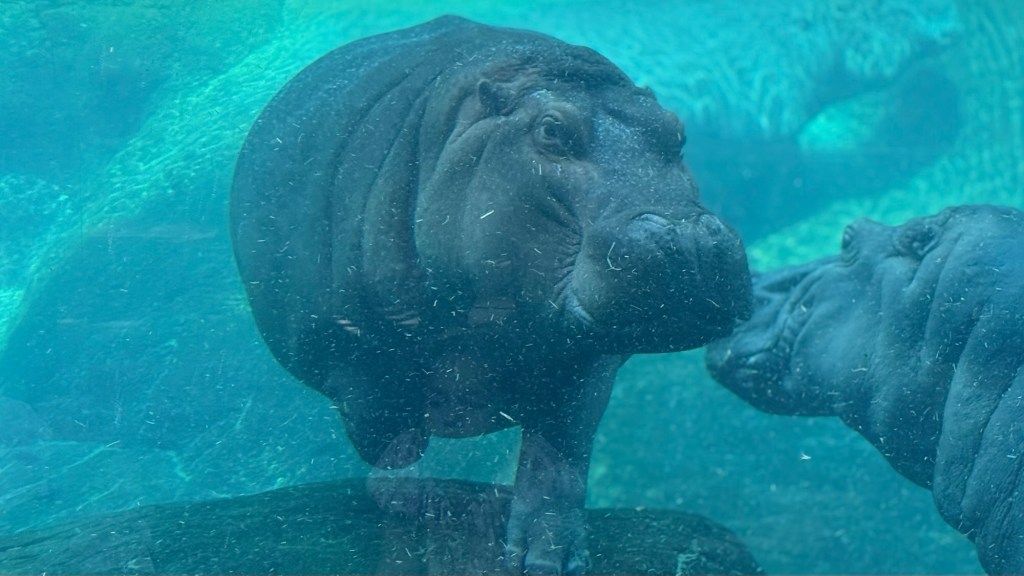
Considered by many to be the best zoo in the world, the San Diego Zoo, located in Balboa Park and founded in 1915, pioneered the concept of cage-less, open-air exhibits that recreate natural animal habitats. The zoo sits on one hundred acres, housing over twelve thousand animals and more than seven hundred species and subspecies.
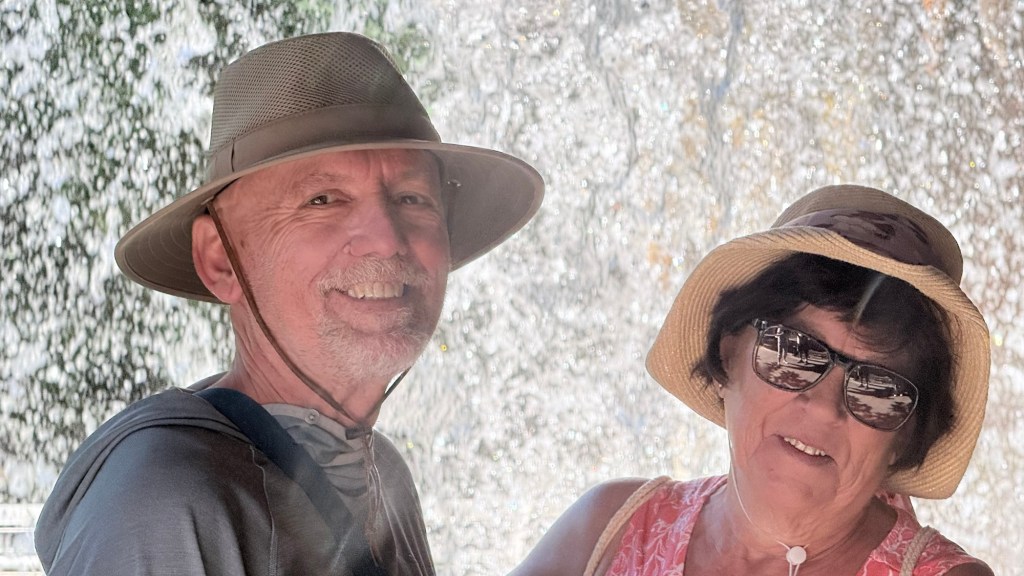
Our camping friends from LA, Mike and Susan, asked us to join them for a day at the zoo…

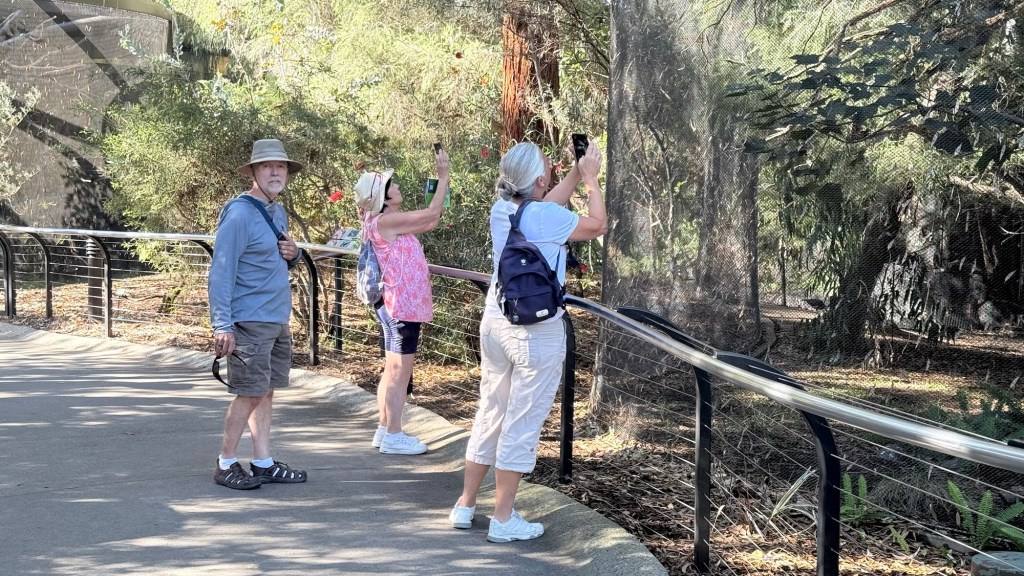
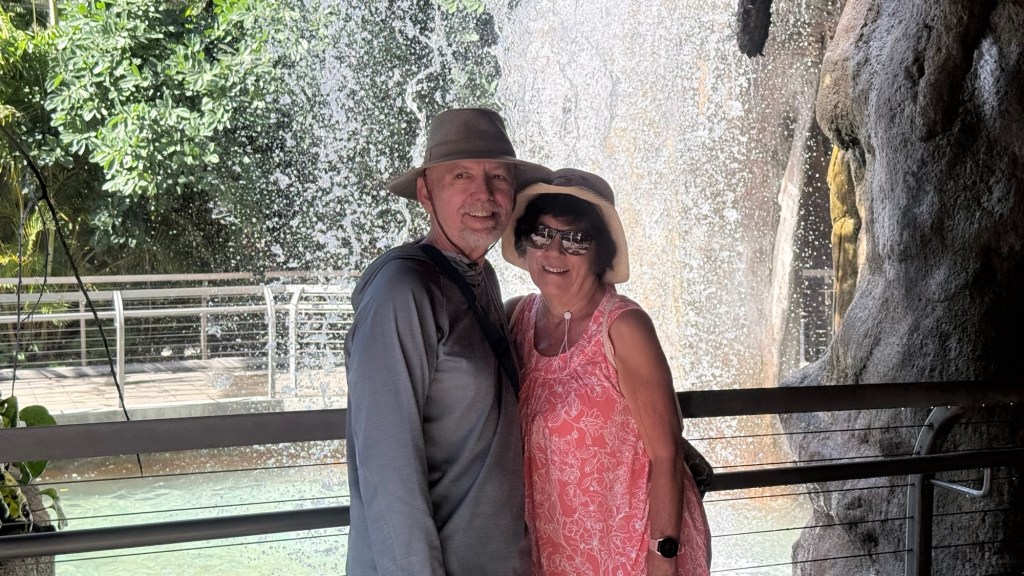
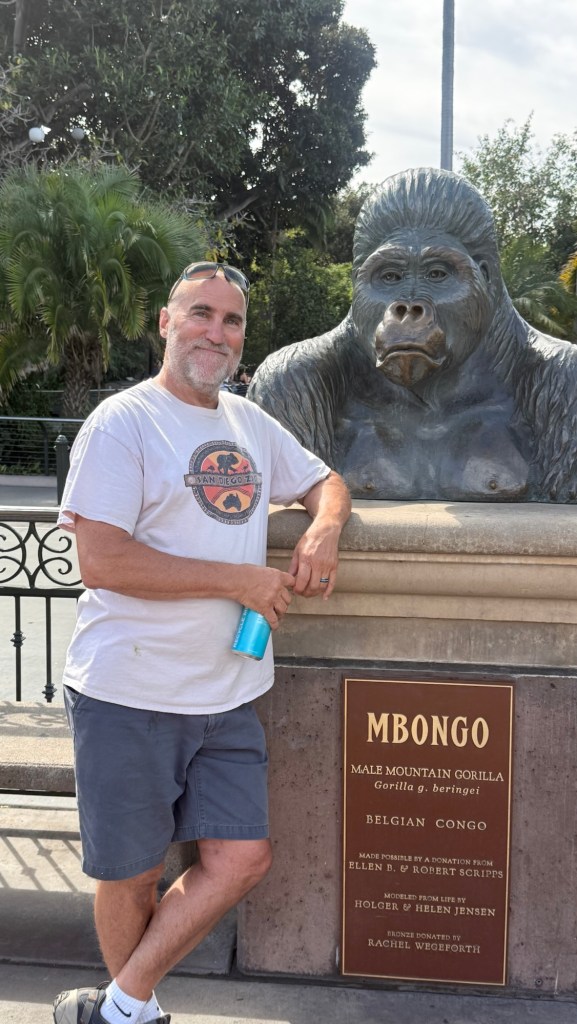

When Treva and I lived here in San Diego we were annual members of the zoo. We would go there simply for the exercise, hiking up and down the canyon that the zoo is nestled in. I would sometimes go alone if Treva was working. My path would usually follow the Monkeys Trail and take me directly to my favorite…the Bonobos.
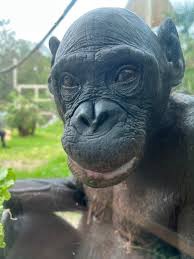
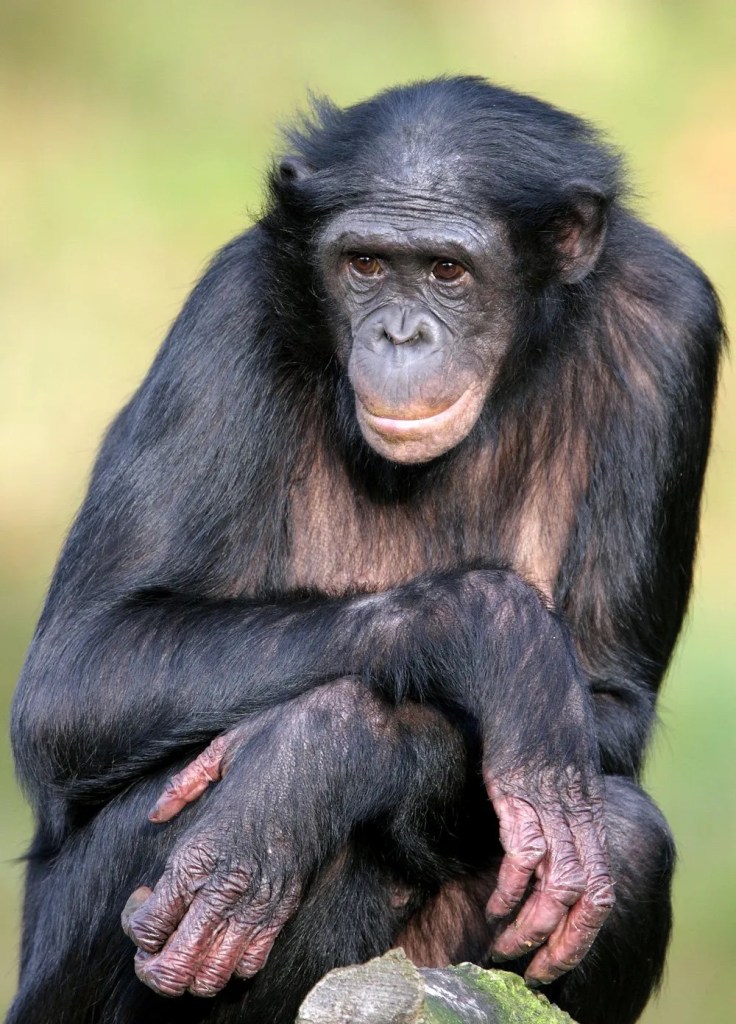
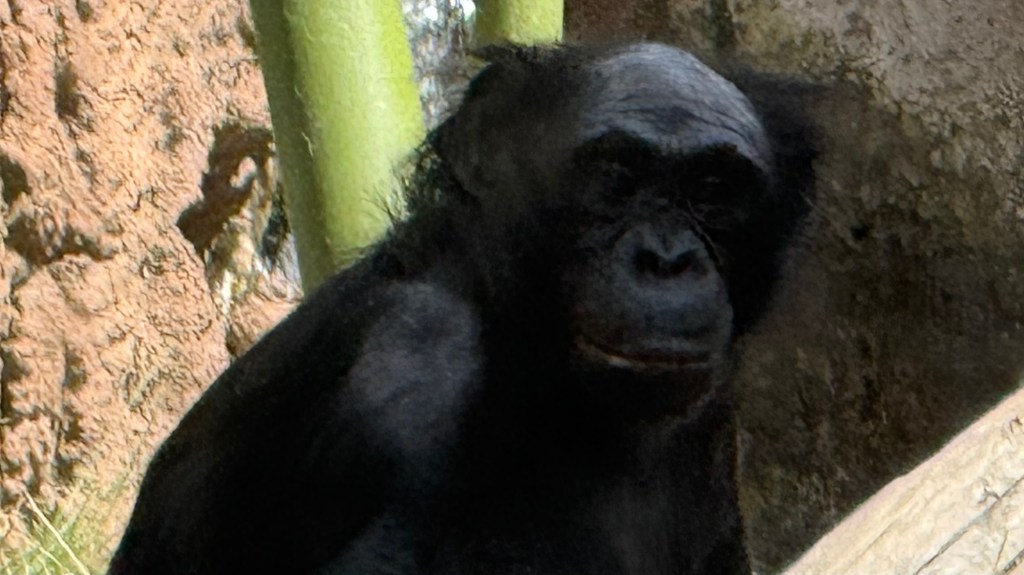
Just like chimpanzees, gorillas, orangutans and humans, bonobos are great apes, in the Hominidae family. Great apes don’t have a tail, unlike monkeys and are considered the most intelligent primates. Found only in the Democratic Republic of Congo, these endangered apes are known for their female-dominated, matriarchal societies and peaceful, highly social behavior. They are known as the “make love, not war” ape or the “hippie ape” because they use sexual behavior to resolve conflicts, reduce tension, and form social bonds. This is made easier since bonobos are also bisexual. Along with chimpanzees, they are our closest living relatives, sharing over 98% of our DNA. They are intelligent, capable of learning symbols to communicate with humans, which I found out firsthand on my visits to the zoo. I would sit in front of the glass and interact with a particularly personable Bonobo named Elsa, who would recognize me whenever I arrived. (I always wore the same shirt, the one I’m wearing in these pictures.) There were a few occasions that our sign language friendship would draw a human crowd to observe our entertaining interactions as we played hand games through the glass. On one special occasion Elsa bent over and exposed her genitalia to me. (Yes, you read that right.) In most human interactions this would be a social no-no, but in Bonobo society this is considered a compliment, it was her way of saying she liked me, that we were friends. I was honored. We remained friends until she was transferred to the Cincinnati Zoo where she has since become a grandmother.
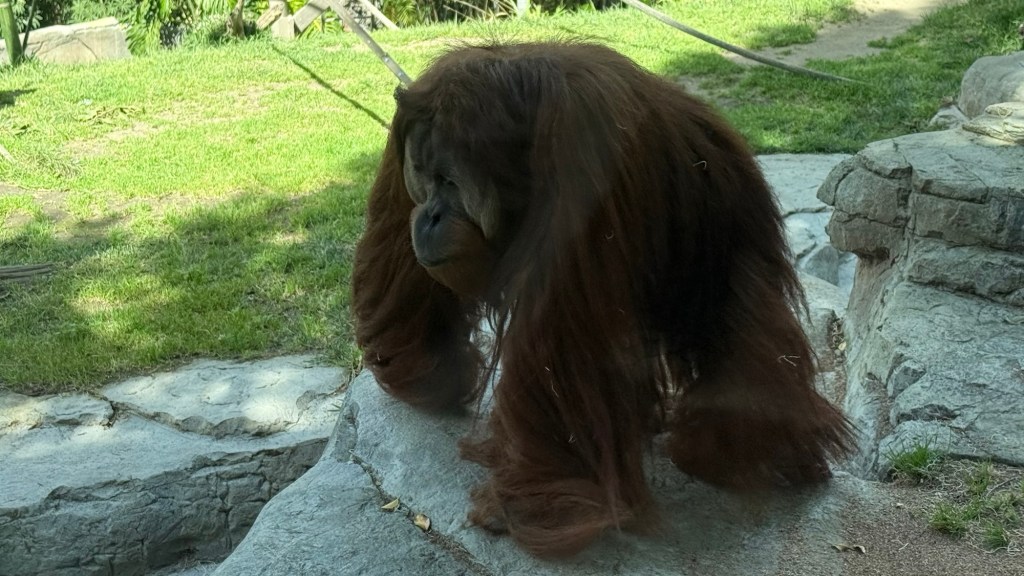
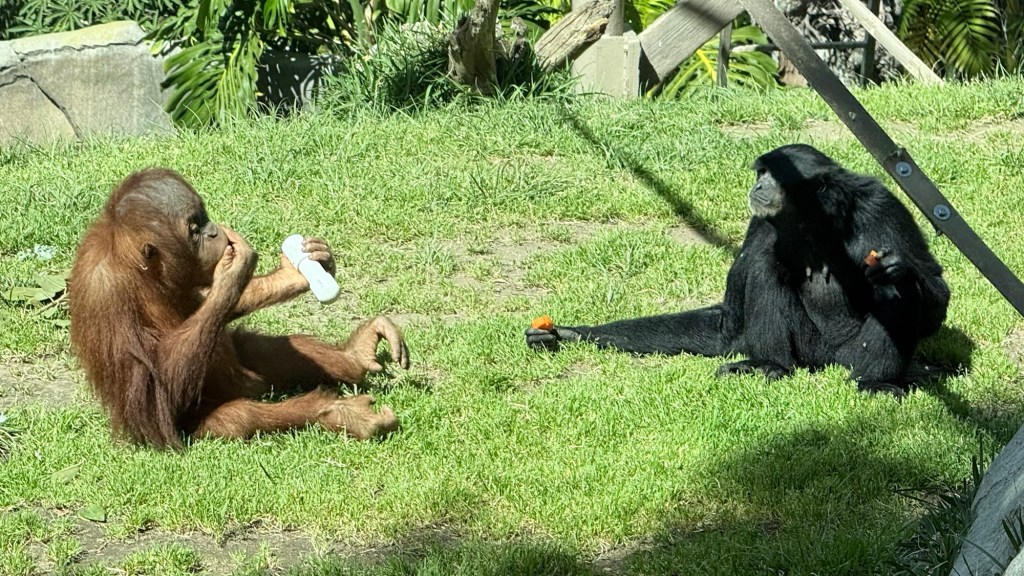
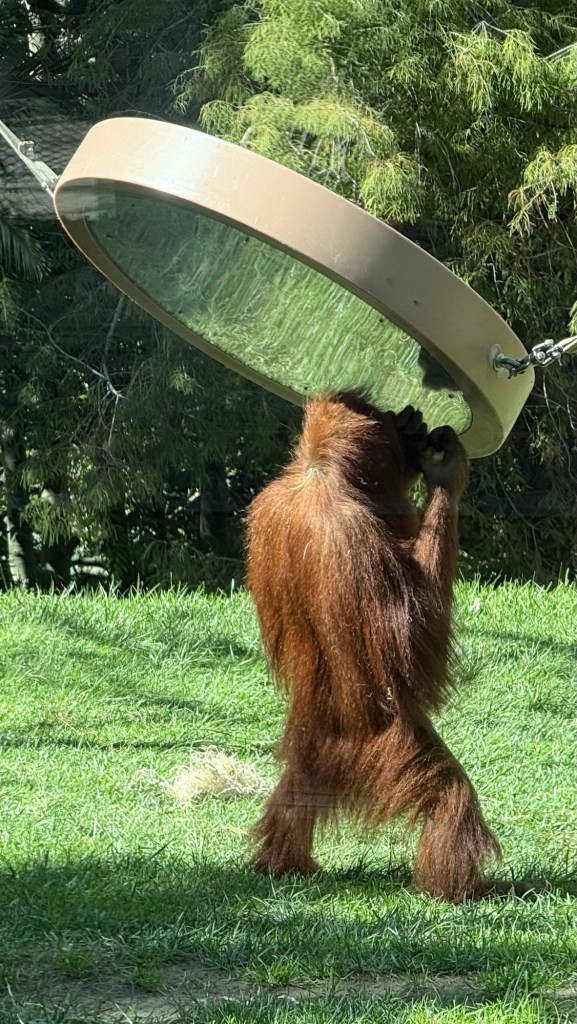
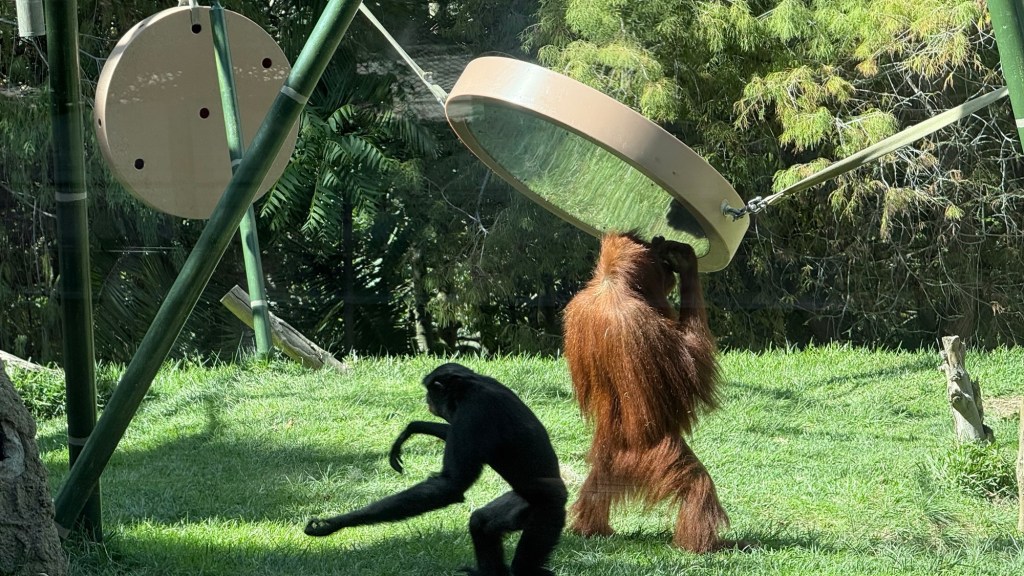
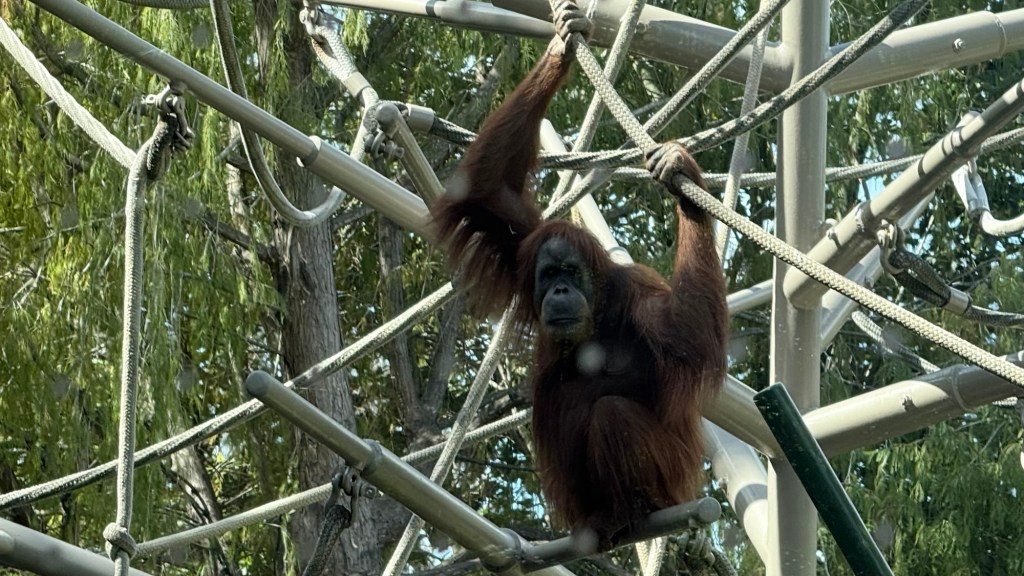
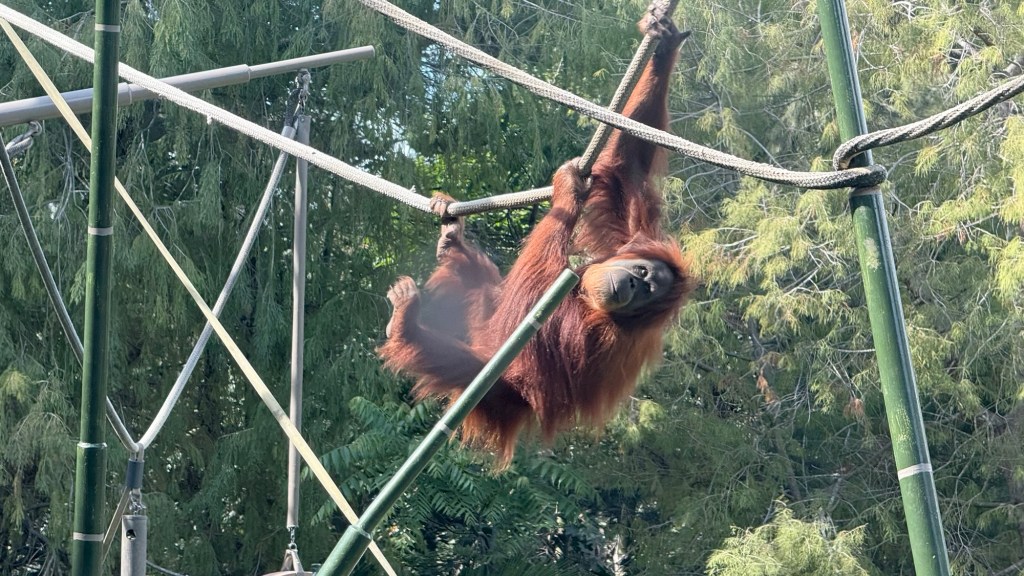
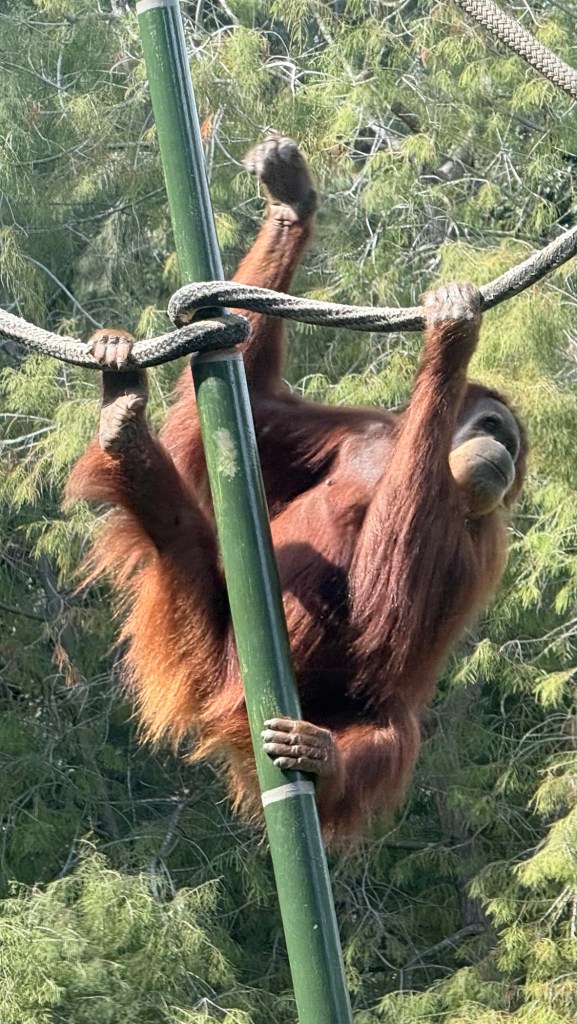
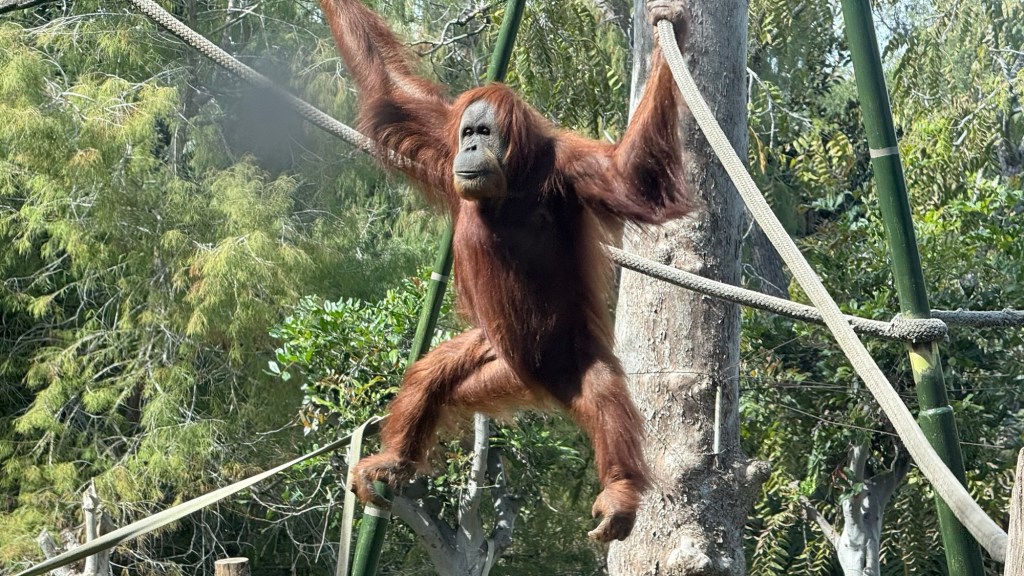
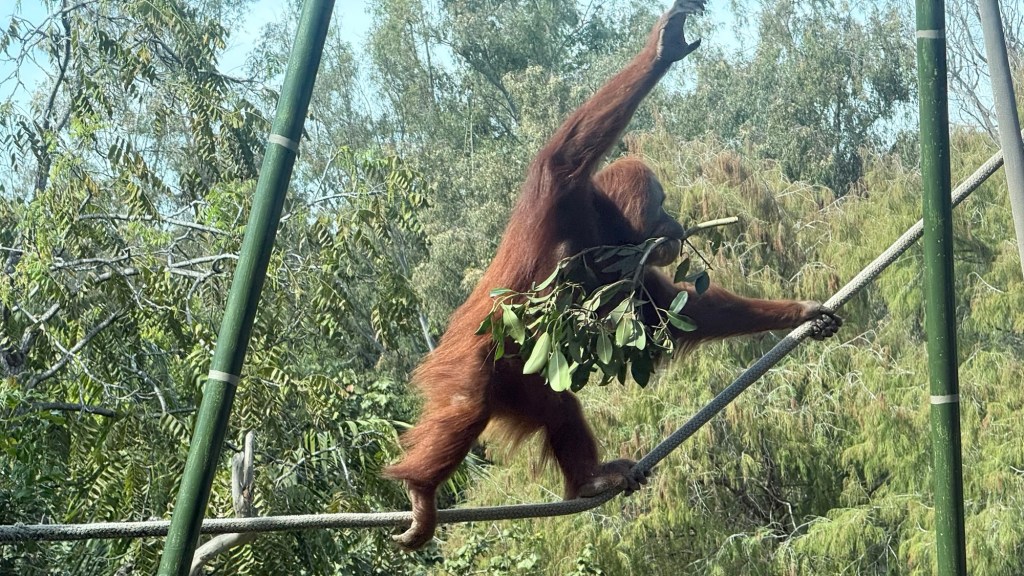
The Sumatran Orangutans we saw always seemed to be moving, swinging from ropes, and therefore, entertaining the crowd. There is one male, Labu, three females, Karen, Indy, and Aisha, as well as one juvenile male named Kaja. 🦧
Orangutans are great apes known for their reddish-orange fur, long arms, and arboreal (tree-dwelling) lifestyle in the rainforests of Borneo and Sumatra, making them the largest tree-living mammals. They are highly intelligent primates, closely related to humans, and are characterized by their solitary nature, use of tools, and unique physical adaptations like opposable thumbs and toes for grasping branches. Orangutans have no tail, large facial cheeks, and a seven foot wingspan! 🦧
In a previous blog post I wrote about my visit to the Indianapolis Zoo where they have a state-of-the-art orangutan exhibit, which rivals the orangutan enclosure here in San Diego. Both are worth the price of admission. 🦧
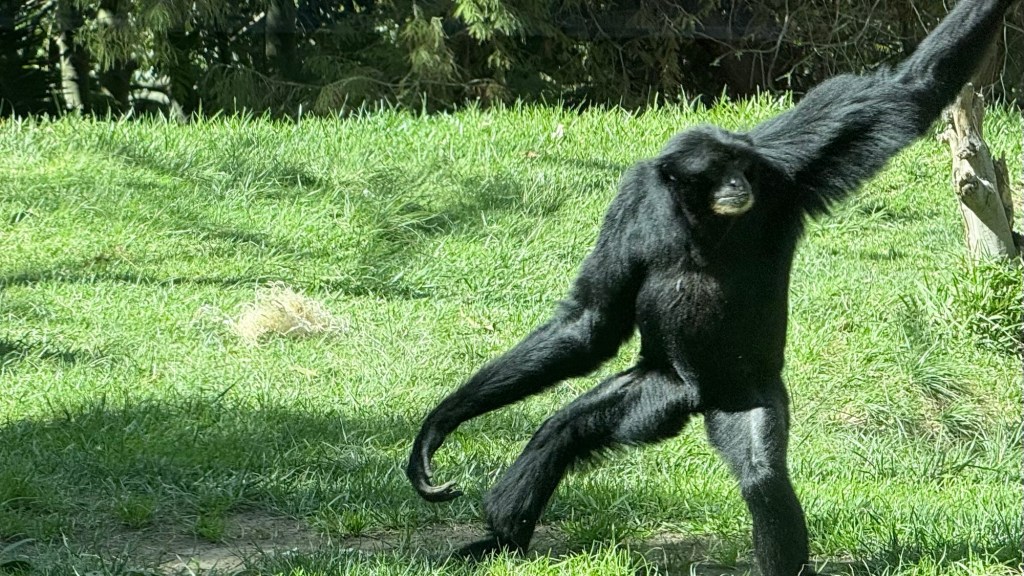
Living in the same environment with the orangutans are two Siamangs, Eloise and her daughter Selamat. Siamangs are also native to Sumatra, are primarily black-furred, and are the largest members of the Gibbon family.
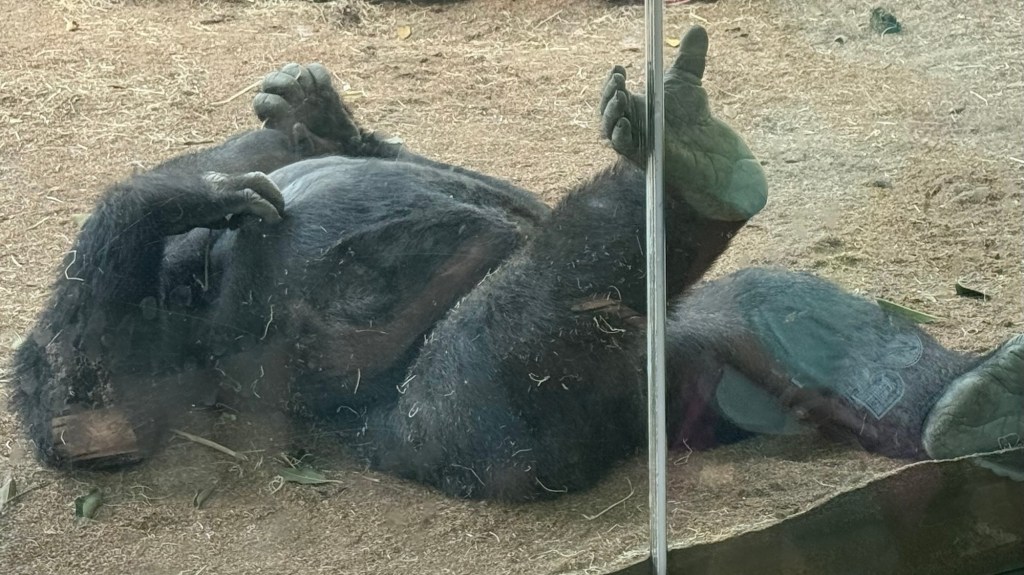
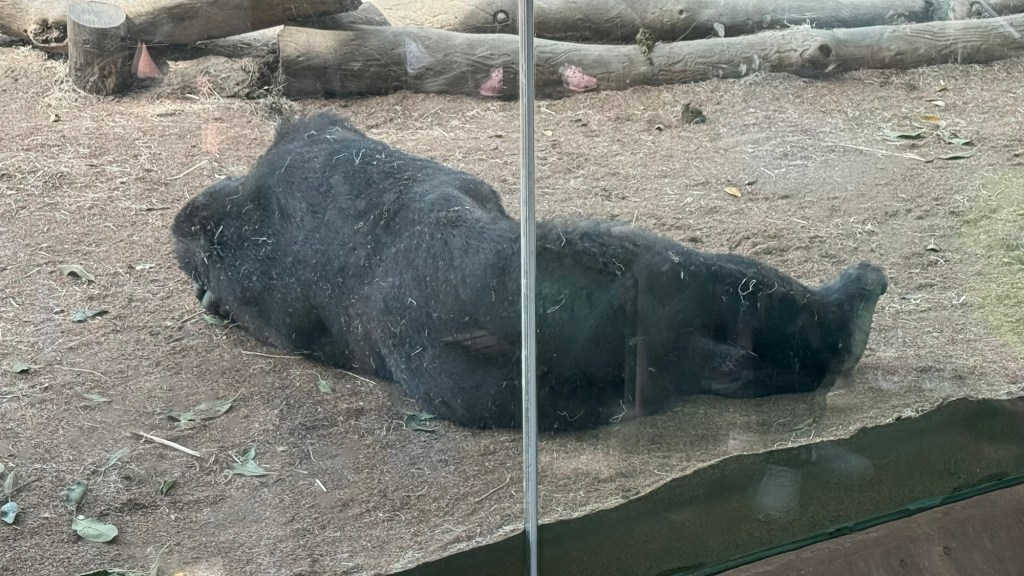
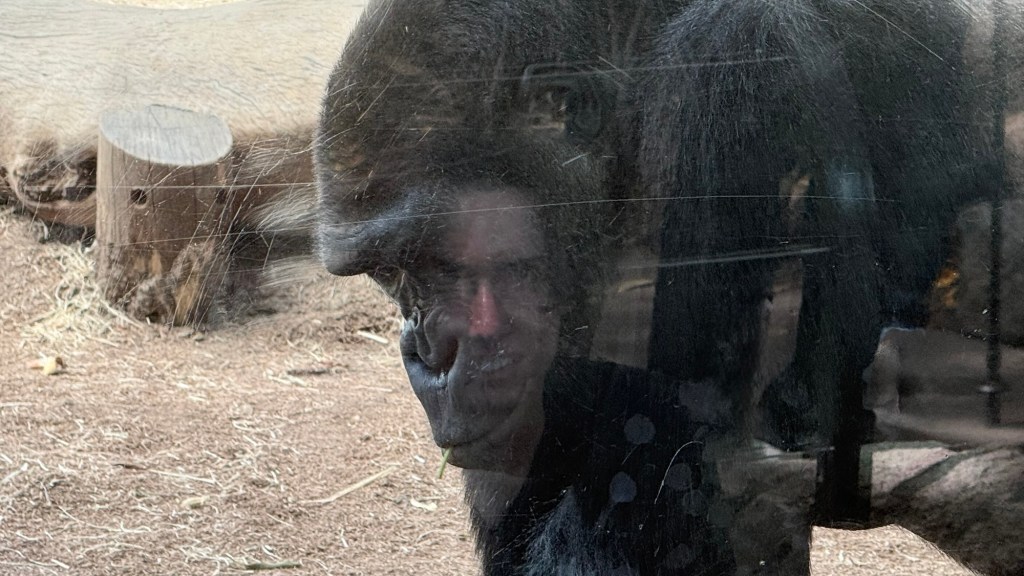
The gorillas were also entertaining with their lazy antics… 🦍
Gorillas are the largest living primates, native to the tropical forests of equatorial Africa. They are highly intelligent, herbivorous great apes that live in social groups led by a dominant male, the Silverback, and share a close genetic relationship with humans. Key characteristics include their large, muscular build, knuckle-walking locomotion, and distinct physical traits like longer arms and black to brown-grey fur, with mountain gorillas having longer hair for colder climates; and they can run on all fours up to twenty-five miles per hour! 🦍
As you can see they weren’t moving very fast today. 🦍
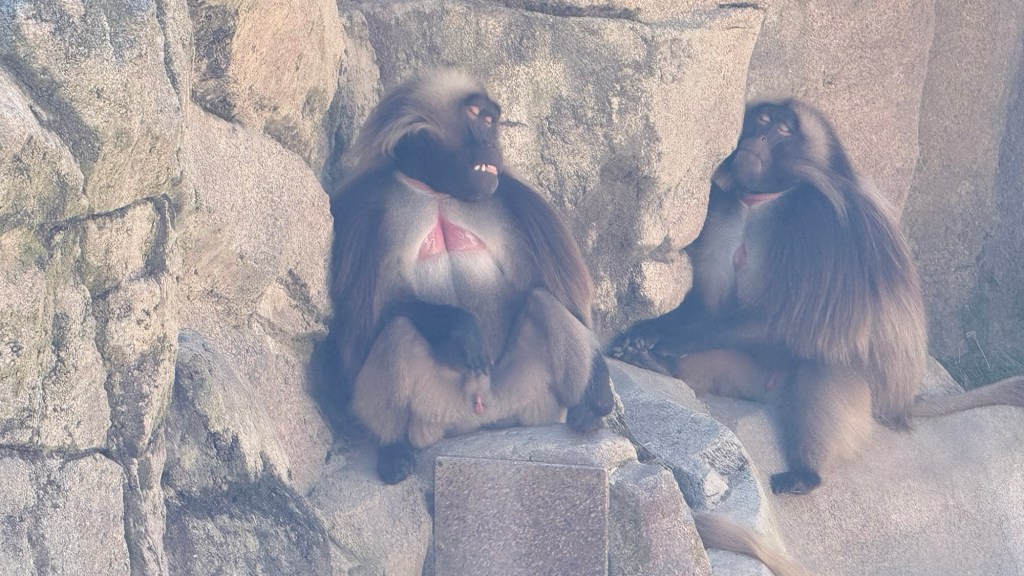
Another unusual primate we saw were the Gelada. The red, hourglass-shaped patch of skin on the Gelada’s chest and neck sets this large monkey apart. On a female, blister-like bumps along the border of her patch enlarge when she is most fertile.
Found only in the highlands of Ethiopia, geladas live in huge herds composed of many harems (a single adult male, several females, and their offspring) and bachelor groups. They are considered the world’s most terrestrial primate species and they are the only primate with a diet made up mostly of grasses.
Other primates at the San Diego Zoo…
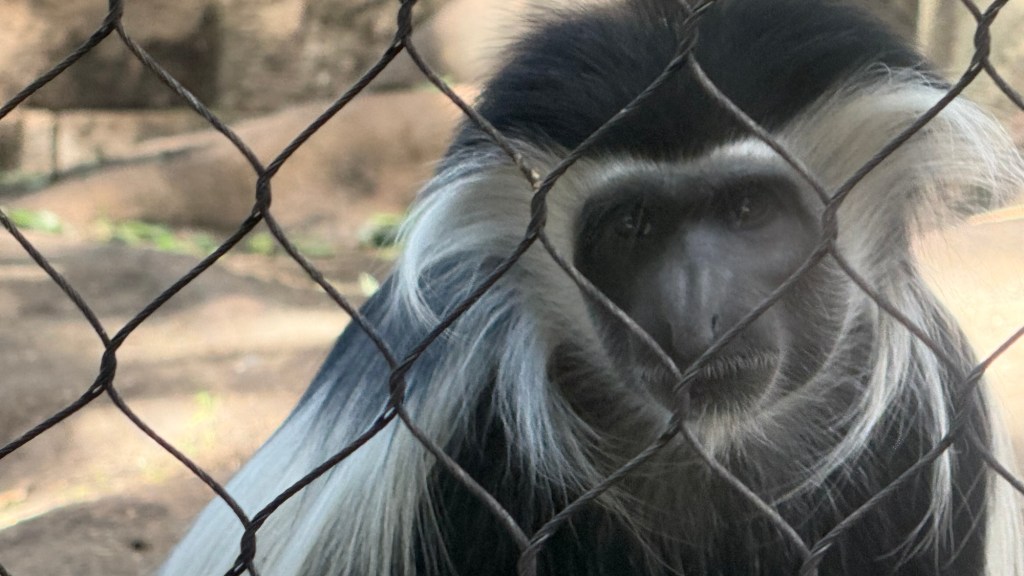
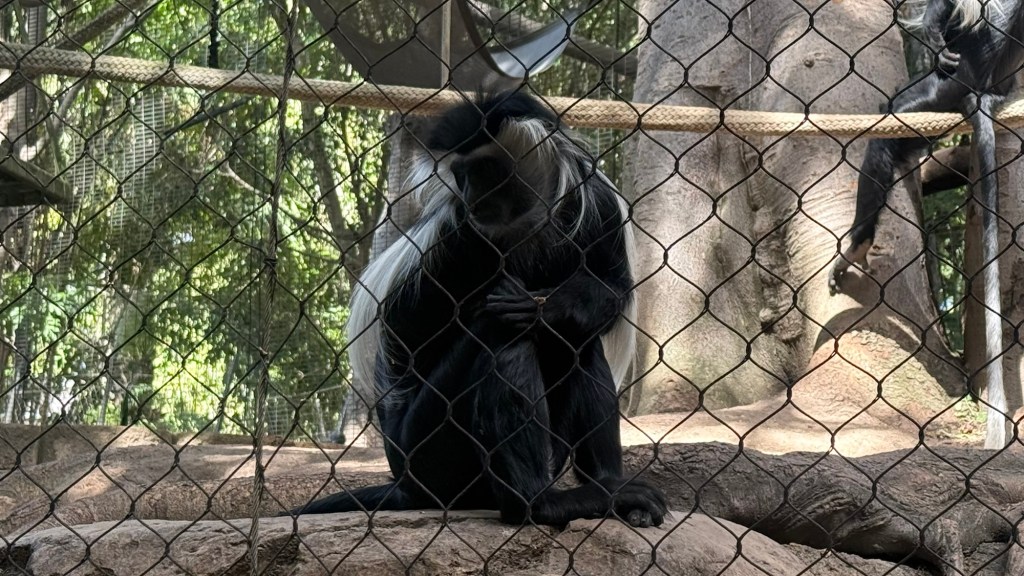
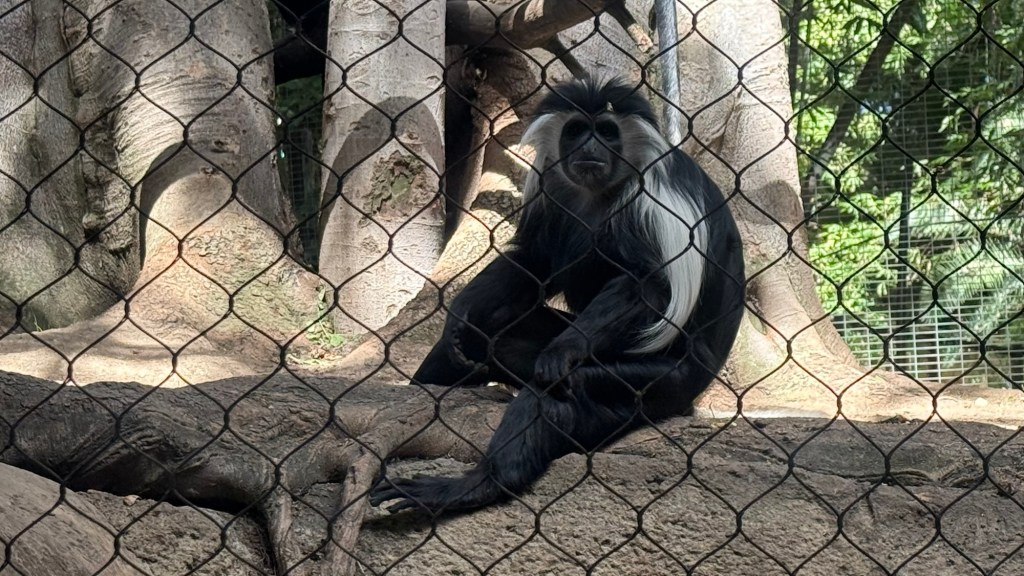
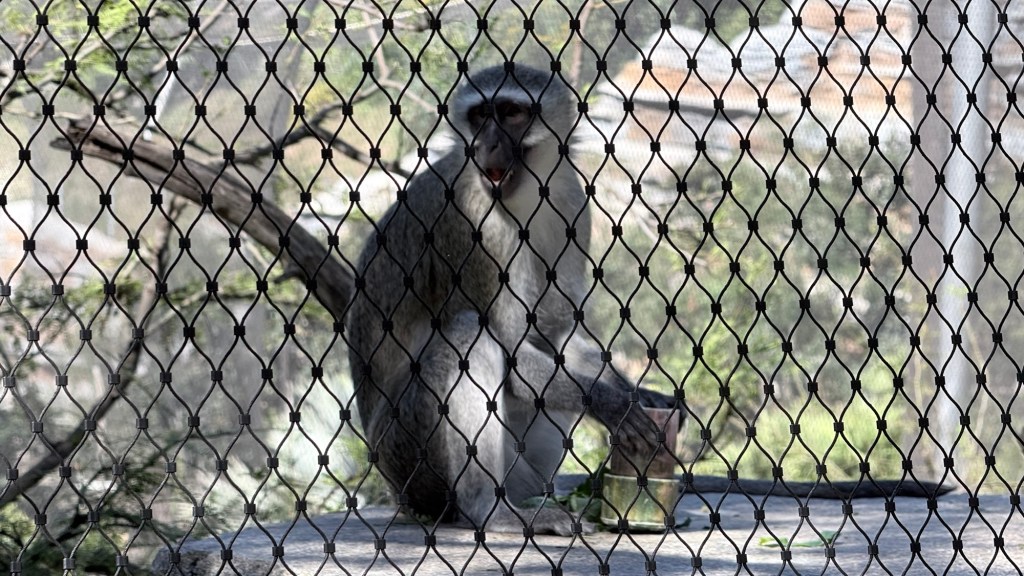
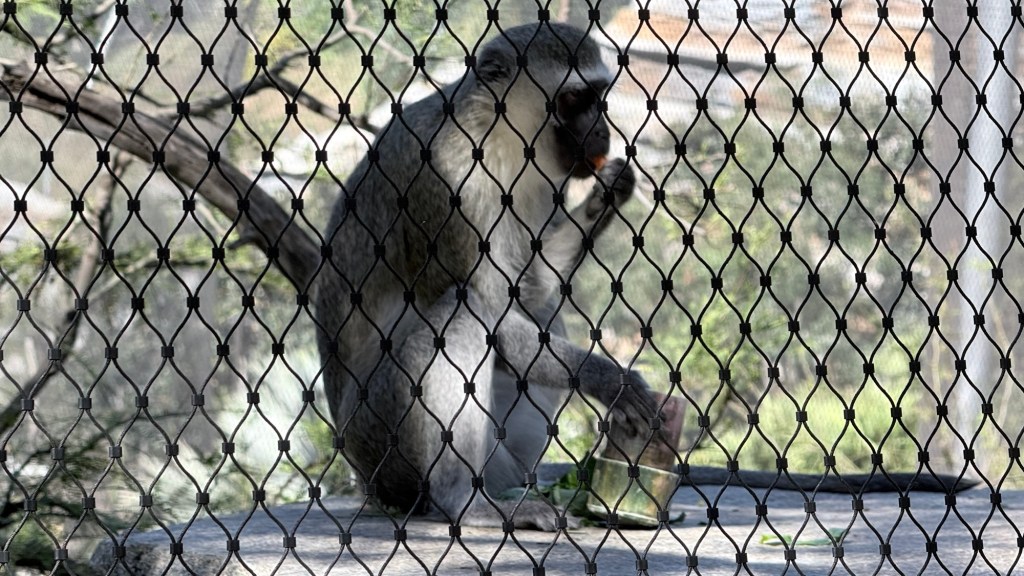
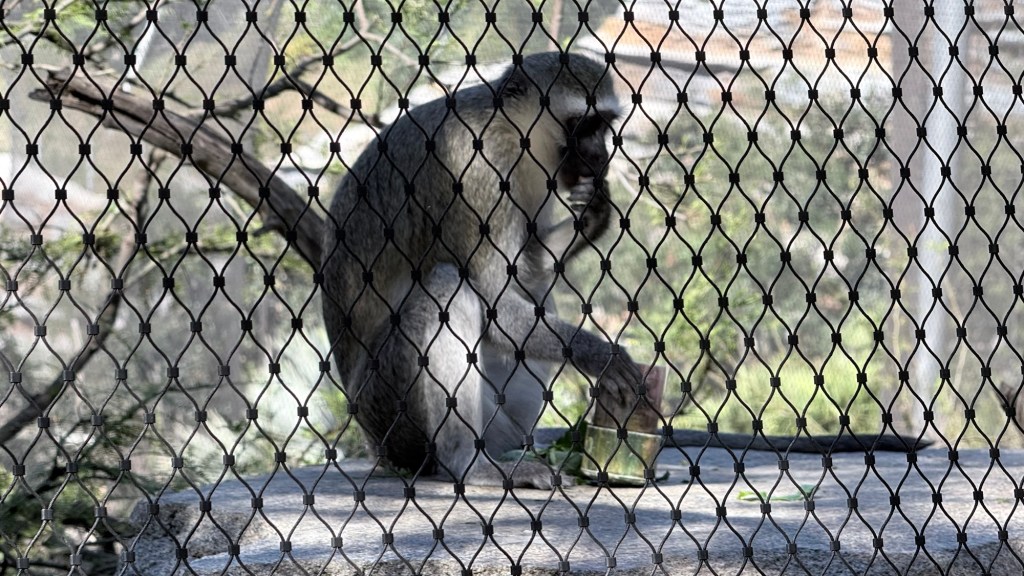
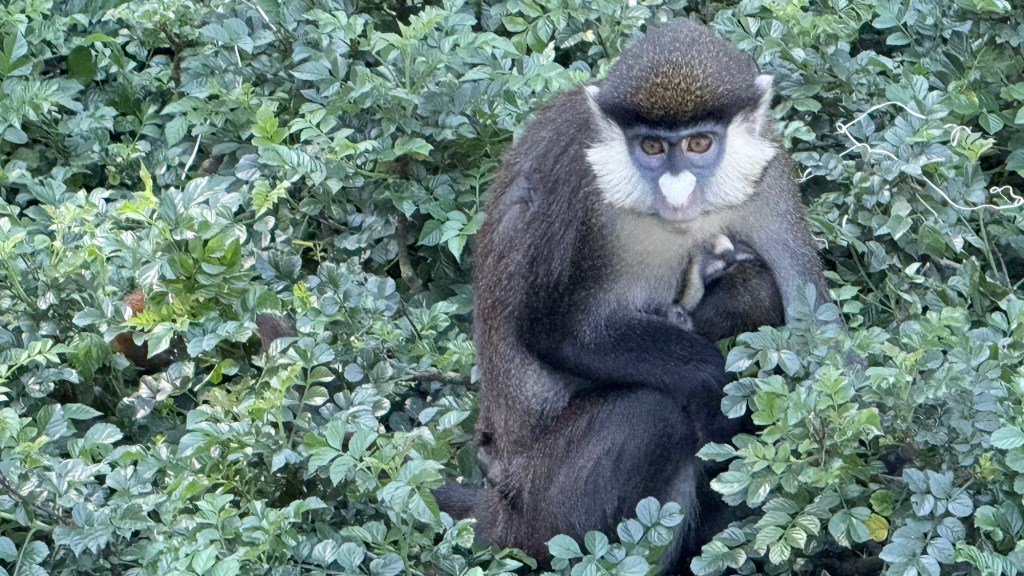
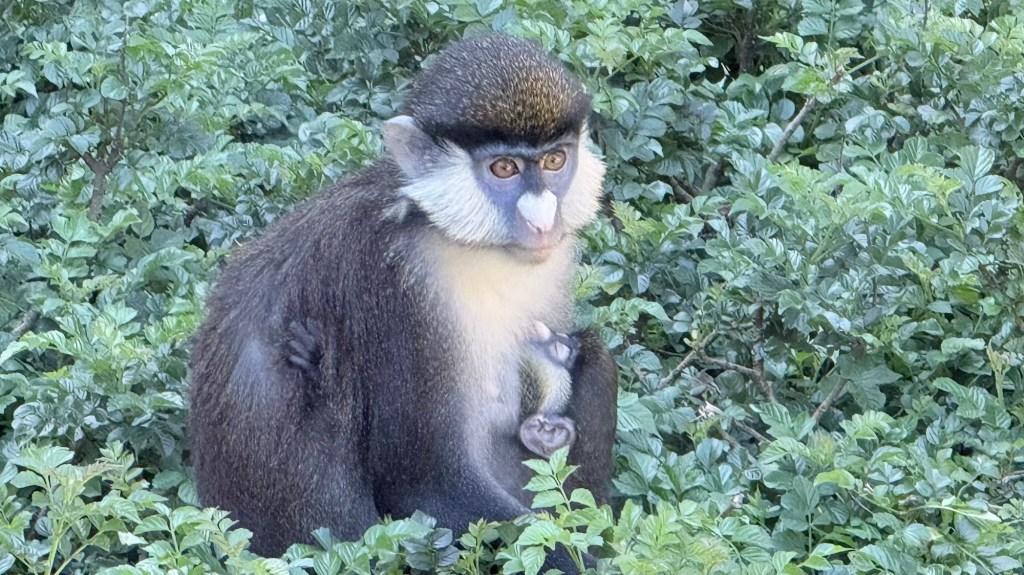
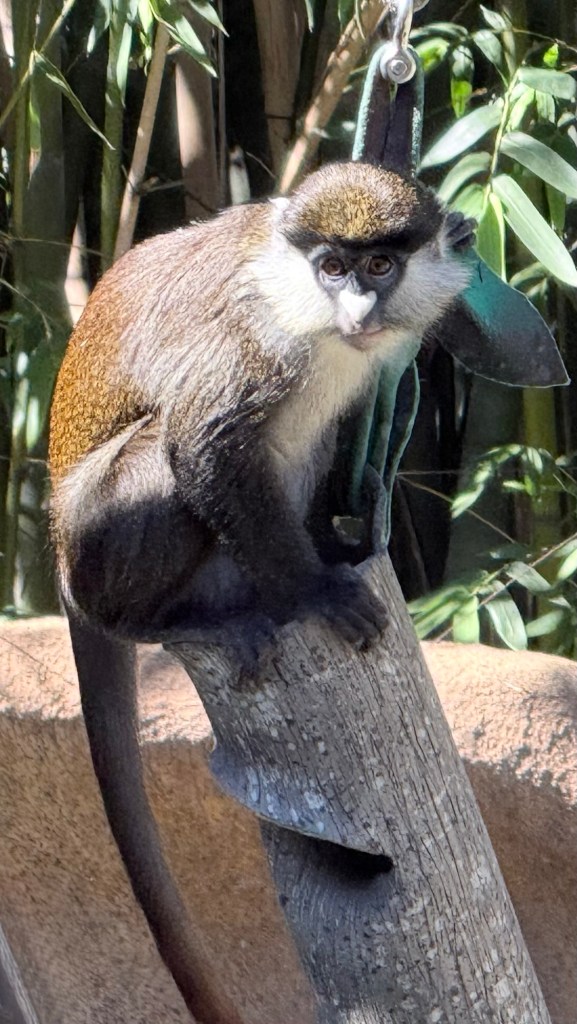
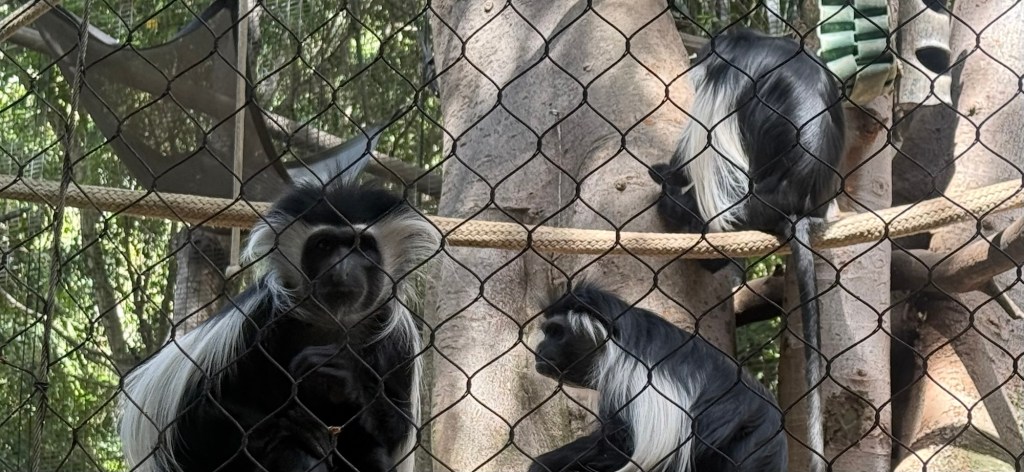
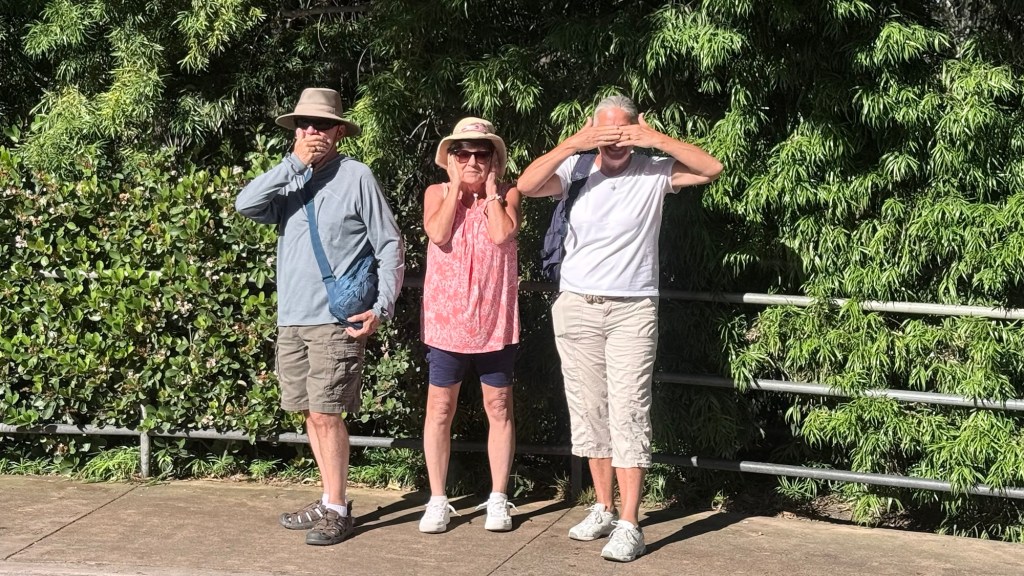
Personally, I love the apes, monkeys, gorillas, orangutans, and any of the others primates considered to be our distant cousins. Probably because I grew up from a young age with the Planet of the Apes movies, toys, and TV series.
🦧 🦍 🐘 🐪 🦏 🦛 🦒 🦬 🦘 🐅 🐆 🐂 🐃 🐫
But there were many other species of animals at the zoo, so we took the full tour…

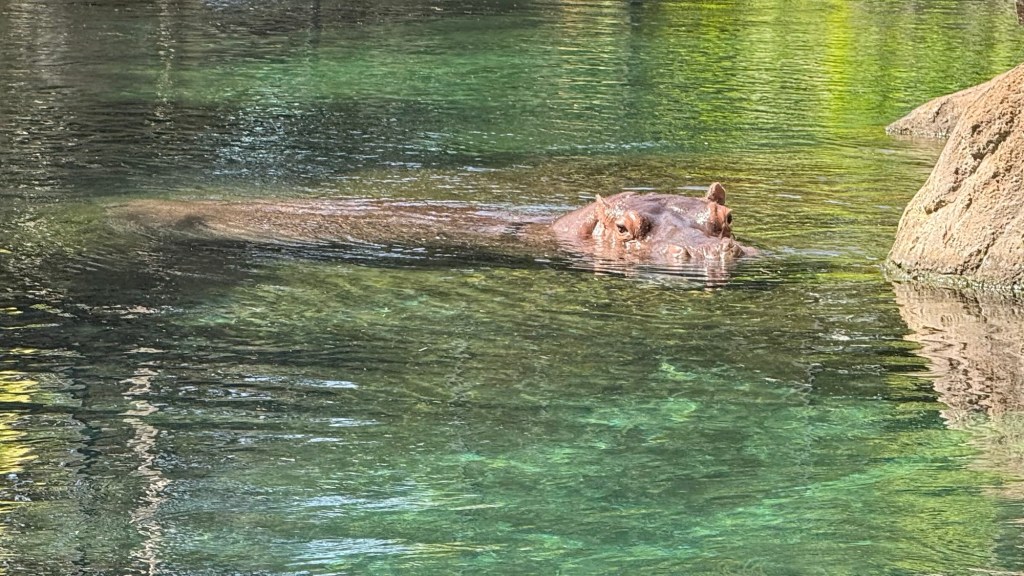
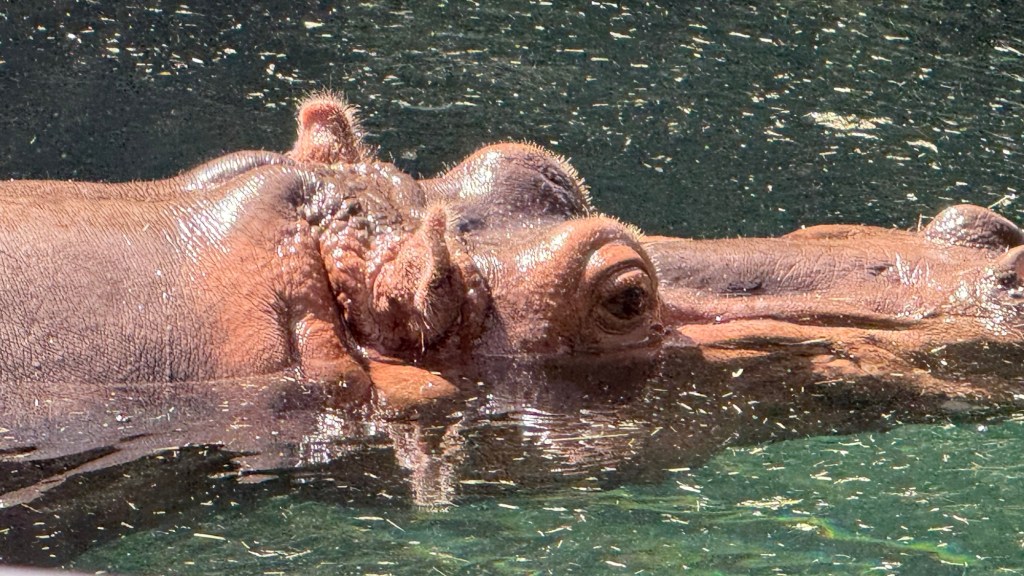
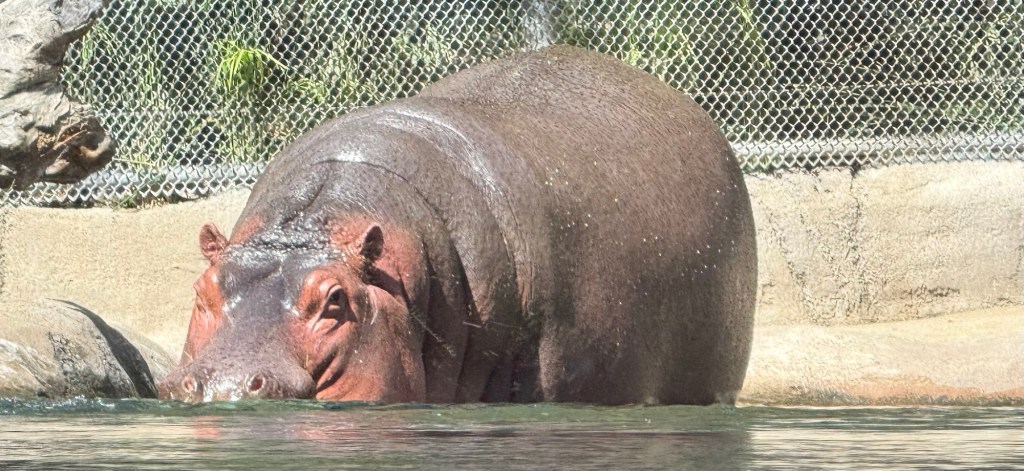
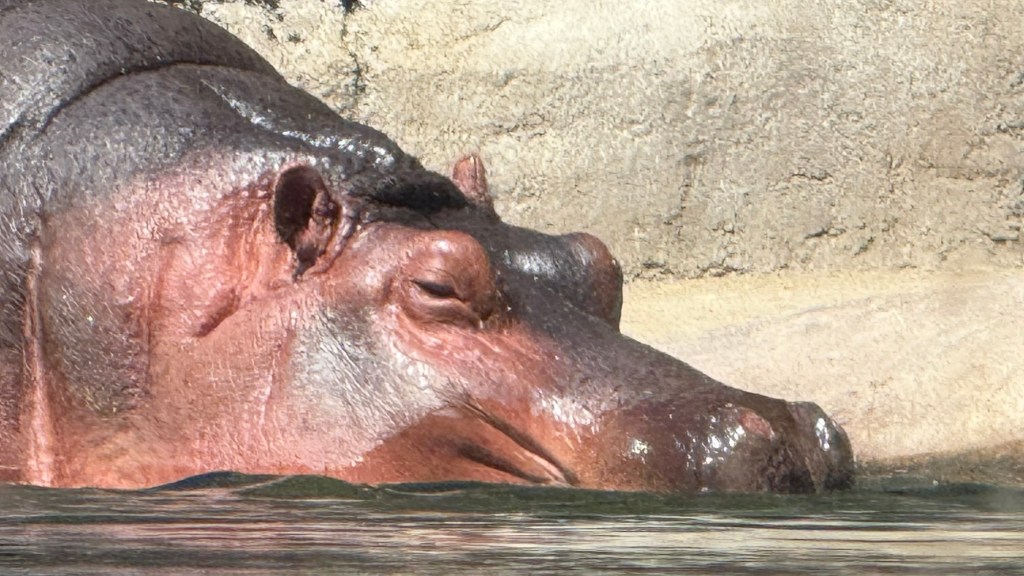
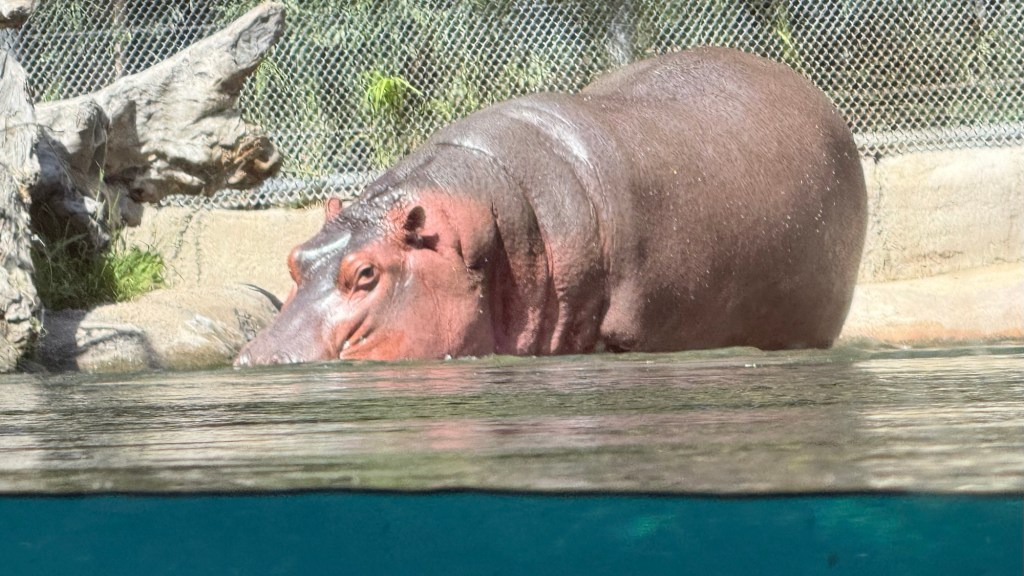
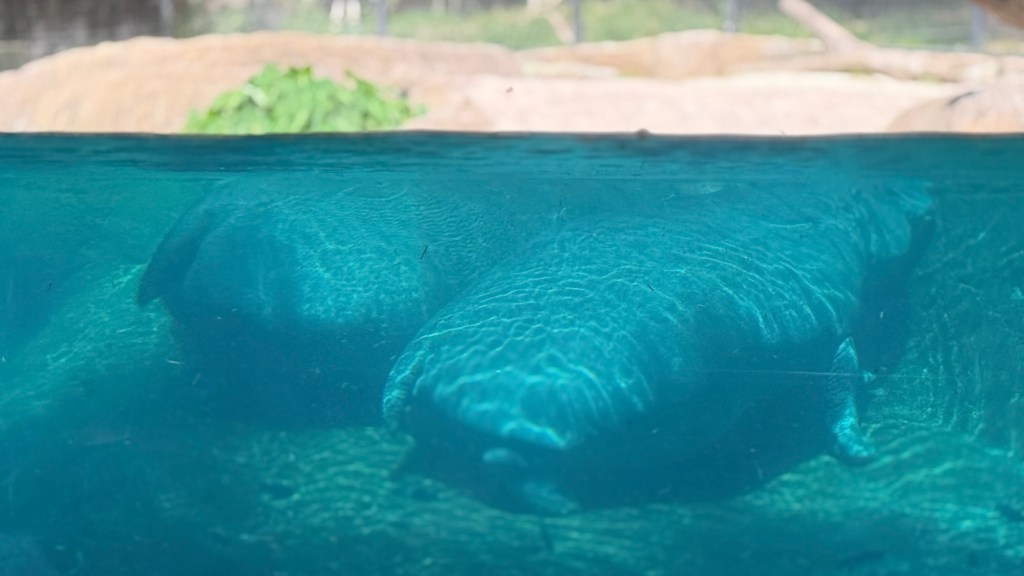
The hippopotamus were a “big” hit. 🦛
The hippopotamus is a large, semi-aquatic mammal from sub-Saharan Africa, known as a “river horse” for its life in and around rivers and lakes, though it can’t swim and instead walks on the bottom. They spend days in water to stay cool and hydrated, emerging at night to graze on grasses, and secrete a reddish “blood sweat” for sun protection. Despite their herbivorous diet, they are highly territorial and considered one of Africa’s most dangerous animals due to their powerful jaws and aggressive nature. Weighing in at three tons probably attributes to the fact that more people are killed in Africa by hippos than by any other animal. 🦛
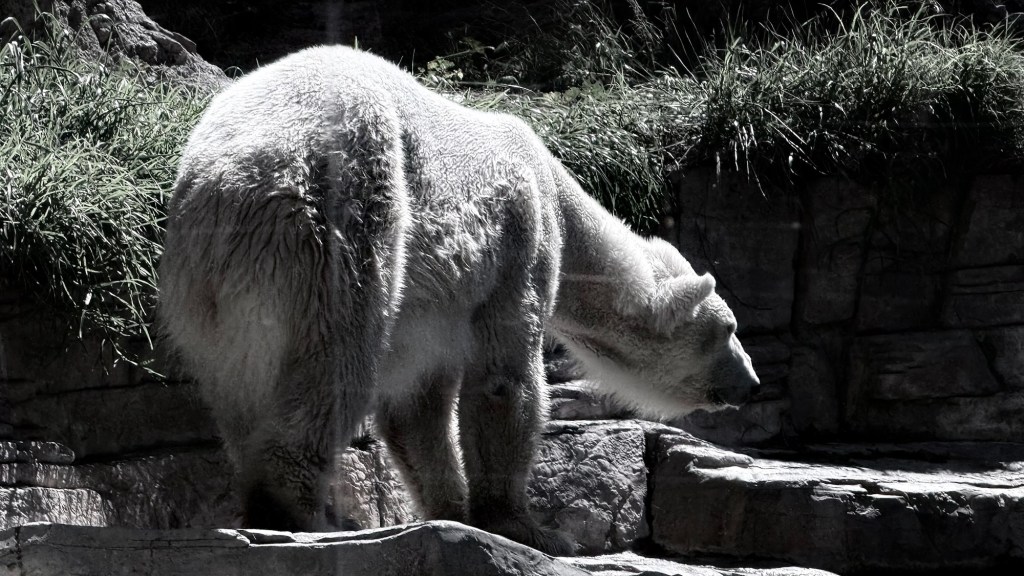
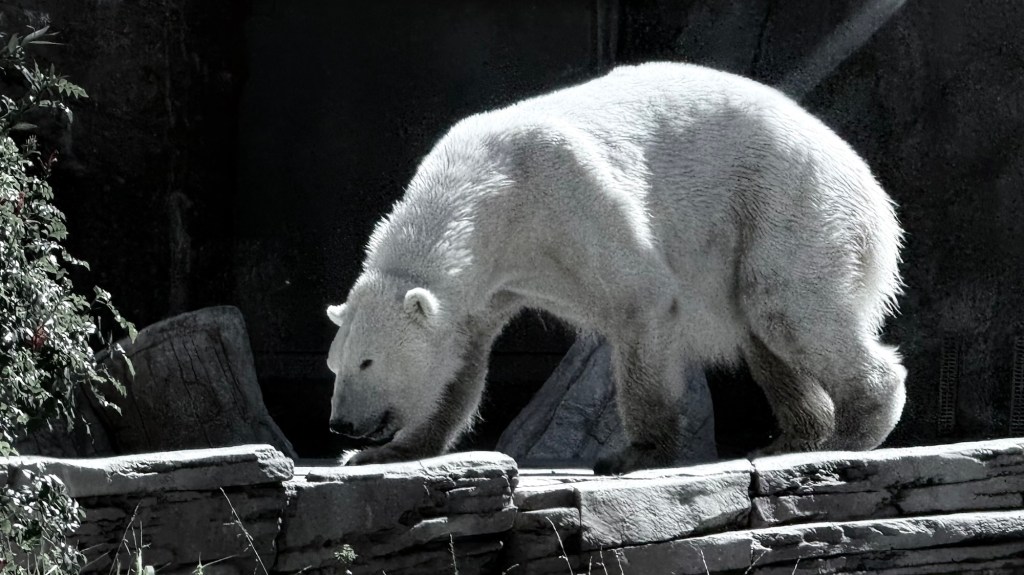
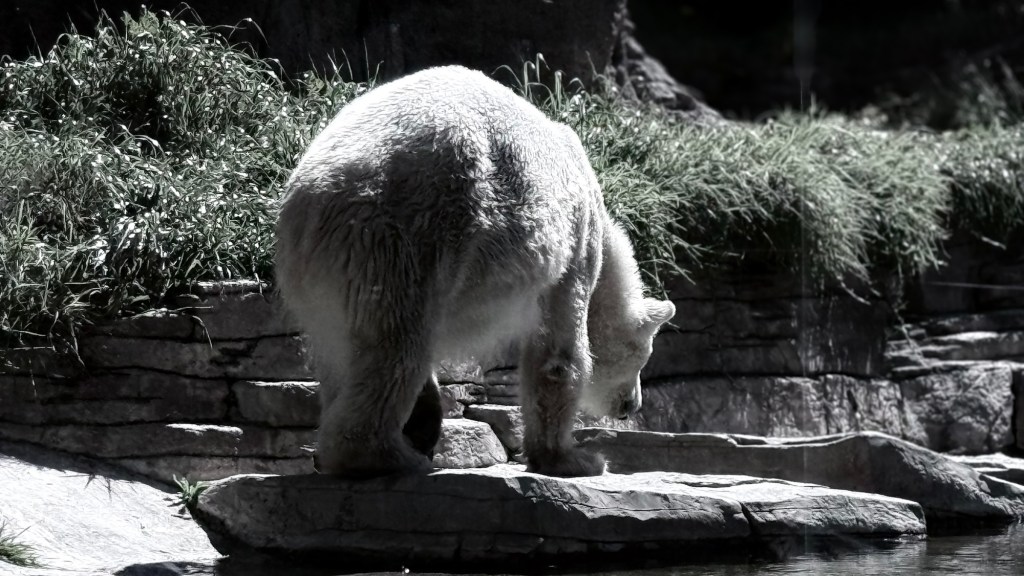
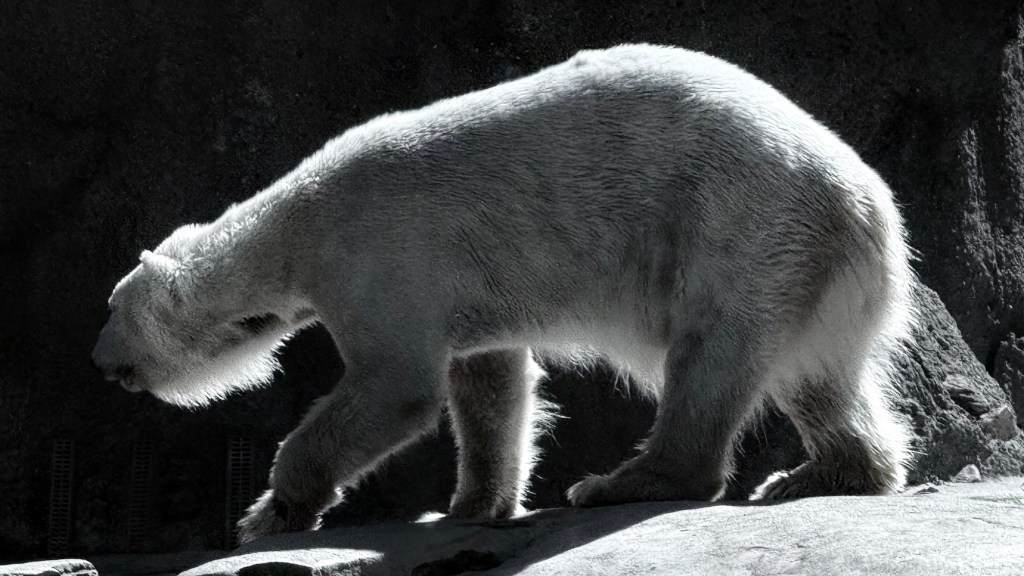
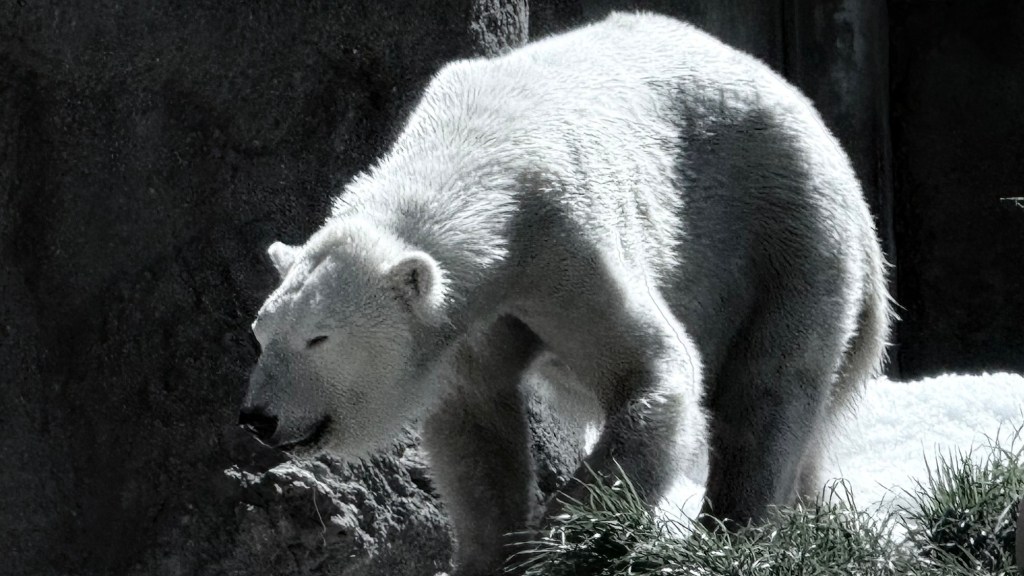
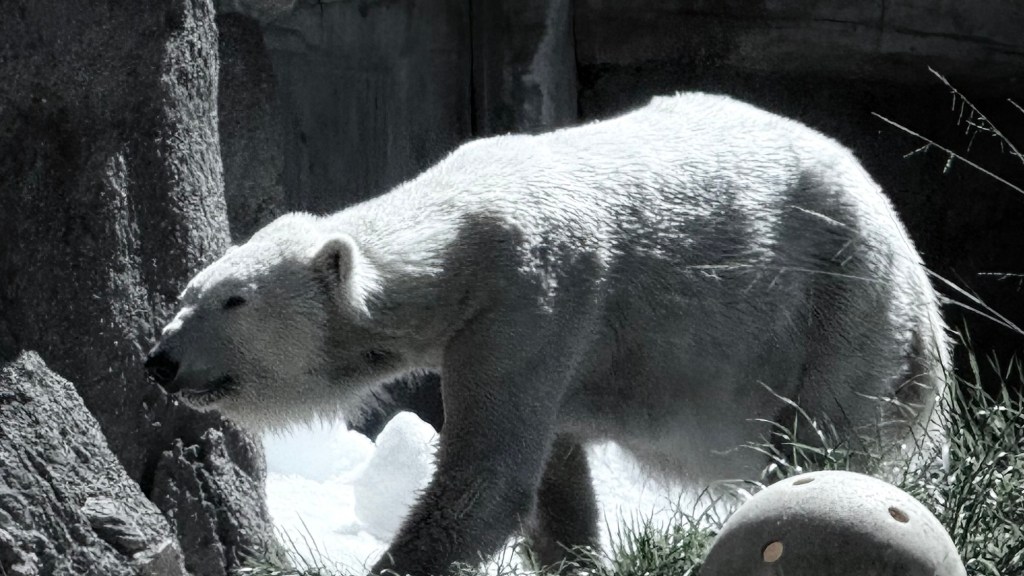
The polar bear is the world’s largest bear, a marine mammal adapted to the Arctic, relying on sea ice for hunting seals, its primary food source. They have thick, white-appearing fur (it’s actually translucent) on their black skin, thick blubber, with large furred paws for walking on ice and insulated for strong swimming. 🐻❄️
Today was an exceptionally hot day in San Diego, not suited for our friend the polar bear. When we first visited him today he was lallygagging in a pile of man-made snow and trying to stay cool. 🐻❄️
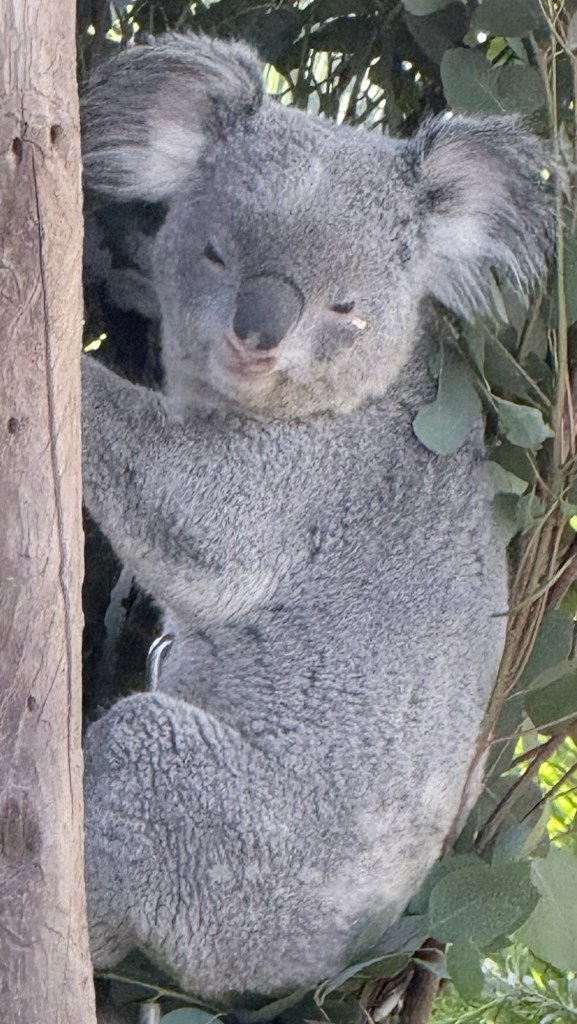
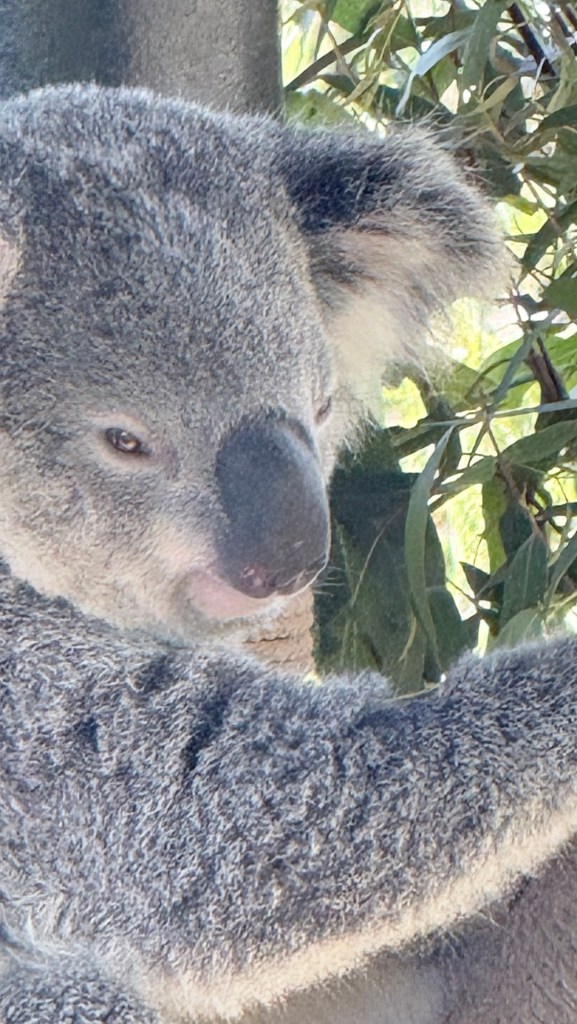
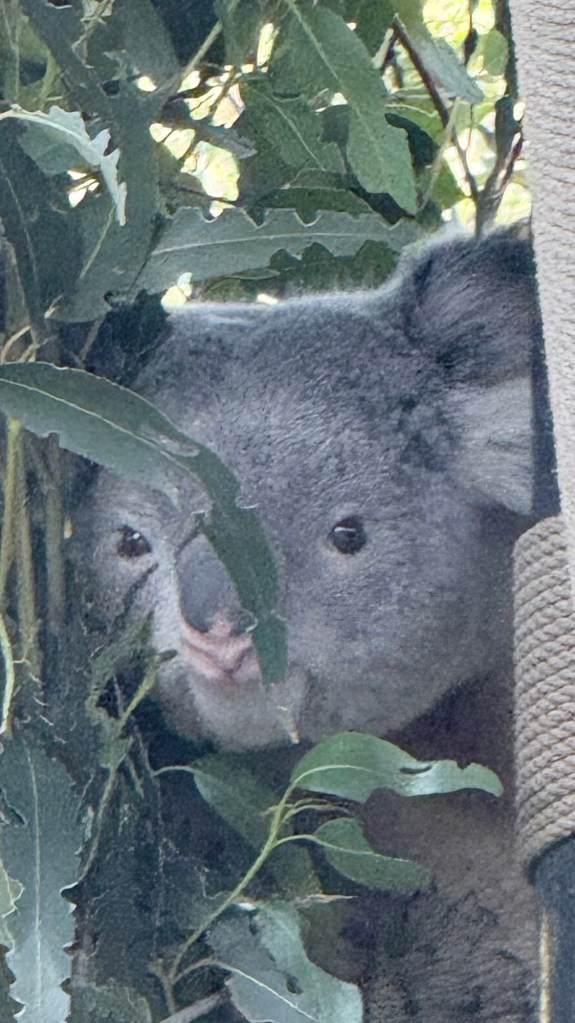
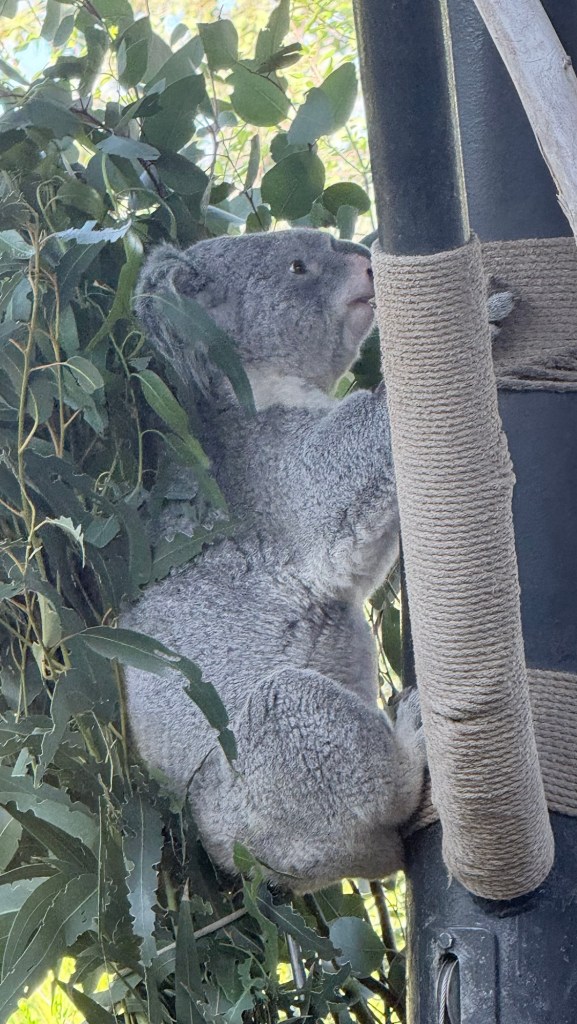
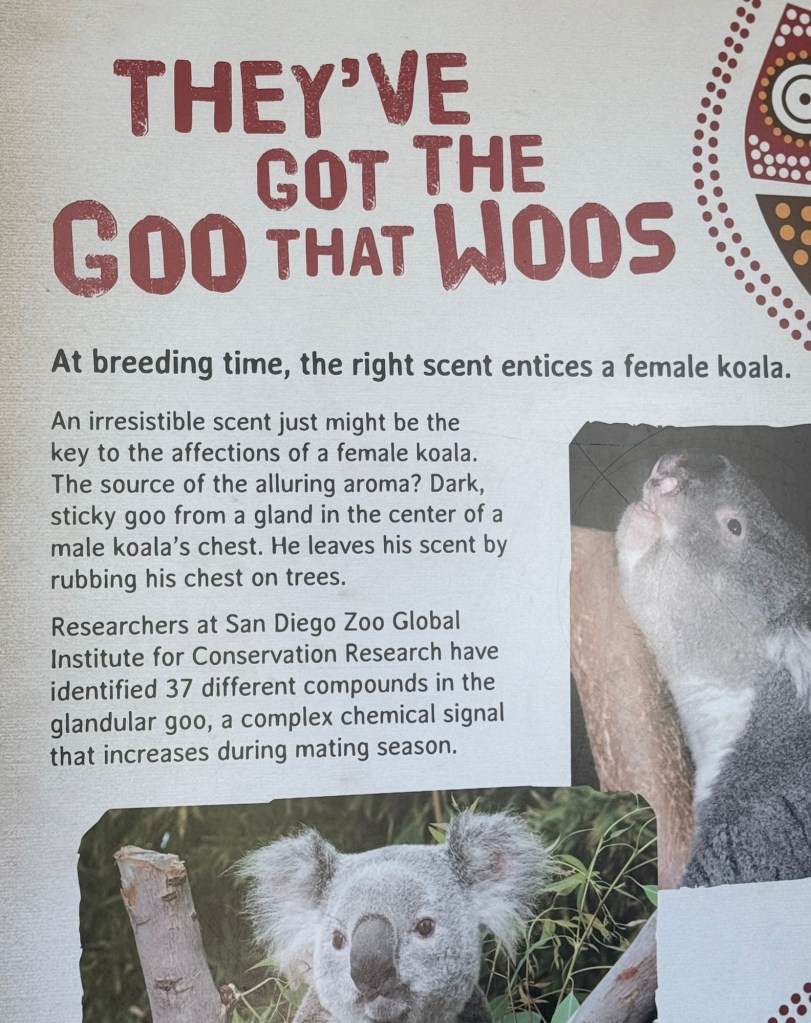
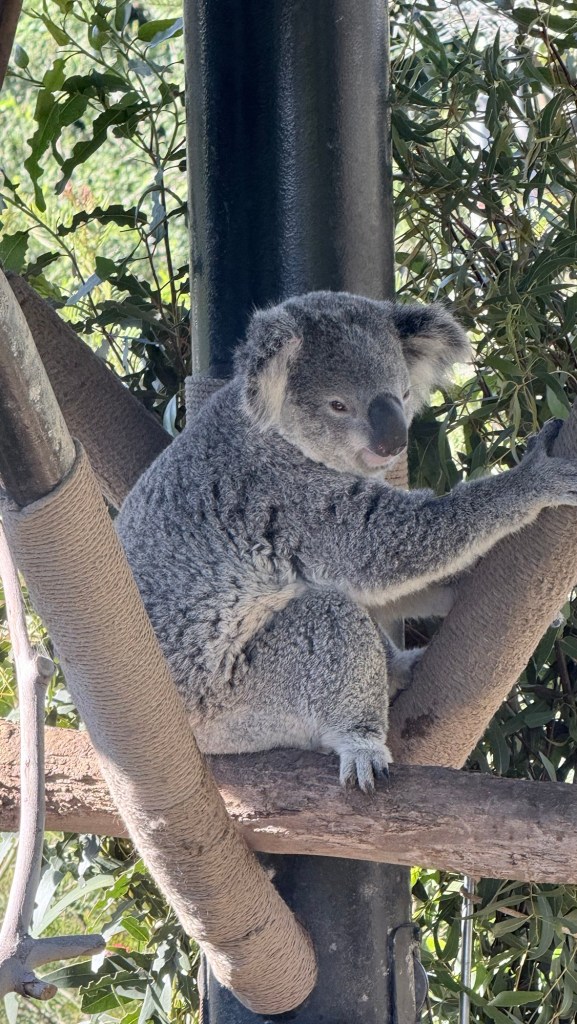
Koalas are iconic, tree-dwelling marsupials native to Australia, known for their stout bodies, large heads, and fluffy ears, but they are not bears. They are herbivores that primarily eat eucalyptus leaves, which leads to their low-energy lifestyle, causing them to sleep up to twenty hours a day. As marsupials, not bears, females have a pouch to raise their young (Joeys), and their closest living relatives are more closely related to kangaroos and wombats. 🐻
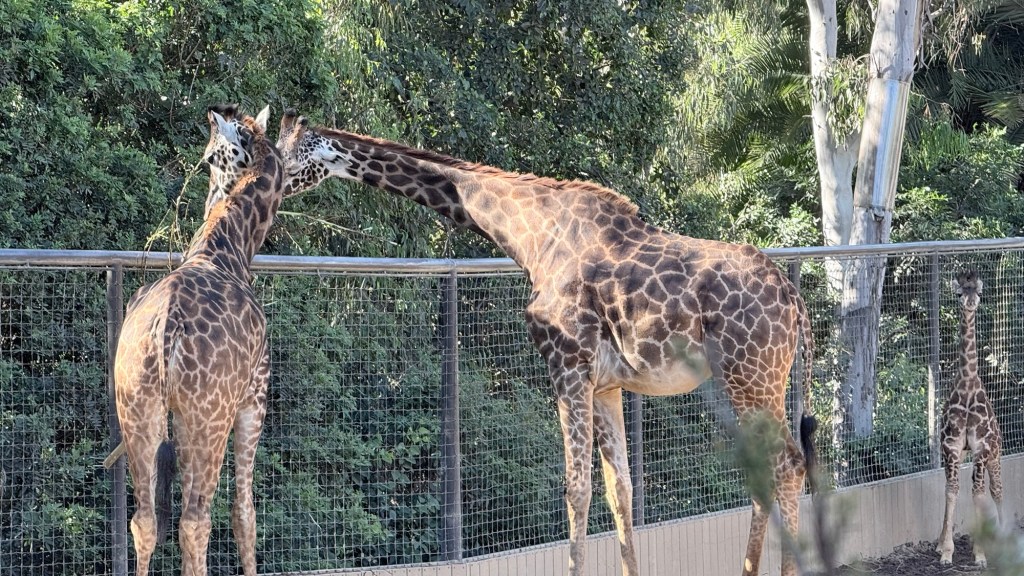
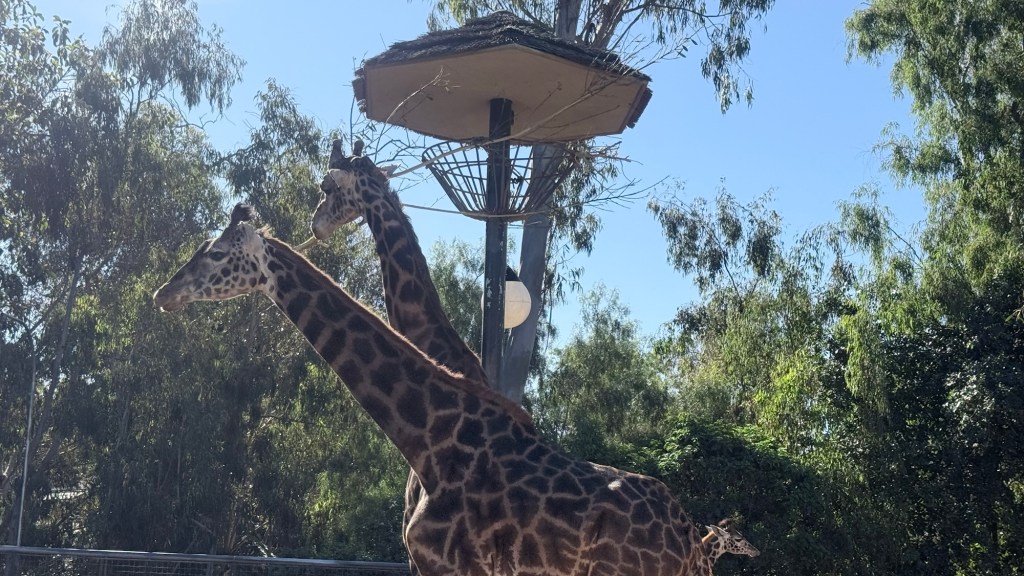
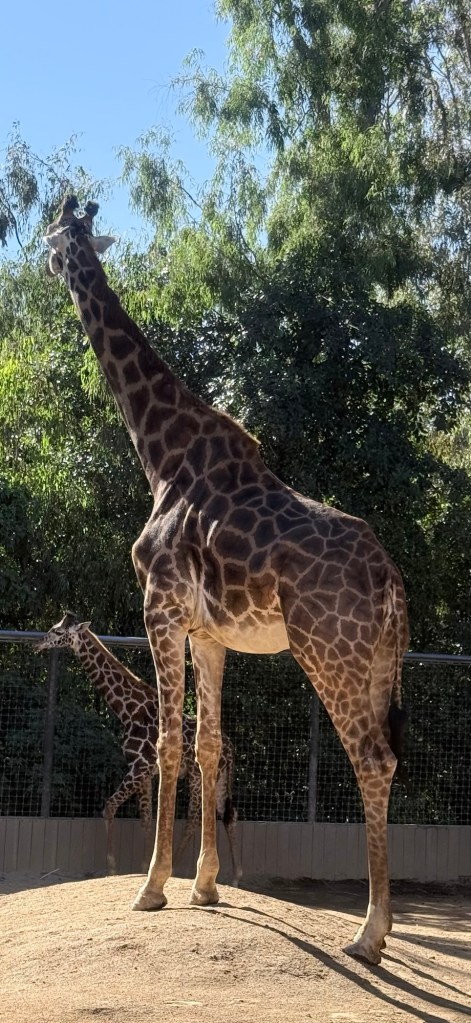
The giraffes were standing tall… 🦒
Giraffes are the world’s tallest mammal, known for their extremely long necks and distinctive spotted coats, and are native to Africa. They can reach up to eighteen feet and despite its length, a giraffe’s neck has only seven vertebrae, the same as humans. They are herbivores that browse on high tree leaves, usually acacia trees, consuming up to a hundred pounds daily. They use their height to spot predators; they can run up to thirty-five miles per hour and deliver powerful kicks to predators like lions. They have unique adaptations like a powerful heart and specialized blood vessels to manage blood flow to reach their heads. A group of giraffes is called a “tower,” and their coat patterns are unique to each individual, like a human fingerprint. Giraffe calves are born standing and can walk and run within hours. 🦒
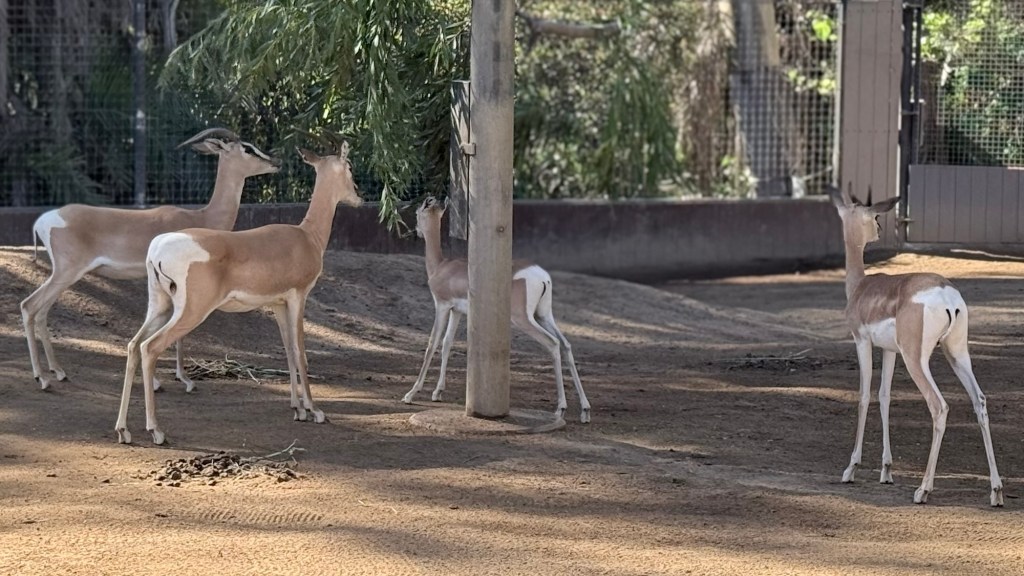
In our wanderings we discovered the delicate Springbok. The Springbok is a medium-sized antelope from Southern Africa, known for its striking reddish-brown and white coat, lyre-shaped horns, and a unique behavior called “pronking,” which involves stiff-legged leaps into the air up to nine feet, which is believed to signal fitness to predators; and if that doesn’t work the Springbok can also run up to sixty miles per hour! The Springbok is the national animal of South Africa and can survive without drinking water by getting moisture from plants, feeding on shrubs and succulents. 🦌
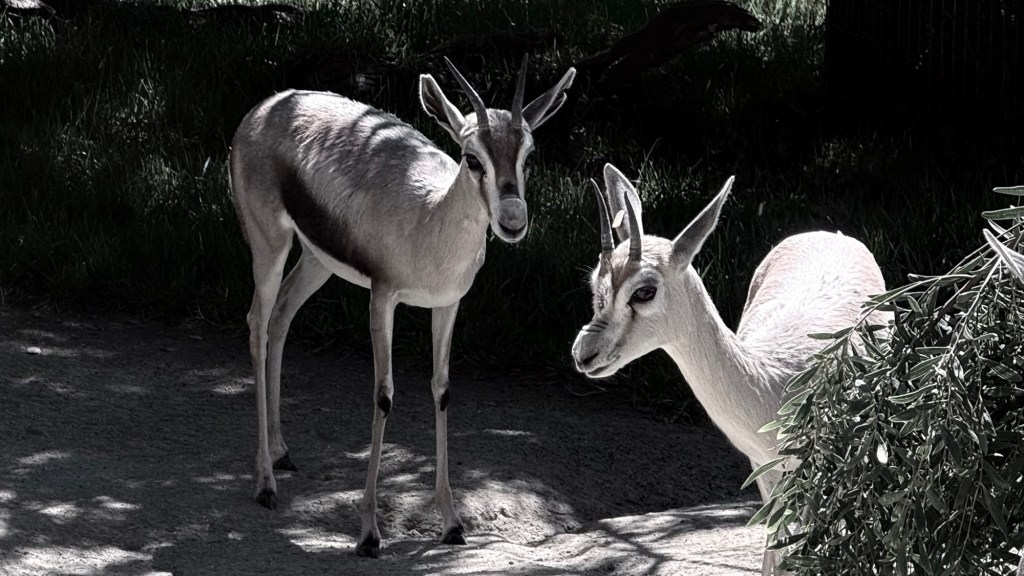
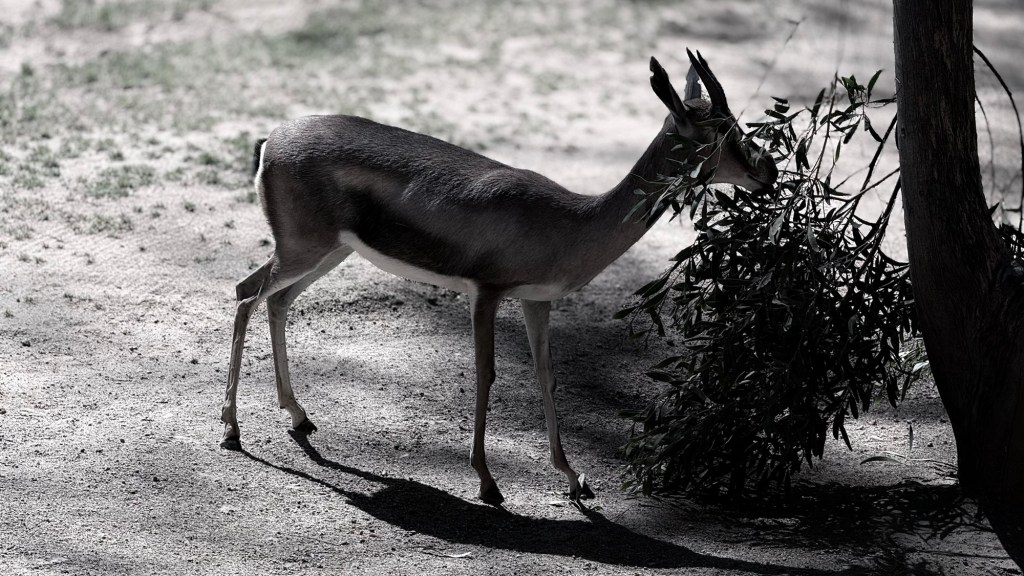
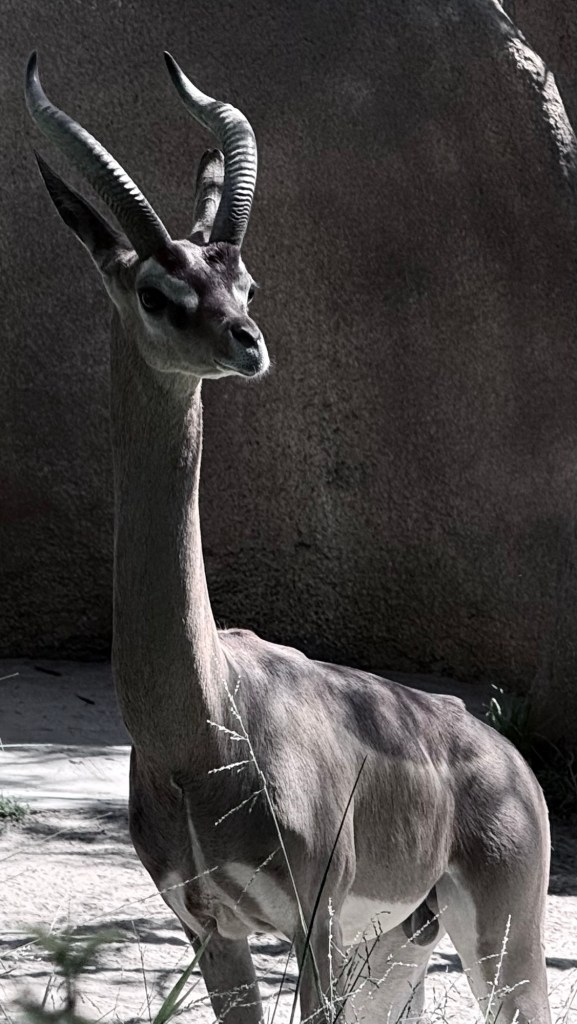
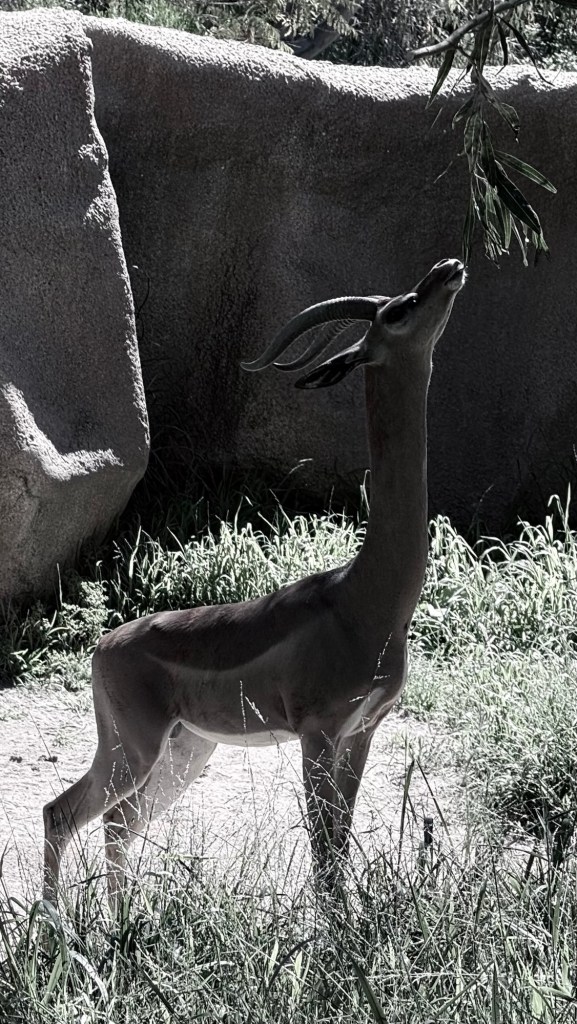
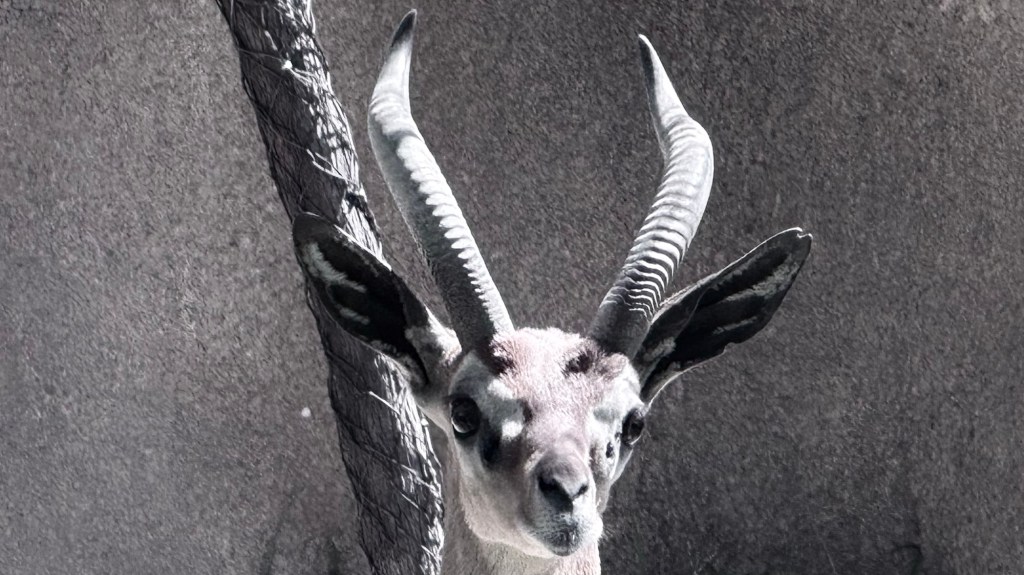
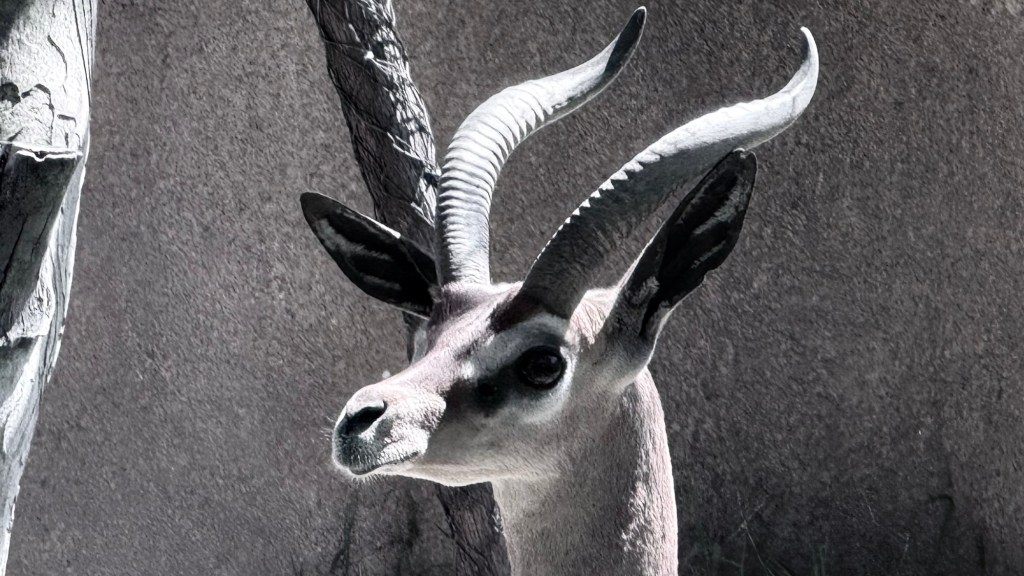
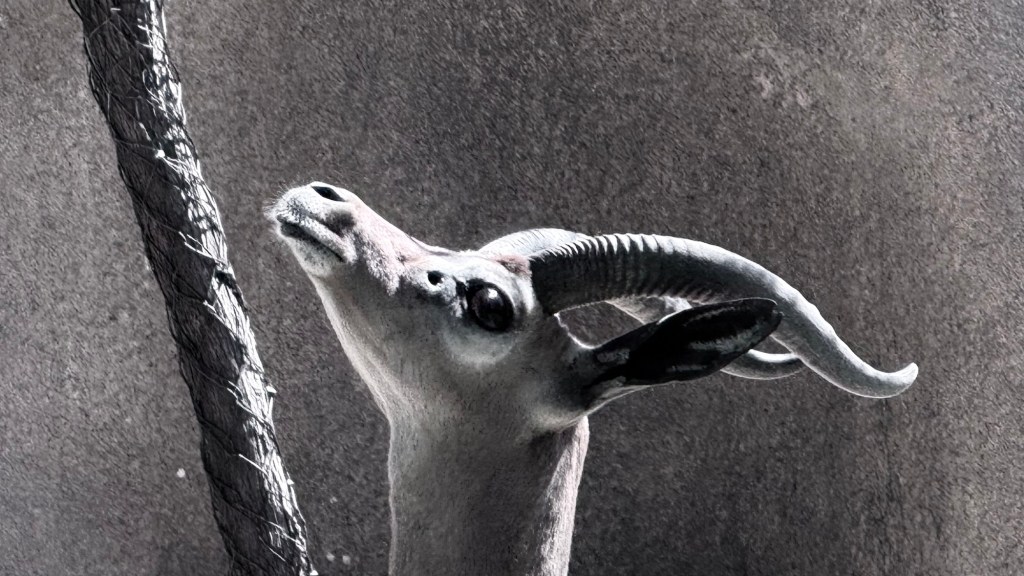
I found the Southern Gerenuk particularly photogenic. These agile creatures eat leaves and shrubs out on the dry plains of Tanzania and Somalia. Long legs and neck give a gerenuk height, but to reach taller branches a gerenuk will stand straight up on its hind legs. Only the male of the species have these elegant horns on their head.
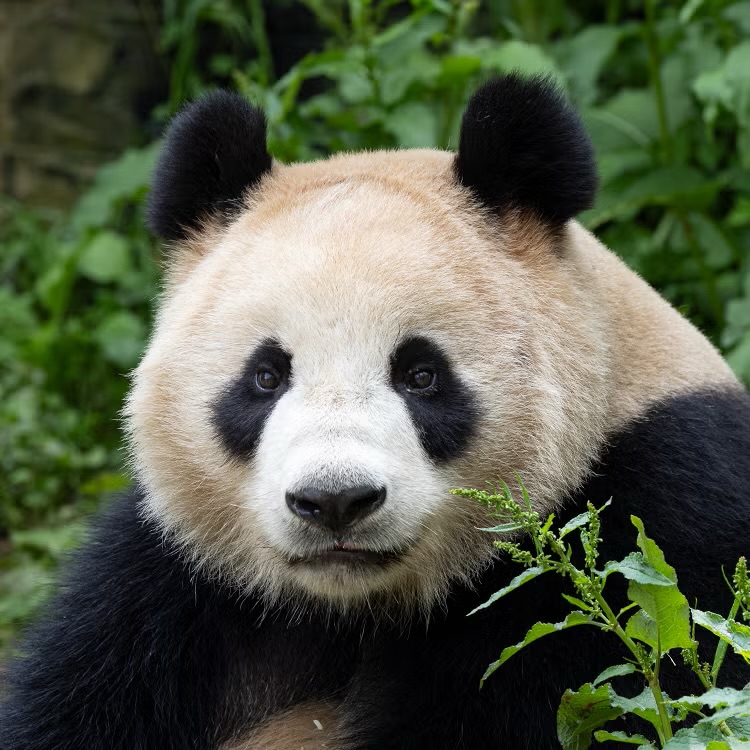
The San Diego Zoo is also famous for its Giant Panda Bears who have recently returned from China. 🐼
The Giant Panda, famous for its distinctive black and white fur coat and bamboo diet, which makes up 99% of its food. These solitary animals use a unique wrist bone as a “thumb” to grip bamboo, spending up to 14 hours a day eating. 🐼
The extra line to see them was long and the sun was hot so here’s a picture from the zoo’s website… 🐼
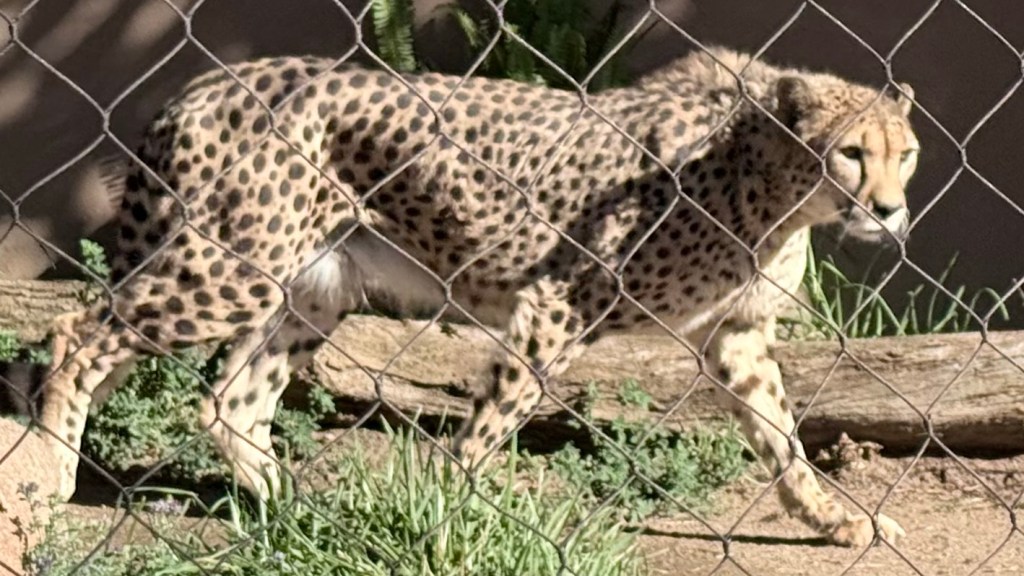
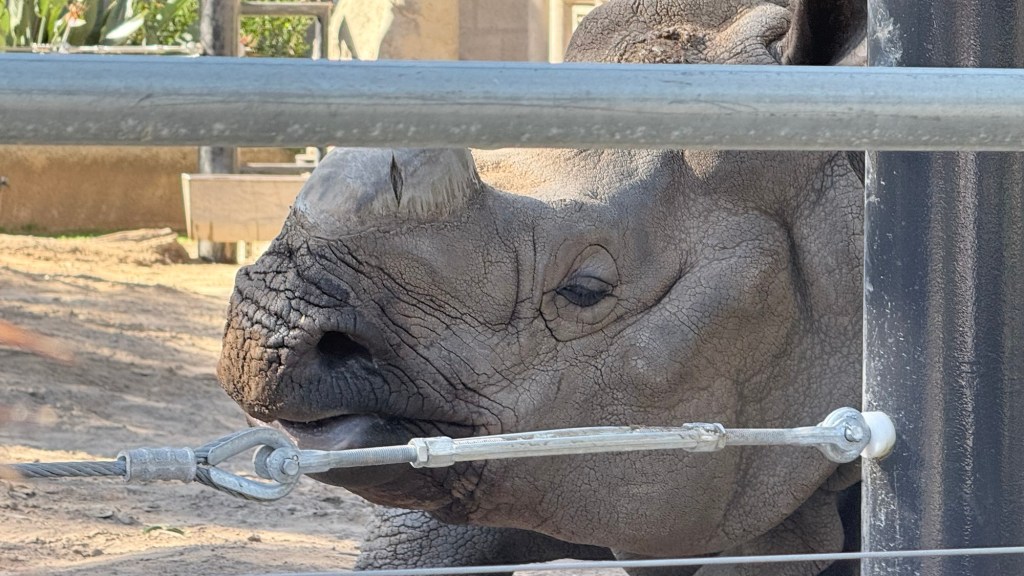
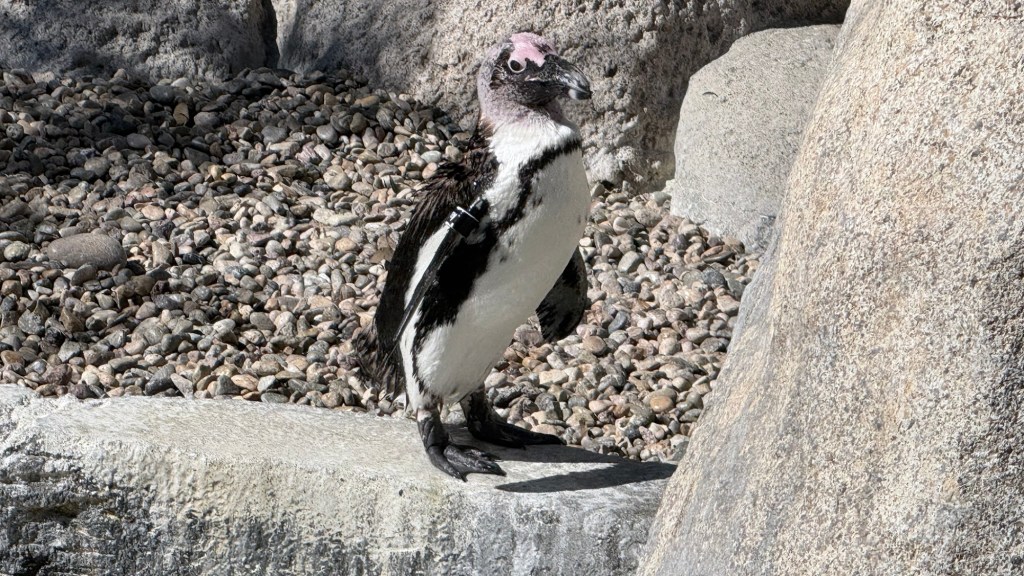
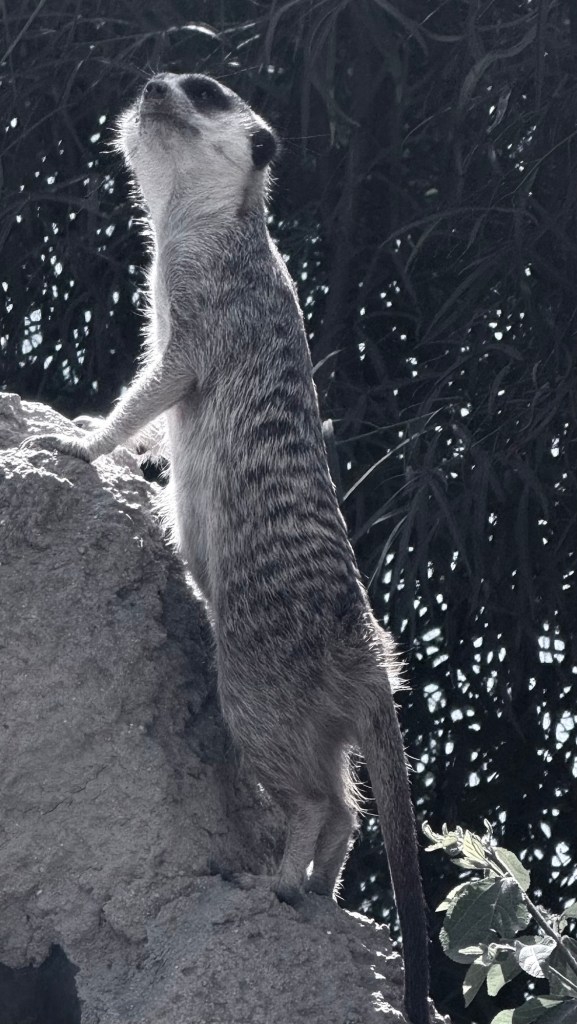
At the zoo there were also…
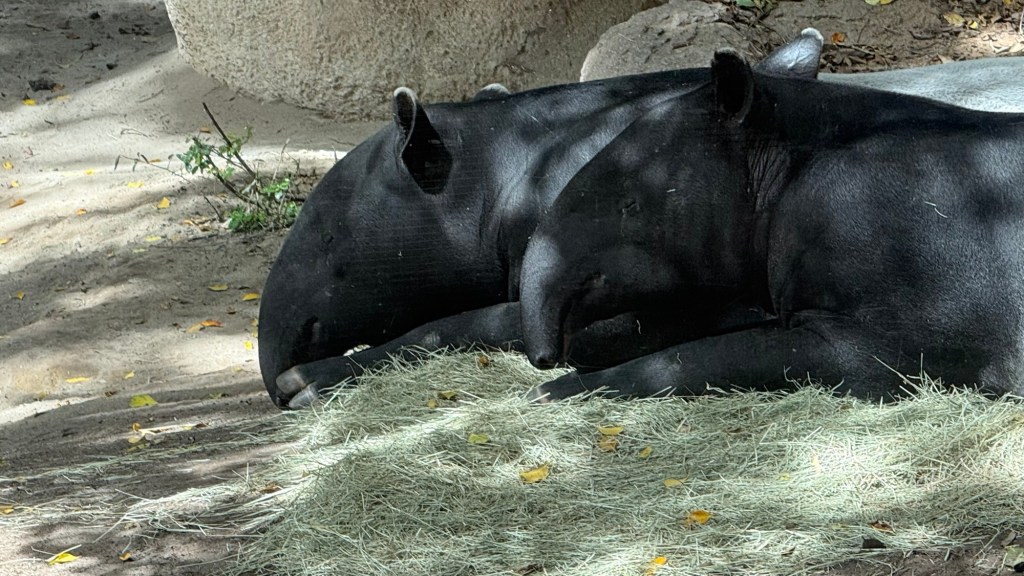
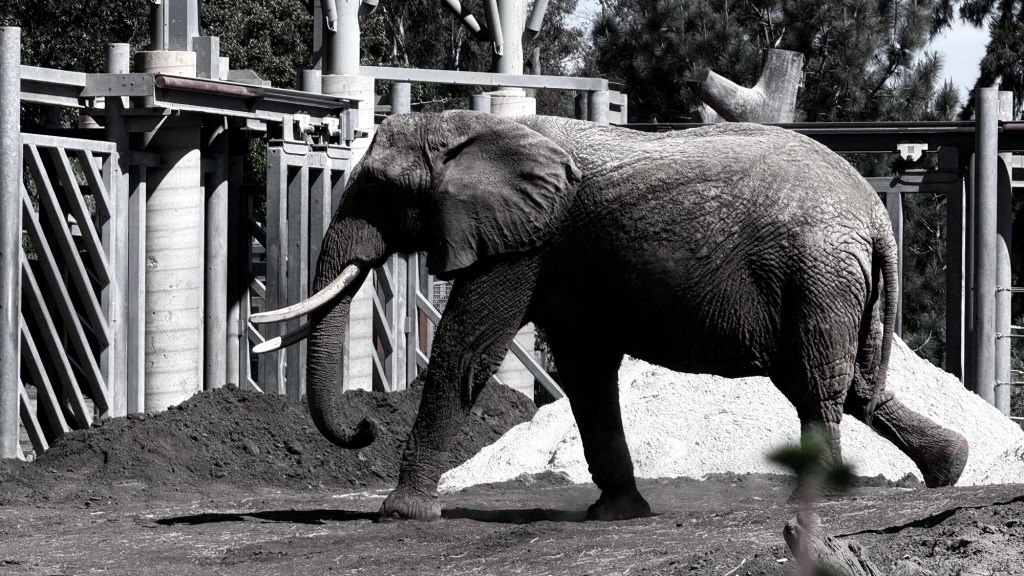
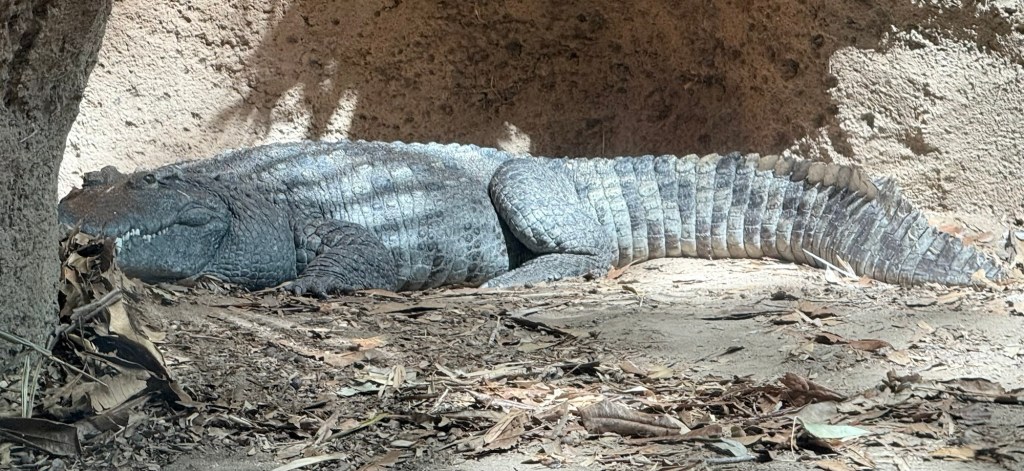
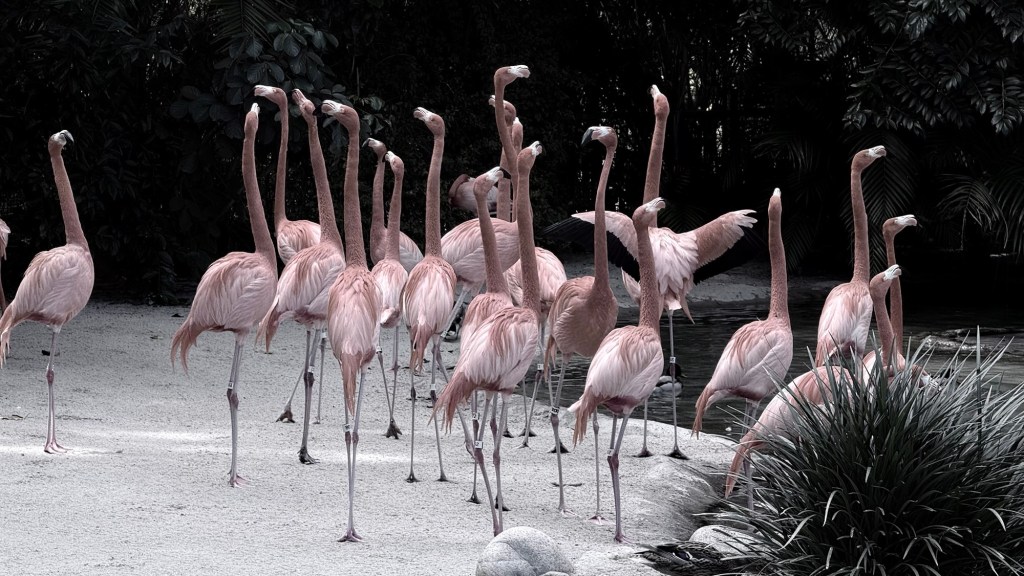
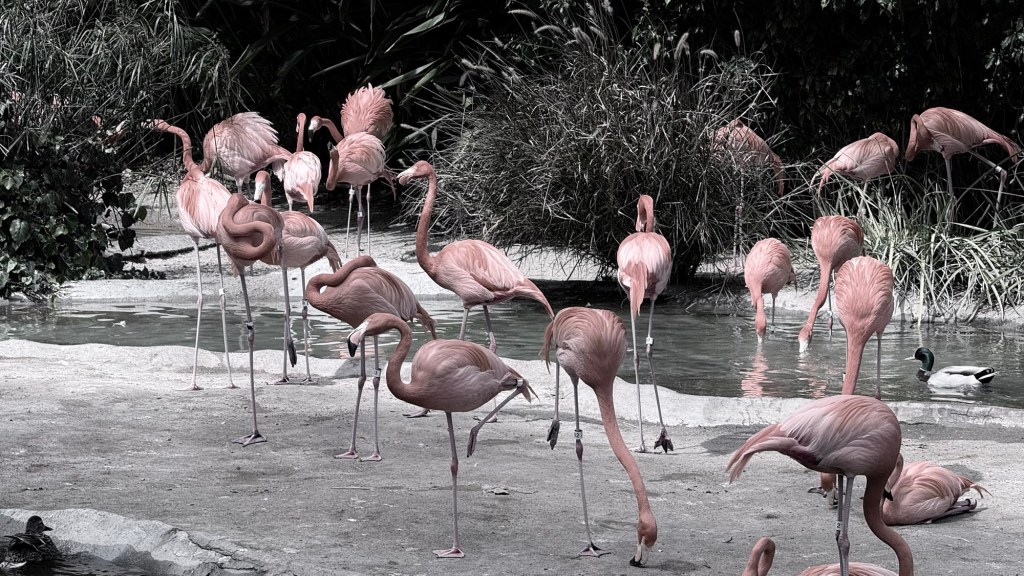
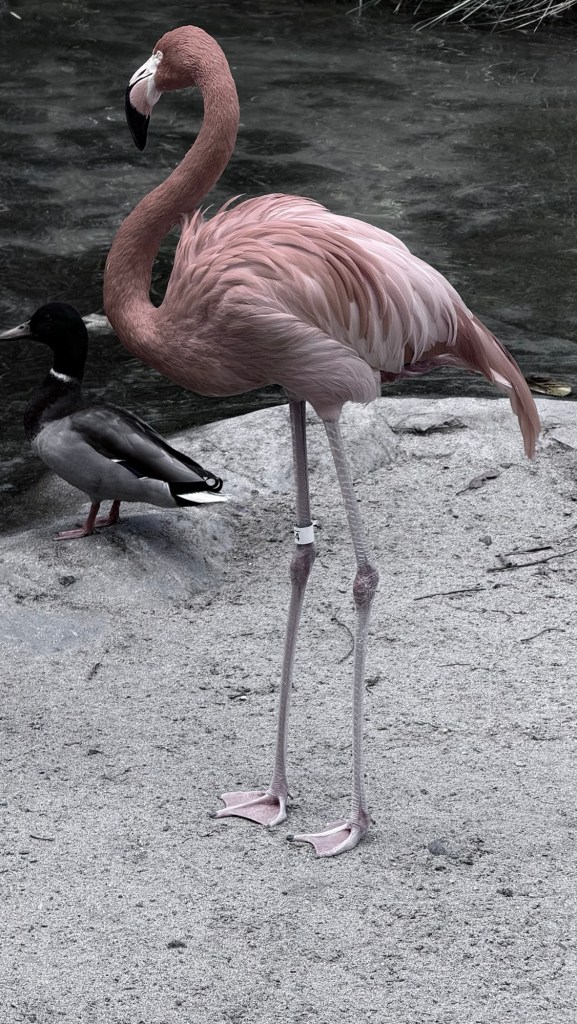
Of course, we couldn’t leave the zoo without visiting my Aunt Dale’s favorite birds, the American Flamingos. 🦩
The American Flamingo is a large, social bird known for its vibrant pink-to-red plumage, long legs, and distinctive downward-curved bill, making it the only flamingo species native to North America. Flamingo chicks, born in a single egg, are born gray and develop their pink color as they mature. Its color comes from pigments in its diet of algae, shrimp, and mollusks, and it filters food from shallow, brackish water using comb-like structures in its bill. These three-toed birds live in large flocks, often standing on one leg to conserve body heat, and can grow to be five foot tall with a five foot wingspan. 🦩
🦩🦩🦩🦩🦩🦩🦩🦩🦩🦩🦩🦩🦩🦩🦩🦩🦩
So…
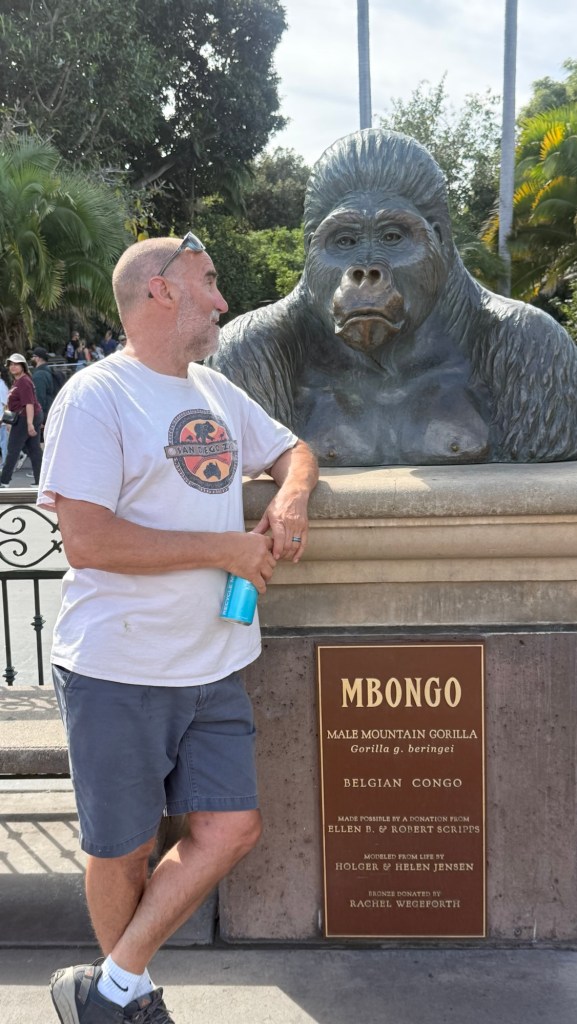
All in all, we had a pleasant day, walking about four miles in total, and seeing most of the zoo’s residents.
At lunchtime, the lines were long and the sun was hot at most of the food concessions but we stumbled upon a hidden gem near the front entrance that was camouflaged by tinted windows. The San Diego Zoo Sandwich Company was not crowded, it was air conditioned, and the sandwiches were delicious, especially the Turkey on Wheat. Shhh…it’s our secret! 🤫

I sometimes feel heavy-hearted for caged animals after leaving some lesser zoos, animal exhibits or the circus, like the animals are serving some sort of prison sentence or penance. I appreciate the endeavors the San Diego Zoo Wildlife Alliance puts forth to make the animals feel like they’re in their natural habitat and not just caged animals. I also appreciate the achievements they make in actively preserving and protecting animals in the wild with conservation and species-preservation efforts. The zoo has helped increase populations of endangered animals worldwide, both in captivity and in the wild.
They also have a sister park, the San Diego Zoo Safari Park in nearby Escondido, which is like a wide open savanna that gives the animals many acres to roam. The expansive open-range enclosures mimic natural environments for African and Asian wildlife. Here animals like rhinos, giraffe and wildebeests can roam in herds. They just recently opened a new elephant area there that gives the pachyderms an entire valley to wander.
If you’ve been there or here to the San Diego Zoo, you know this is truly is a special place.
I hope you get a chance to visit this iconic zoo.
The gam continues…

 American Gam