American Gam
Velella VelellaA great American road trip
 | Peace on Velella Velella |
| Peace on Farm Life |
| Peace on San Diego Zoo |
 | wareynolds1 on Superbowl |
| Peace on Superbowl |
“A creature with a sailor’s mind, a ready sail, but blowing blind!” ~ Salt City Verse
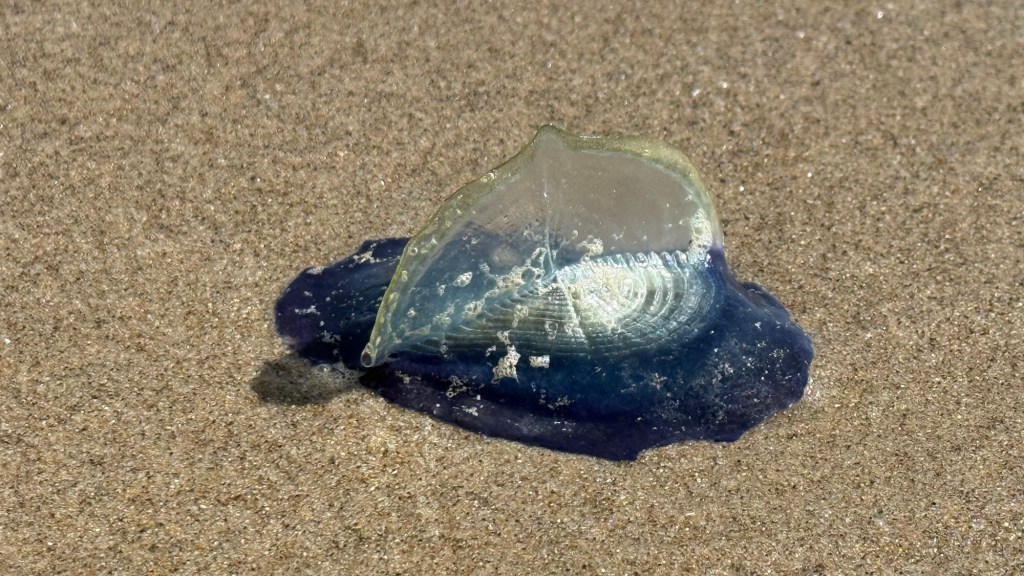
After two months of vacationing, we left San Diego. We will miss the splendid daily sunsets out our back window…
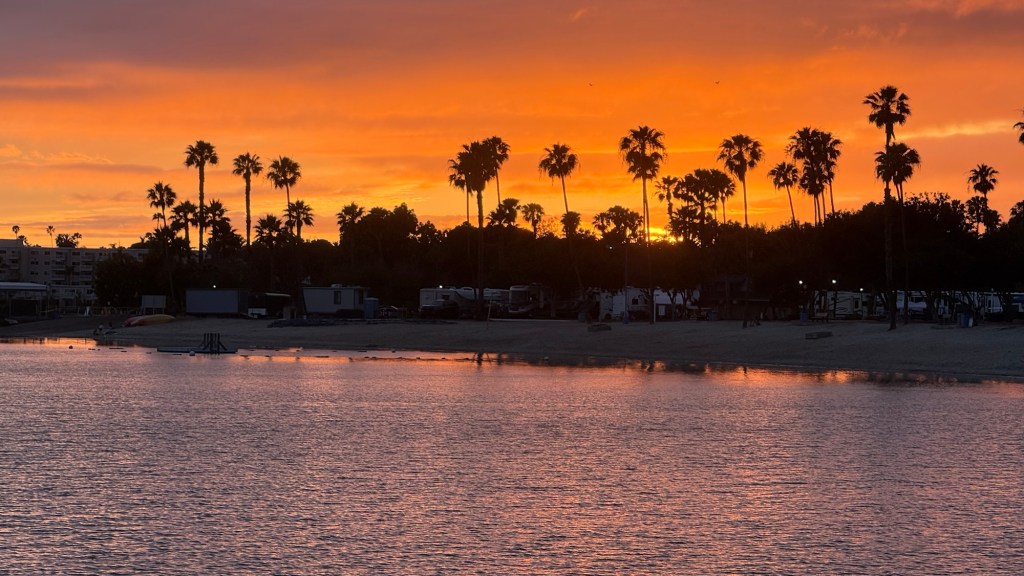
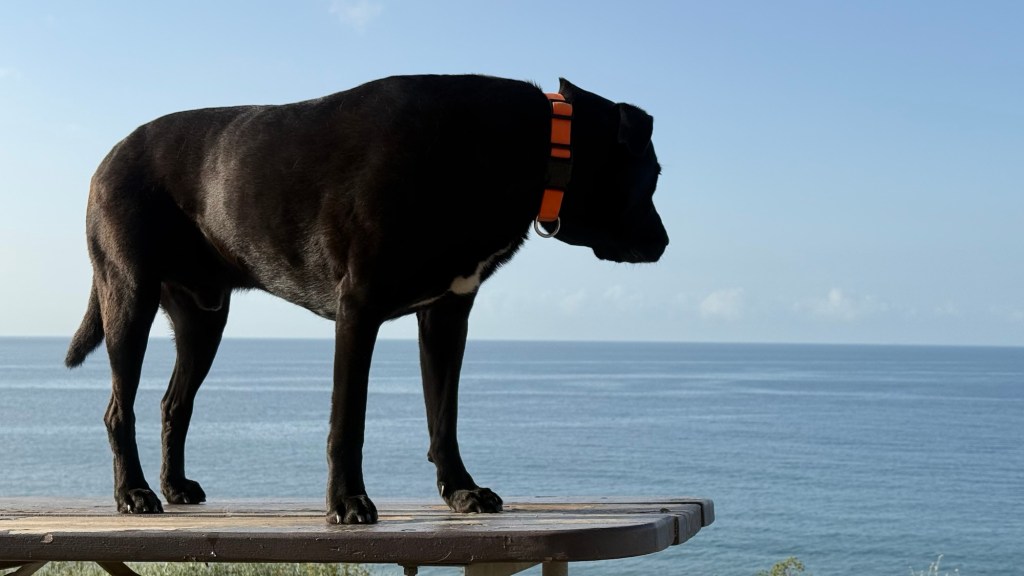
…and Kodi will miss his favorite spot on the planet…Fiesta Island.
From there we spent two restful days in our old haunt, Malibu RV Park. As you might recall, we were “stuck” there last year when I had to complete my cardiac rehab after my triple bypass surgery. But now I have all new plumbing and enjoyed my healthy time there just staring down at the big, beautiful, blue Pacific Ocean…
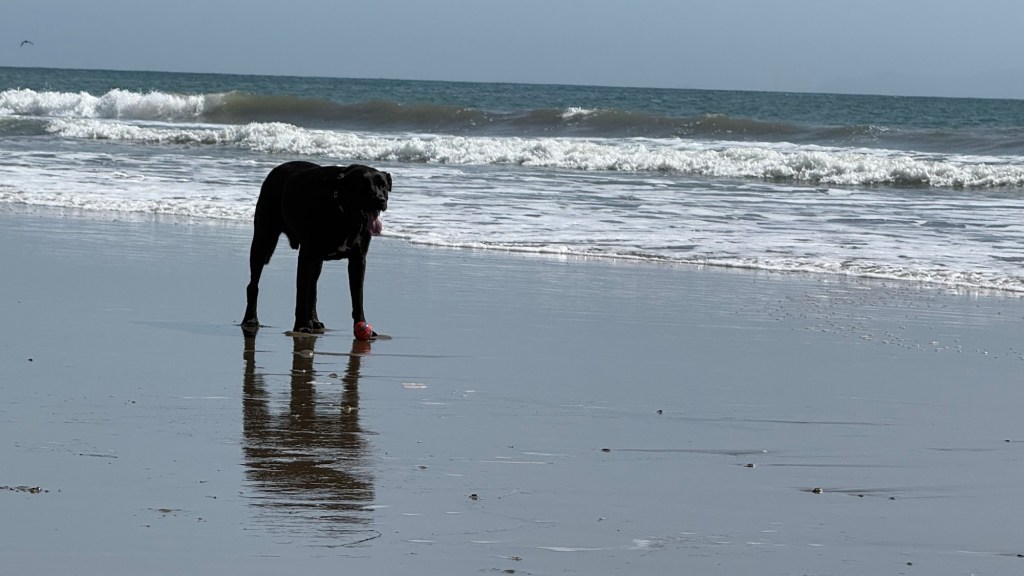
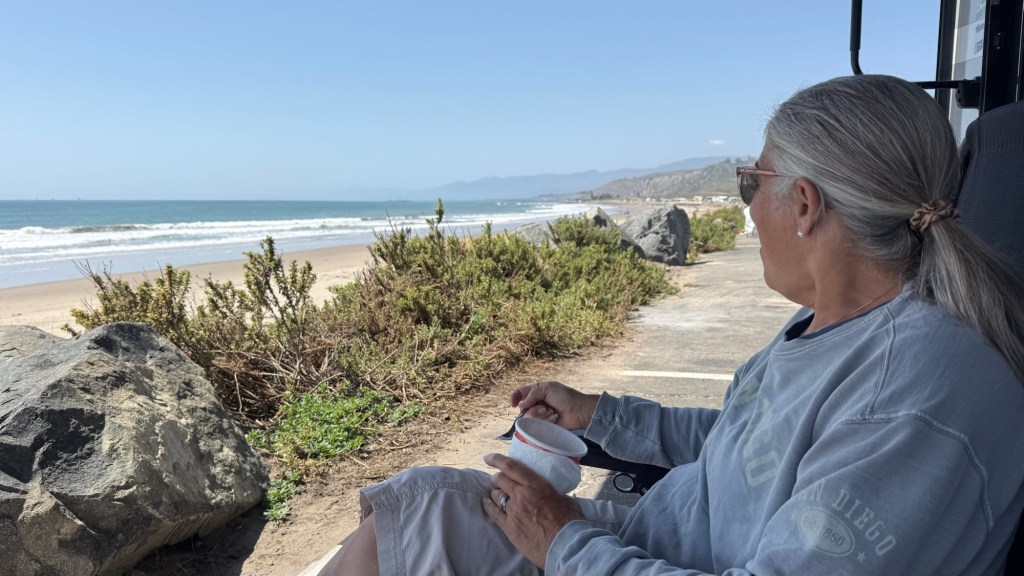
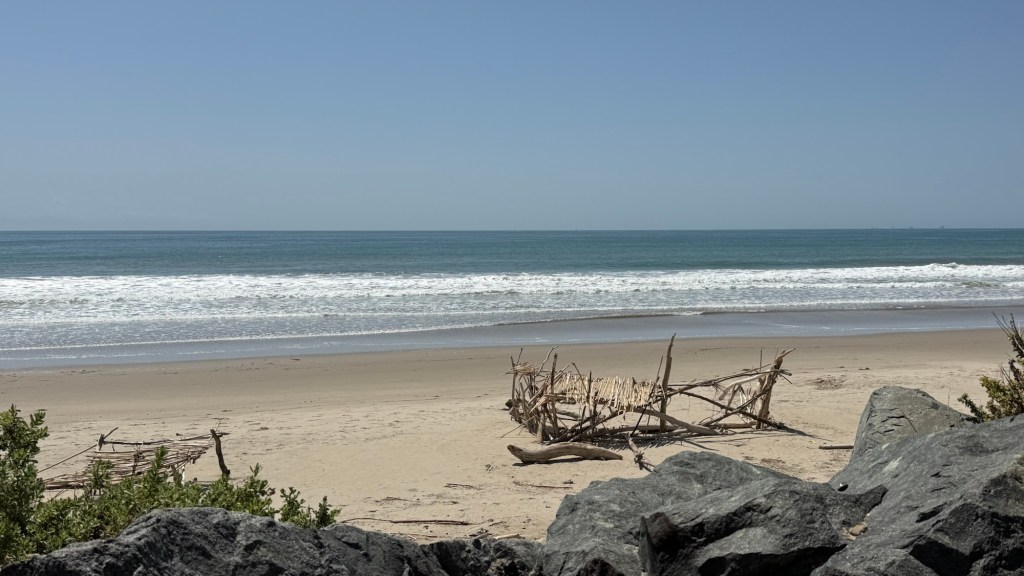
This morning we drove an hour north of Malibu to spend the weekend at another one of our favorite places…Rincon Parkway Campground in Ventura County! I wrote a post about this place last year, if you remember…? This is where the beach is our front yard and the waves become our sleep medicine…
But this time we discovered something new here, something neither of us had ever seen or even heard of before, which you are now about to discover (perhaps) for the first time also!
I am talking about the title of this post: Velella Velella.
Have you ever heard of them? Have you ever seen one? Well, my friend, get ready for today’s nature lesson!
We were walking down on the beach in front of our campsite when we noticed hundreds of small blue jellyfish.
Well! In turns out they’re not exactly jellyfish. After doing some research I discovered that they are Velella Velella and they are more akin to the Portuguese Man-o-War, which is a sub-species of jellyfish. But more than that, each one of the Velella are actually their own floating colony! I’ll explain…if I can…?
Each “individual” with its sail is really a hydroid colony of specialized polyps, not a single animal, with some of the polyps forming the float and reproductive parts and others forming the feeding tentacles that hang below. This symbiotic connection is united by a canal system that enables the colony to share whatever food is ingested by individual polyps. Each Velella is a colony of either all-male or all-female polyps and may live a life-cycle of several months.
The chitinous, air-filled, sail-bearing disc that floats on the surface feeds on plankton, while the short tentacles hanging down below feed on plankton and fish eggs floating nearby. The polyps also contain zooxanthellae, which are single-celled endosymbiotic organisms that provide energy in the form of sugars through photosynthesis, much like your house plant does when it soaks up the sun.
Asexual reproductive polyps on the underside of the colony produce thousands of tiny, free-swimming jellyfish called medusae. These medusae are less than two millimeters in size. These tiny medusae break away from the colony and sink into deeper water where they mature. The medusae release eggs and sperm into the deep ocean. Fertilized eggs hatch into planula larvae, which then develop into a larval stage that grows a sail, develops oil droplets for buoyancy, and rises to the surface to become a new, small polyp colony that can be about one to three inches in size.
Their firm disc-like body is blue to purple in color before it turns clear and brittle after washing up to shore and drying out on the beach. That blue pigmentation is actually designed to protect the Velella from the bombardment of the Sun’s rays as it floats on the surface of the ocean.
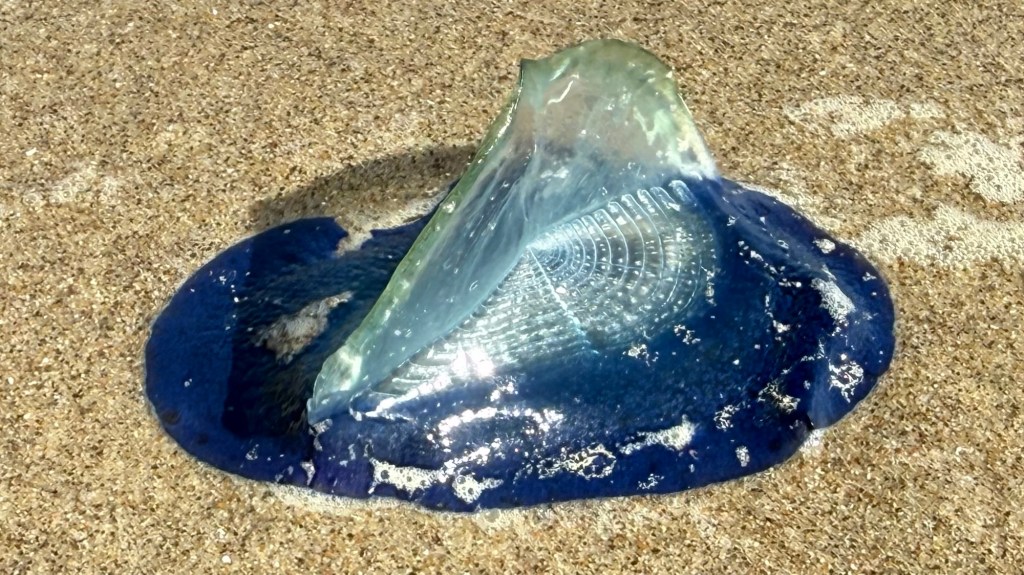
As you can see their bodies have a clear, chitinous semicircular sail which sticks up above the water with a blue float beneath made of concentric circles of gas-filled chambers.
Velella live in warm and temperate waters in all the world’s oceans. They live at the water/air interface, with the float above the water, and polyps hanging down below. Organisms that live partly in and partly out of the water like this are known as neuston.
Having no means of locomotion other than its sail, the Velella is at the mercy of prevailing winds for moving around the seas, and are thereby also subject to mass-strandings on beaches throughout the world, particularly in spring when their life cycles are often synchronized to feed during spring plankton blooms. They are also at the mercy of predators such as sea turtles, albatross, and sunfish.
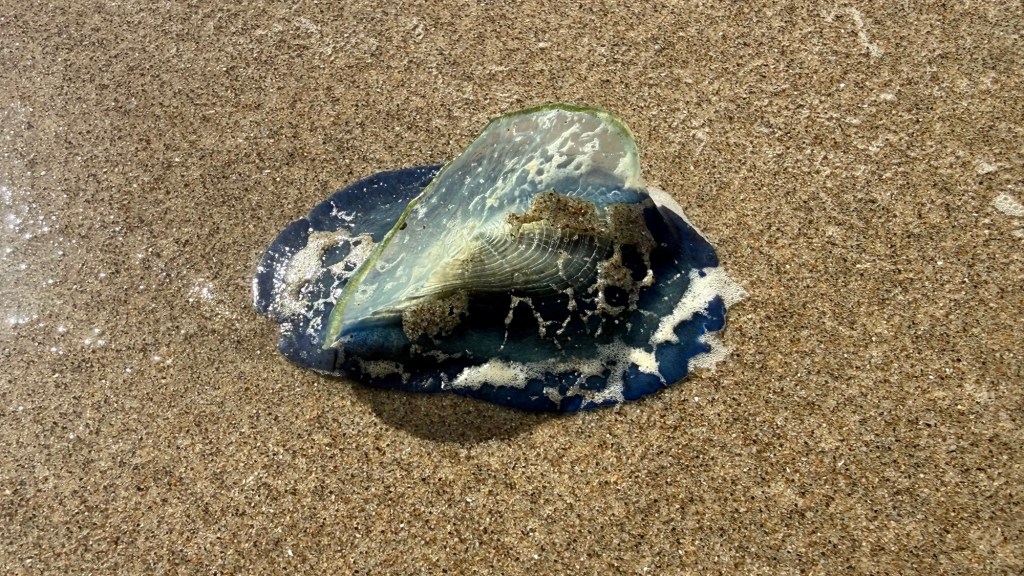
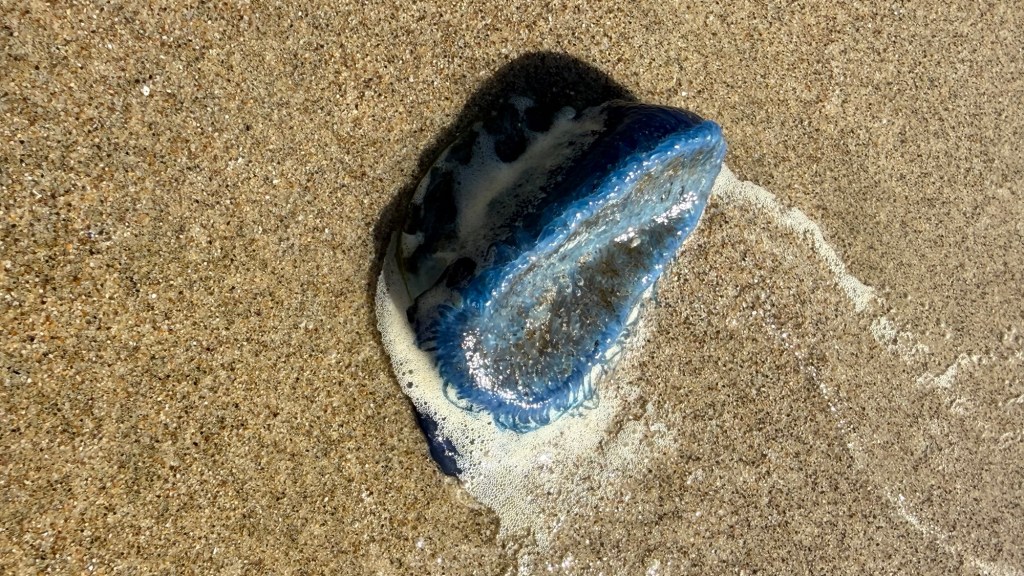
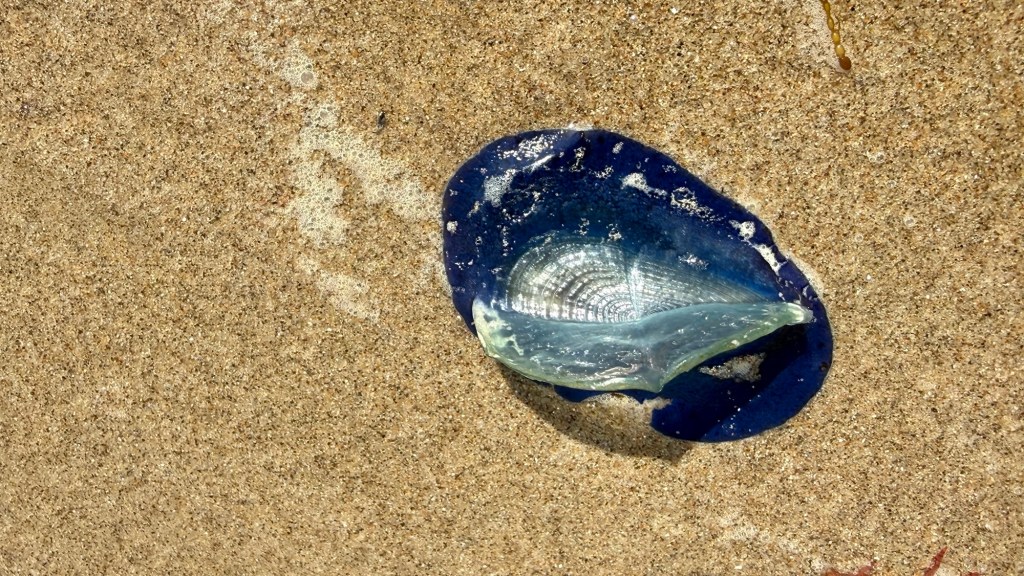
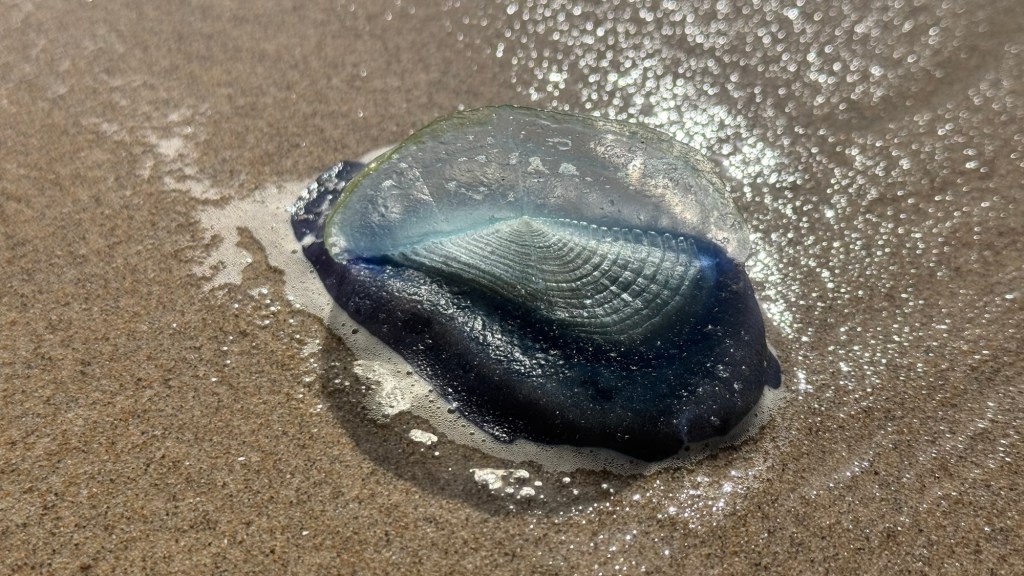
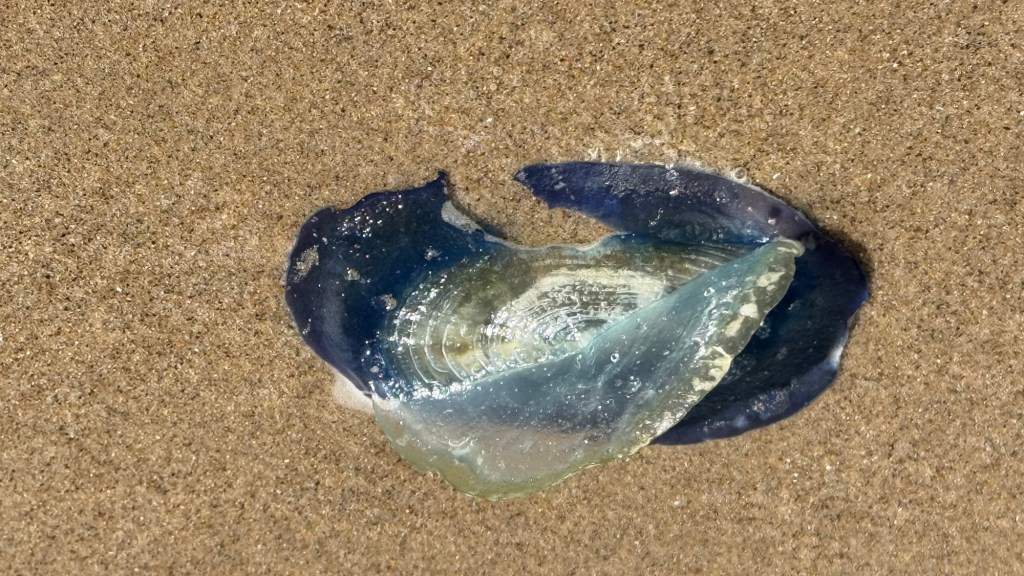
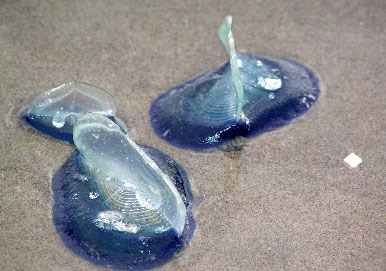
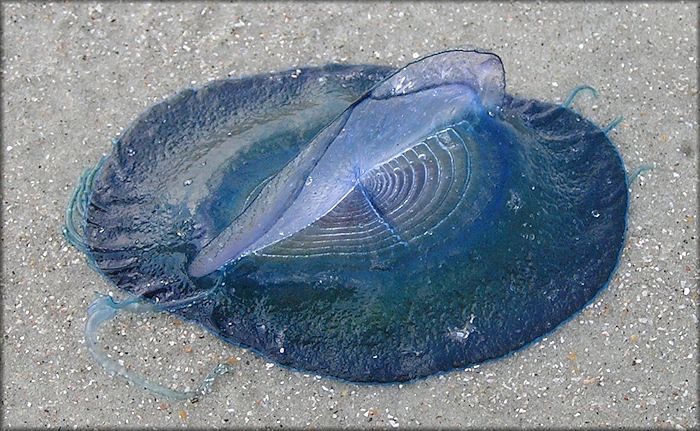
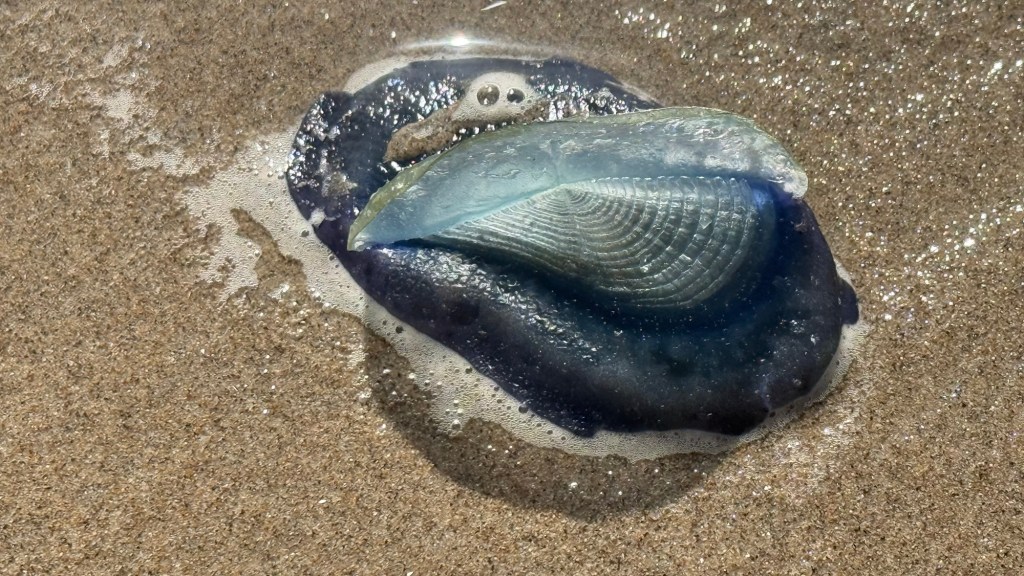
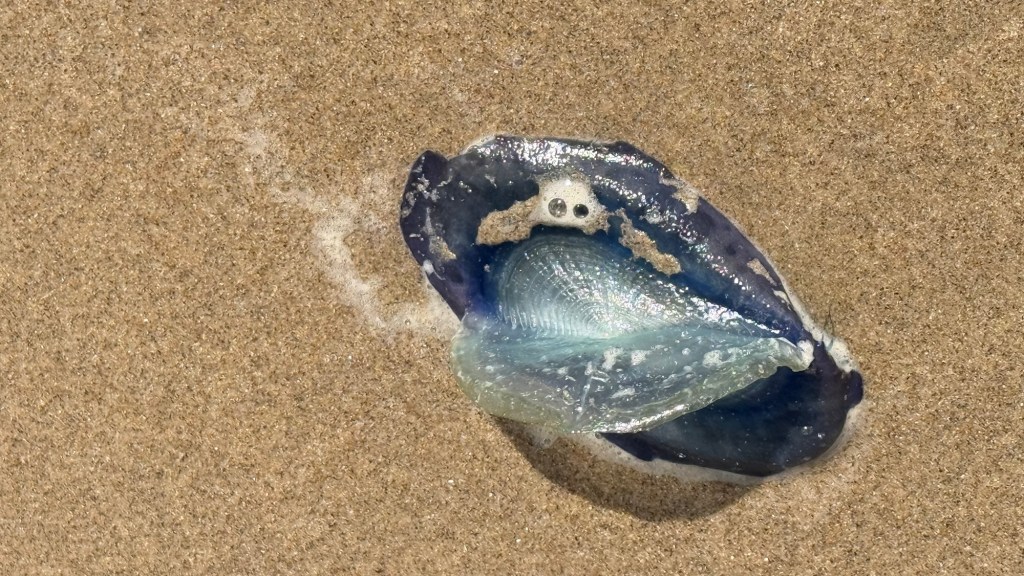
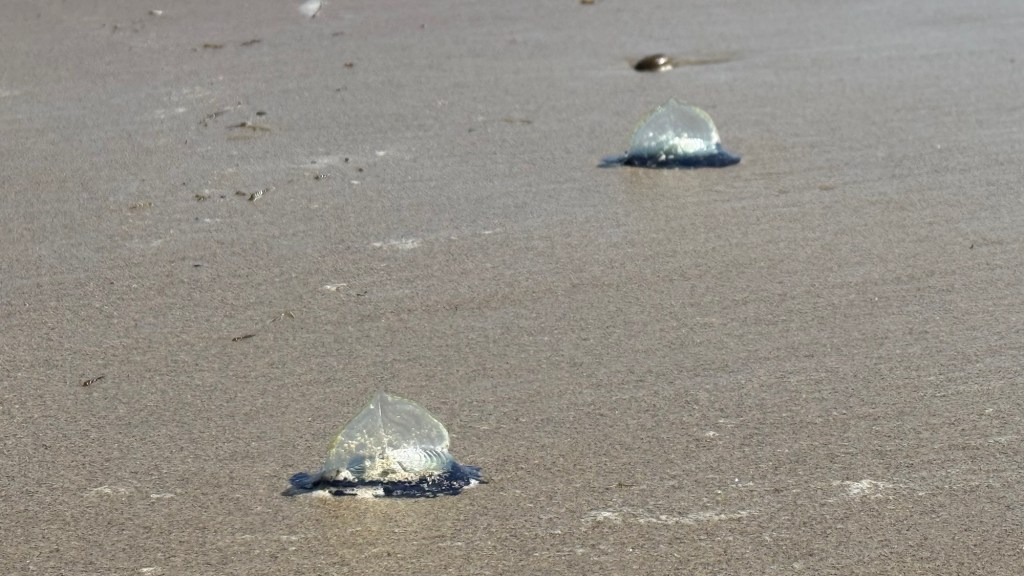
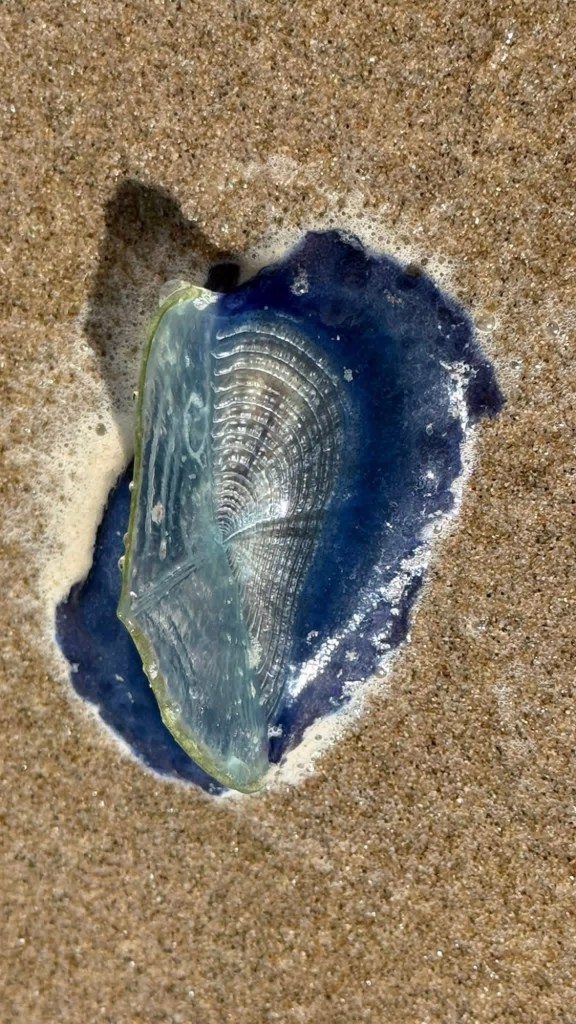
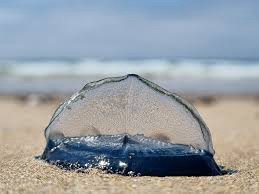
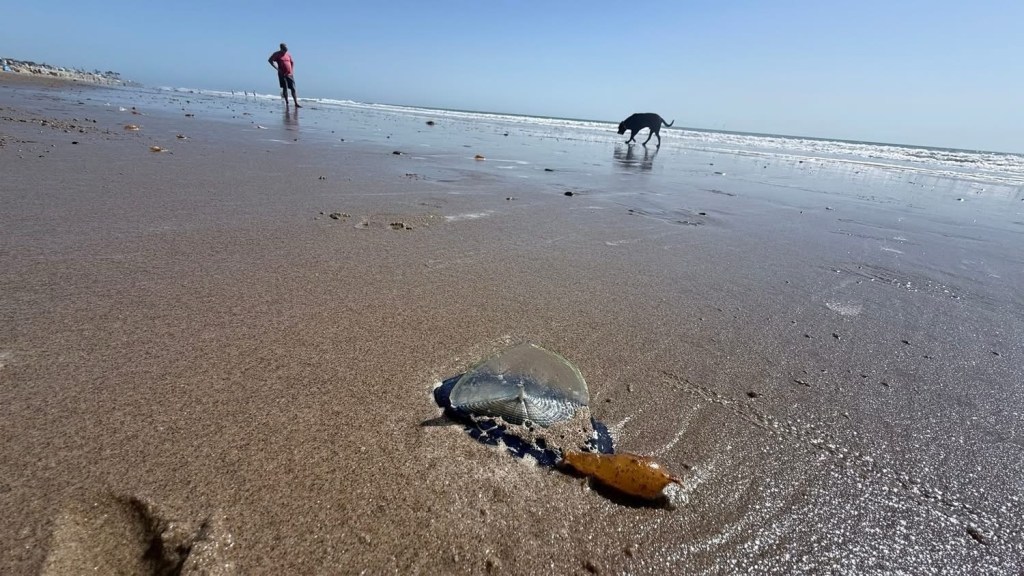
Here’s one that’s dried up, colorless and lifeless. There were an equal amount of these on the shoreline also.
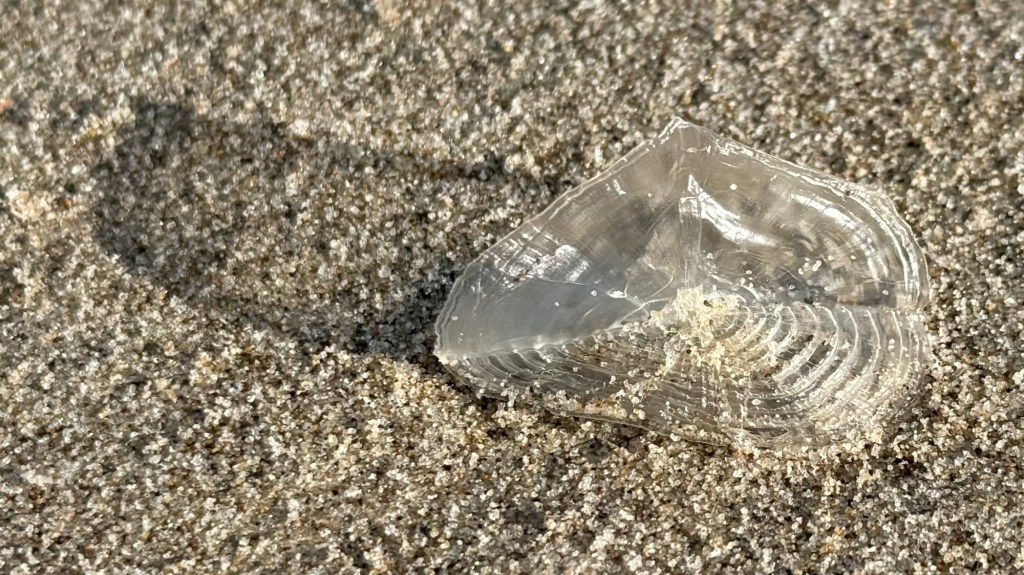
If you see any of these colonial creatures on your coastline, don’t worry, they not poisonous to humans…just don’t let your dog eat them!
I hope you get to see these fascinating wonders of nature personally.
The gam continues…

 American Gam
Super interesting! I learned a lot thank youSent from my iPhone