
American Gam
The Journey MuseumA great American road trip
 | Peace on Beavertail |
 | WAReynolds on I-90 |
| Peace on I-90 |
| Peace on SPAM |
| Peace on Green Giant |
“Life is a journey that must be traveled no matter how bad the roads and accommodations.” ~ Oliver Goldsmith
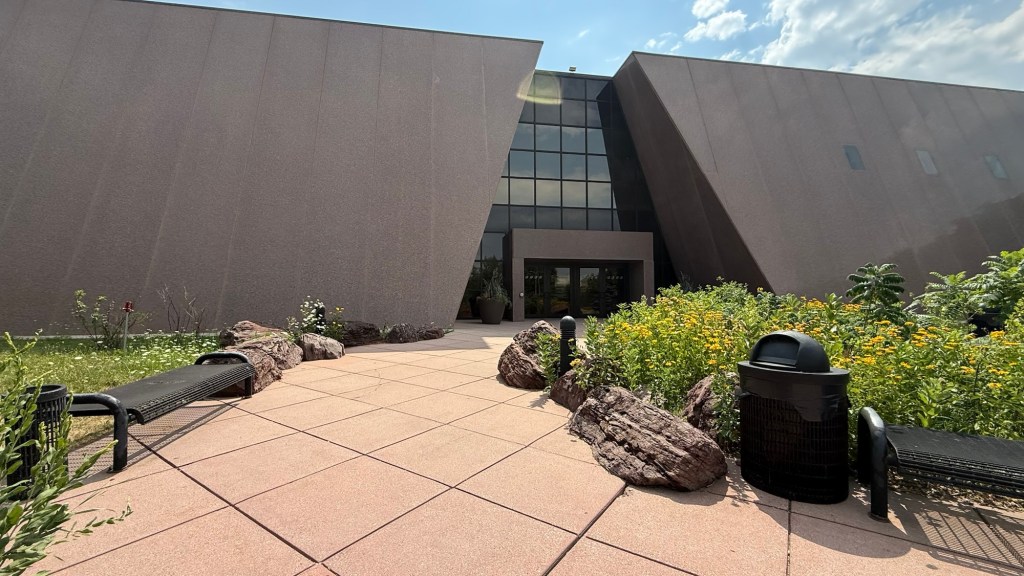
The Journey Museum in Rapid City, South Dakota is dedicated to the education of the history of this region. They have a vast collection of artifacts from the time the Black Hills were being created in a violent upheaval of molten lava to the giant dinosaurs who thunderously stomped around on this land; to the Native Americans who called this area home for ten thousand years to the eastern settlers who came more recently to these hills seeking a fortune in gold. The studies of geology, paleontology, anthropology, and archaeology help tell the story at this museum that spans over two million years of Black Hills history.

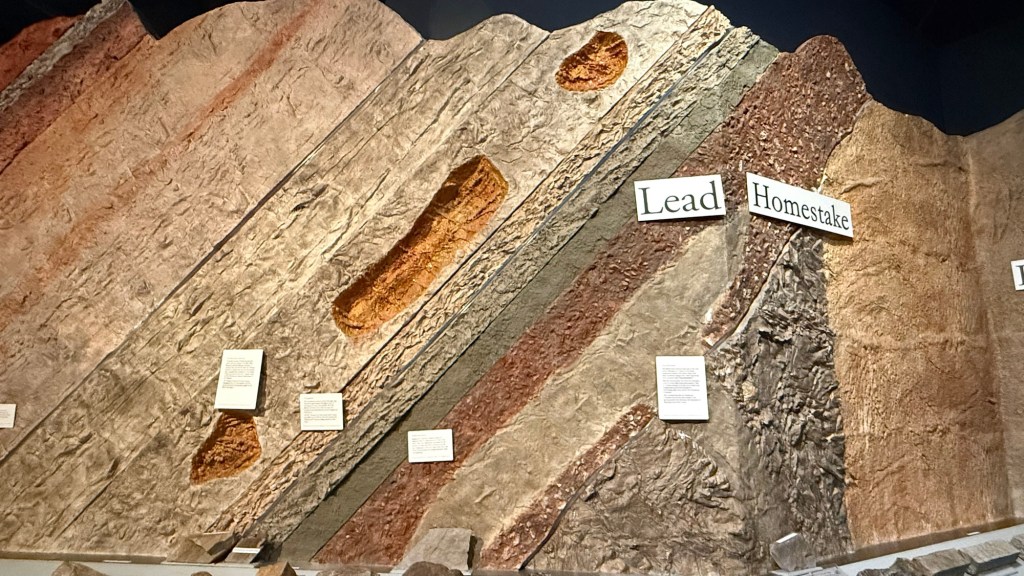
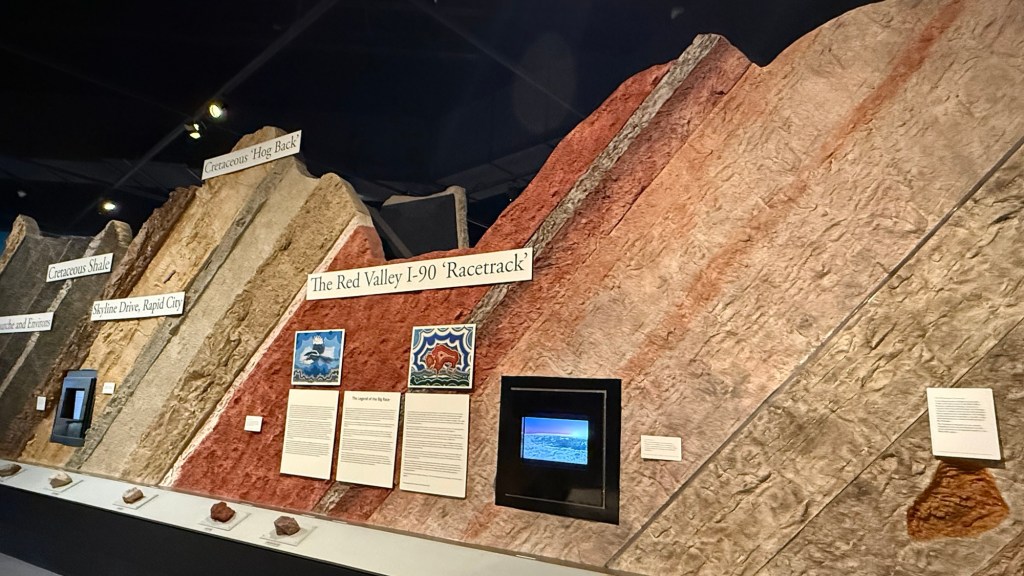
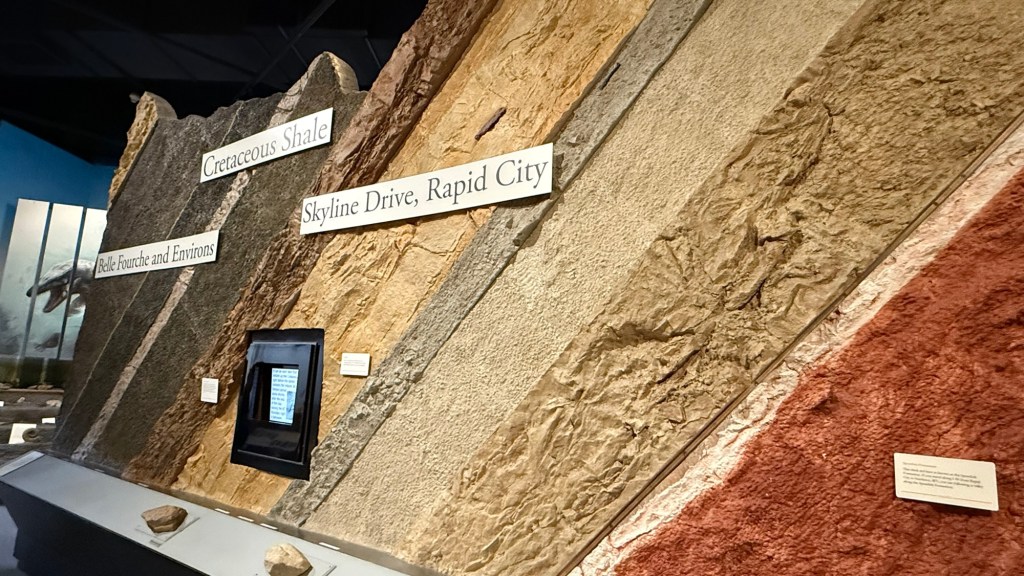
The following pictures show the vast geologic diversity from the lower Great Plains to the peaks of the Black Hills.
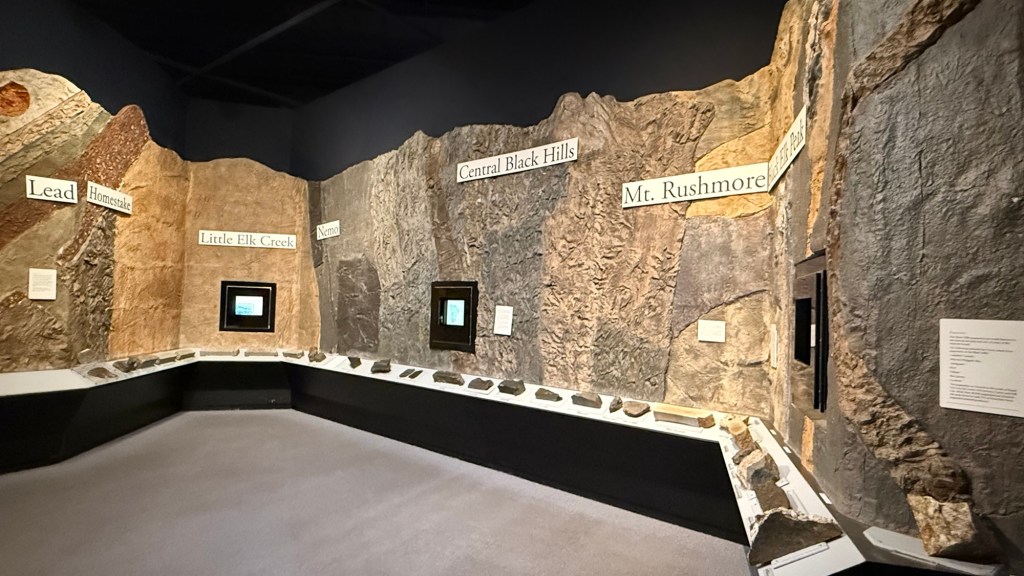
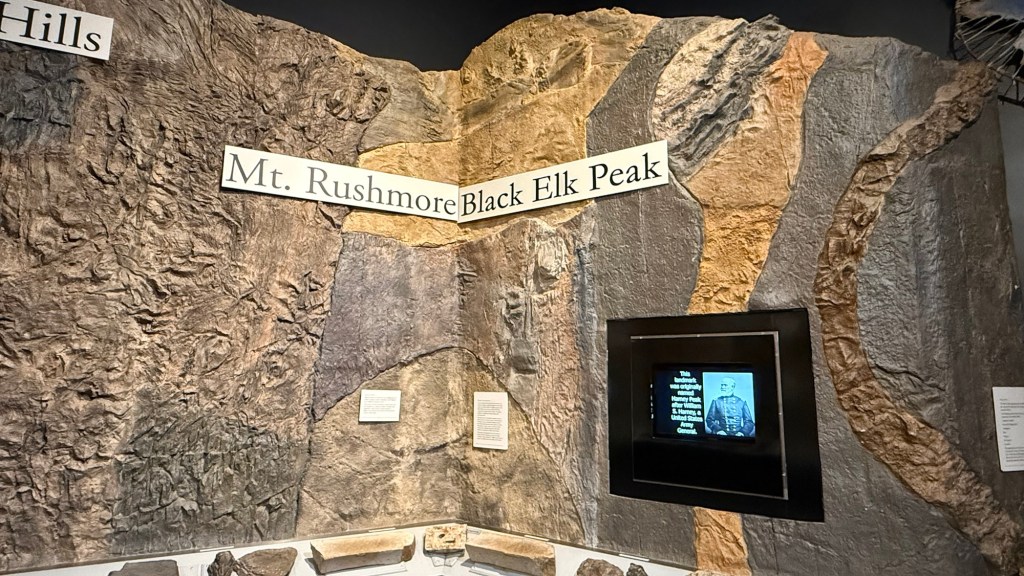
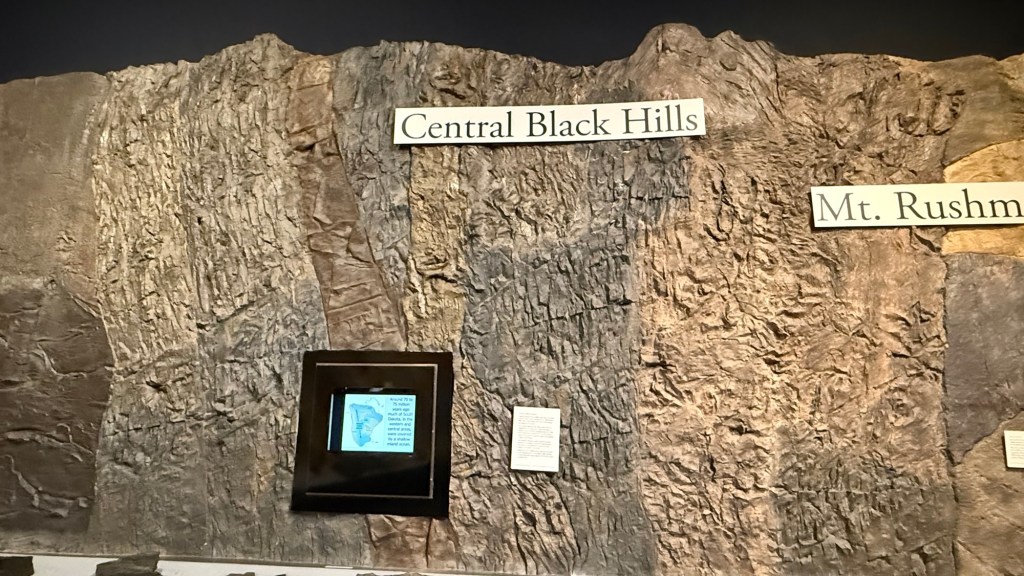
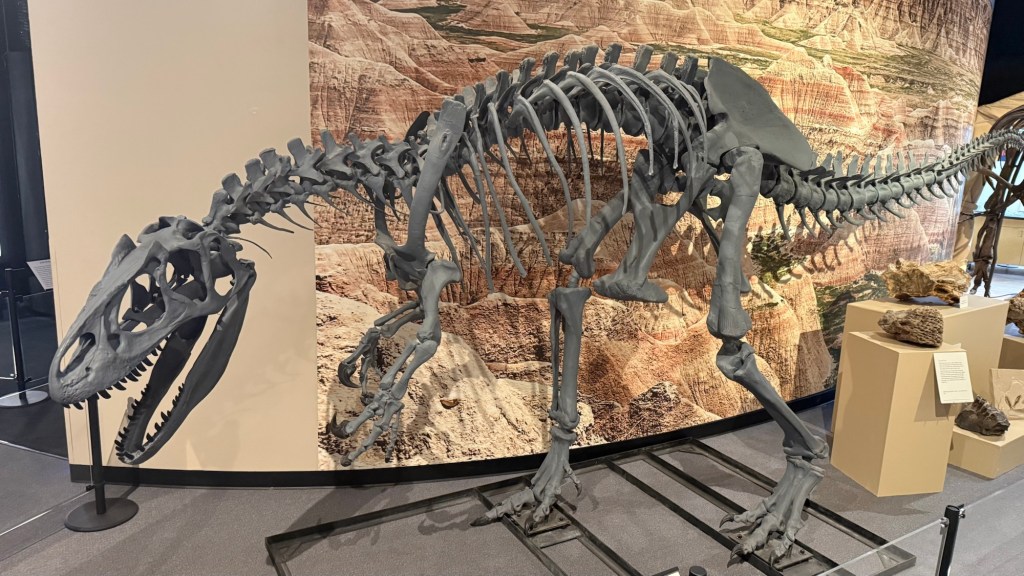
Here we have some of the local residents who roamed around the neighborhood a few million years ago. Interestingly, Allosaurus and T-Rex never lived in the same time period – a million years of time separated them!
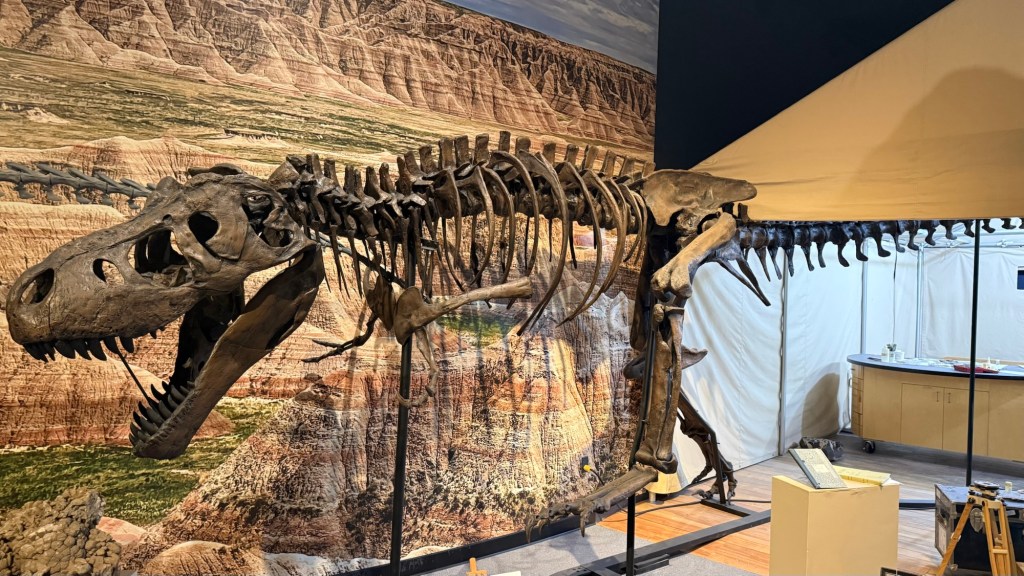
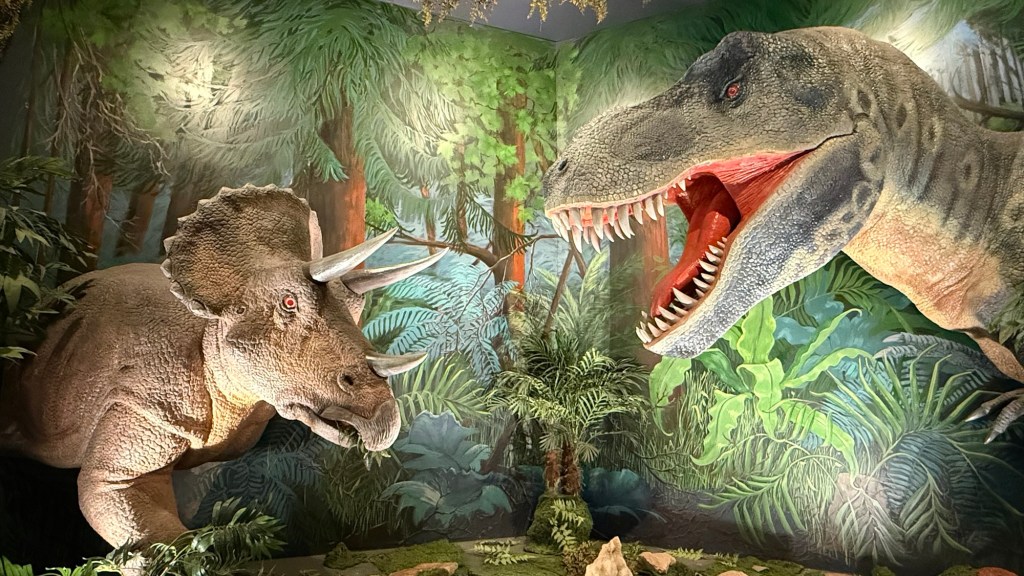
Here we will jump forward a couple of million years to the local Homo Sapiens.
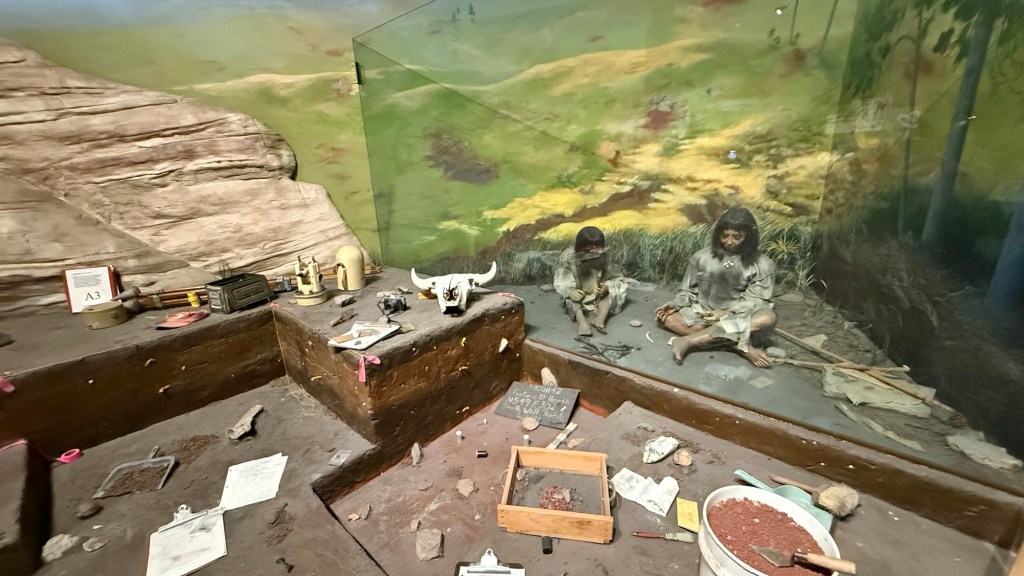
The above picture shows a then-and-now model of an archacological site called the Jim Pitts Site. This Paleo-Indian campsite is important because it is the oldest known location of humans living in the Black Hills, dating back almost twelve thousand years. It was discovered in 1991 during a land survey prior to the reconstruction of Highway 16, which is the road leading to Mount Rushmore. After numerous artifacts were found, a full archaeological excavation began in 1992. By the time the excavation was completed in 1993, archaeologists had made many discoveries. To this day, the Jim Pitts Site is considered incredibly significant because of the variety of its artifacts. Among such artifacts were many mammoth, bison, deer and pronghorn remains, knives, and tools – all tracing their origins to the Black Hills area.
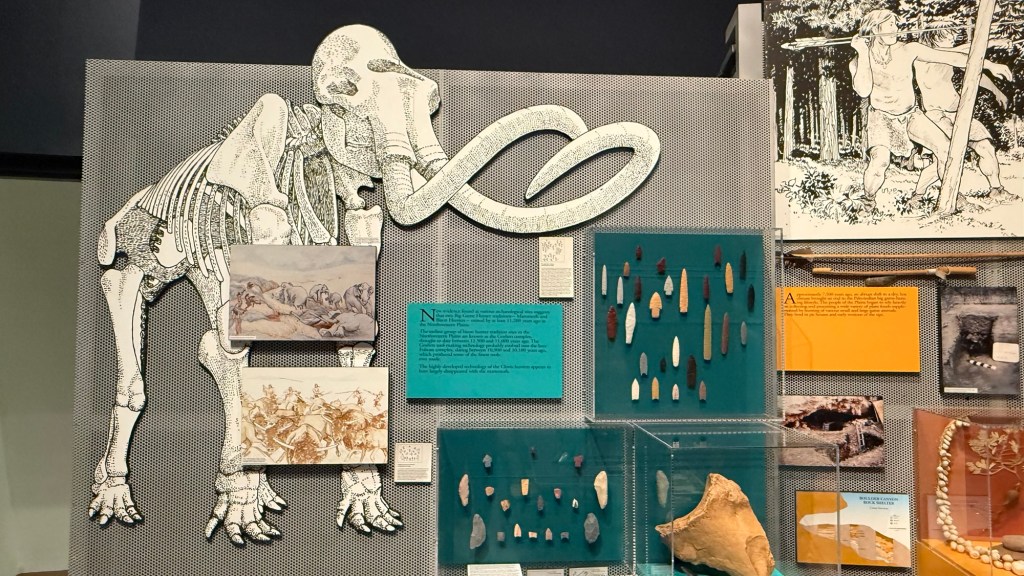
Moving forward in time to the more recent Native American Indian tribes such as the Lakota, we find a much more developed and civilized society.
The Sioux Indian Museum, which is housed within The Journey Museum, is literally a museum within a museum, with Lakota leaders overseeing the presentations and exhibits. Here you will find an entire wing dedicated to the Lakota Indians, who migrated from the Great Lakes region to the Black Hills some five hundred years ago.
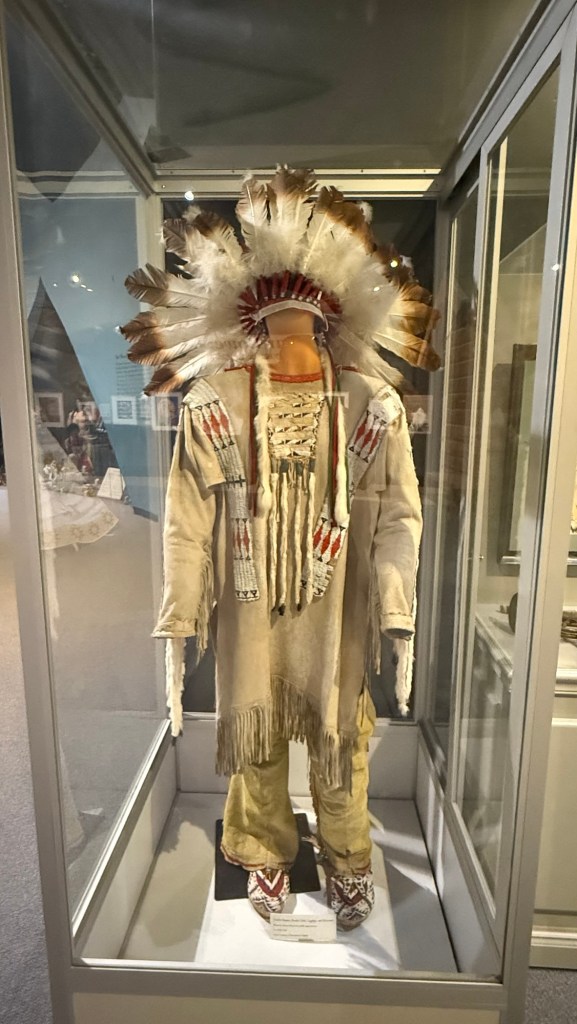
Traditional Lakota society was based around the migration of bison herds. The people had to be adaptable to a mobile lifestyle. This included the furnishings within their homes. Practicality and ease of use were important in the design of the home comforts. Objects like the willow backrest, parflèche (rawhide) containers, and tipi liner were uniquely adapted for a nomadic lifestyle on the Great Plains.
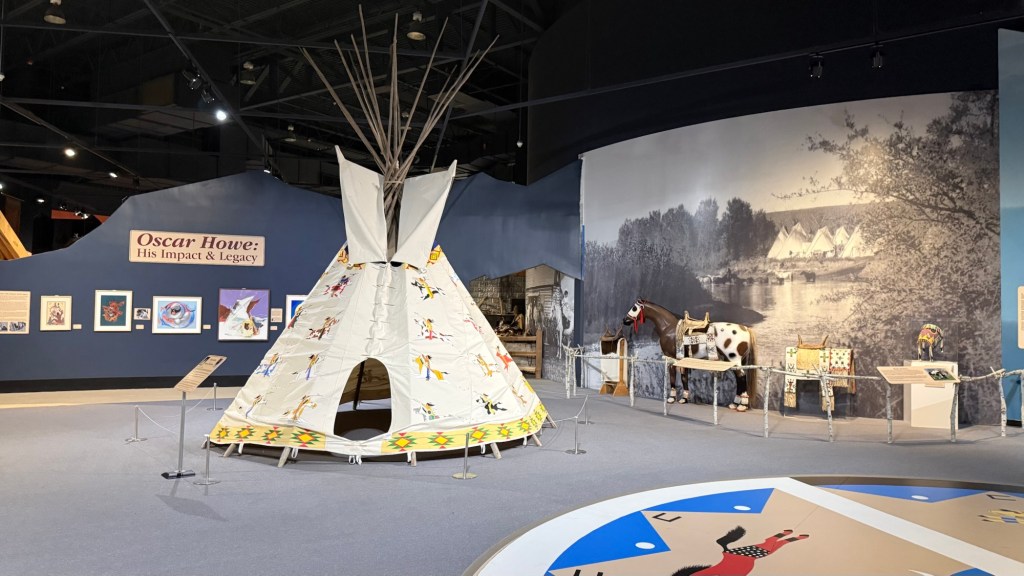
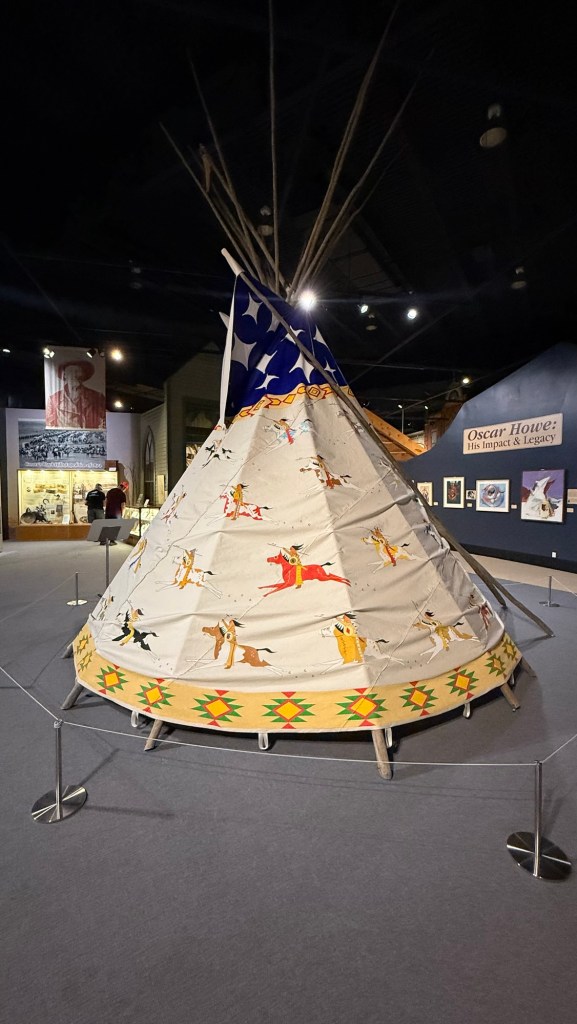
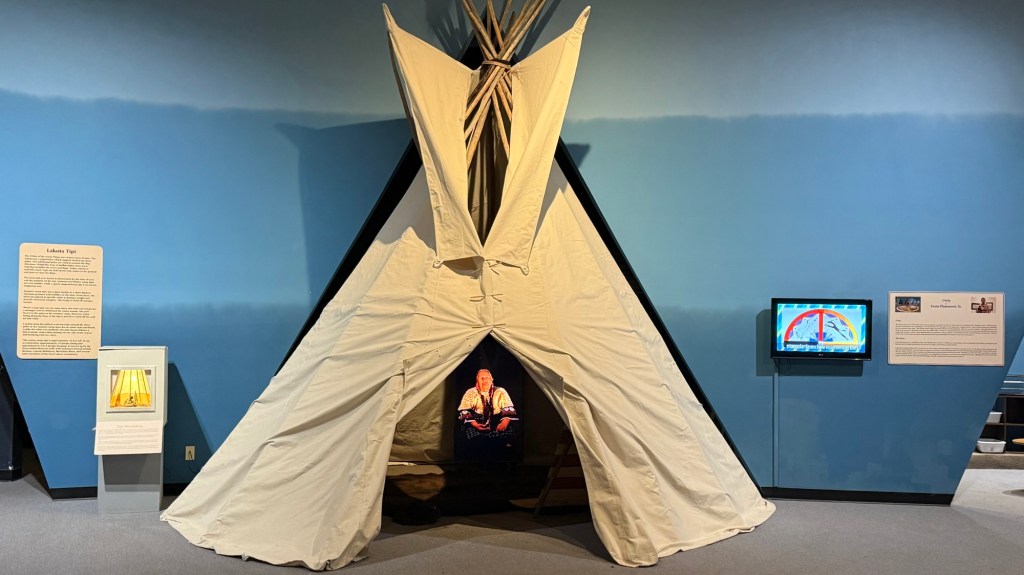
Tipis generally included a tipi liner, also called a dew cloth. Tipi liners were made of hide and later of heavy cloth or canvas. This liner acted as insulation from cold and damp weather around the lower perimeter inside the dwelling. The space between the liner and tipi was a cold storage location for food and other perishable goods and could be stuffed with grasses as an insulator.

The women’s role in Sioux society have emphasized life giving and social order for centuries. In trading networks extending from the Pacific Coast to the Eastern Woodlands, women exercised great economic power. On the Northern Plains, buffalo hides were an important and respected material that needed both time and skill to prepare, including when the fur trade raised the demands for dressed skins and robes.
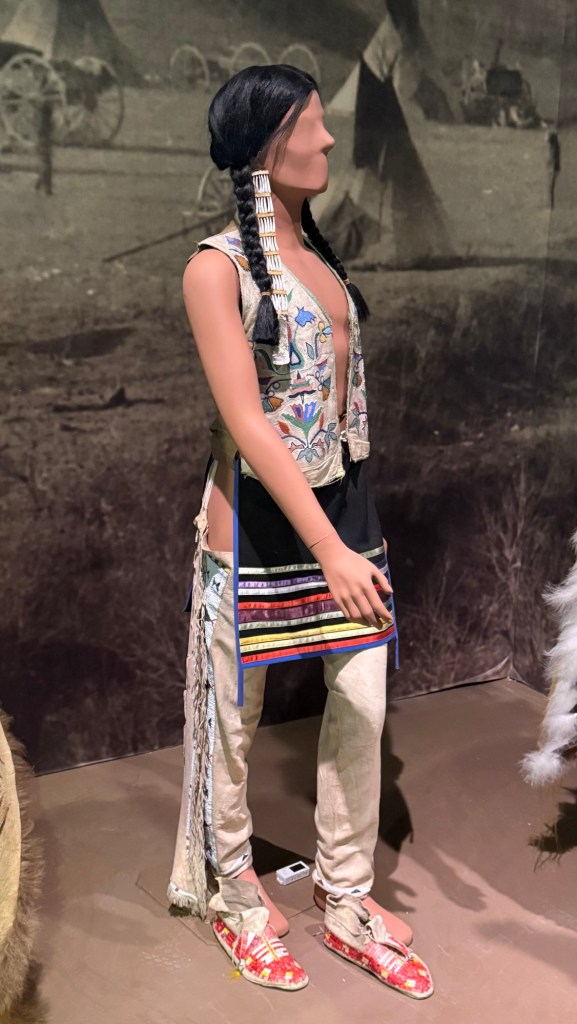
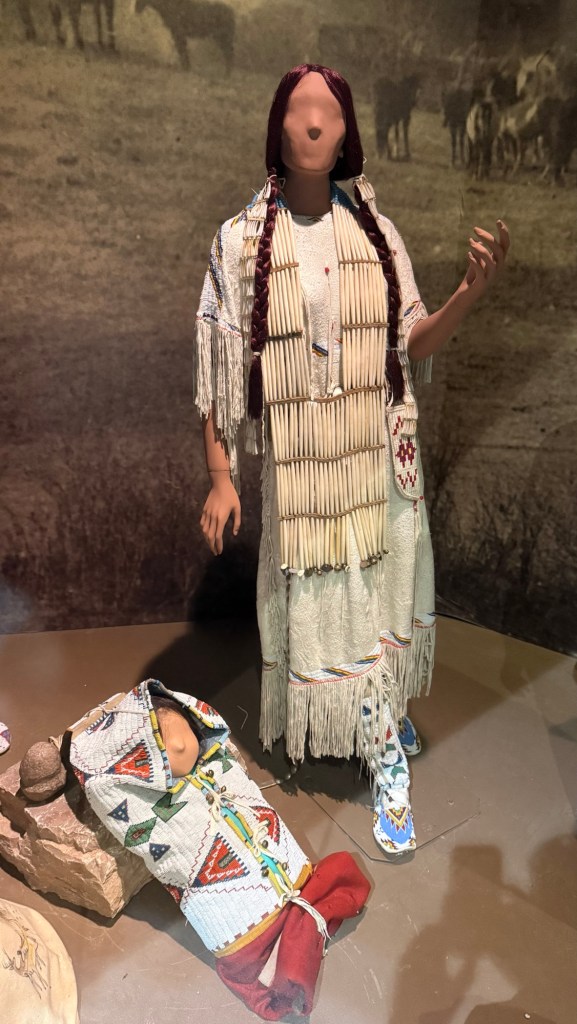
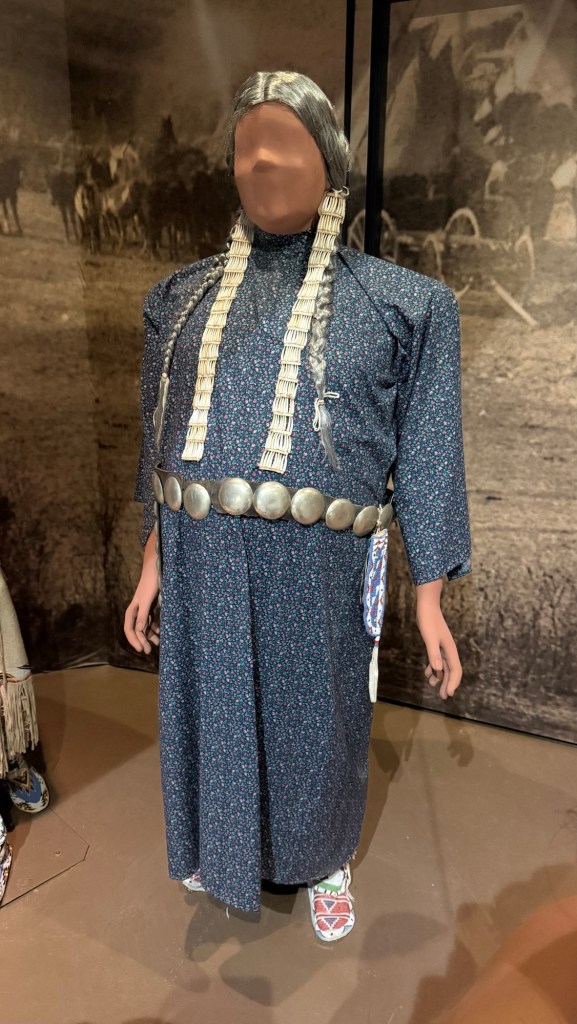
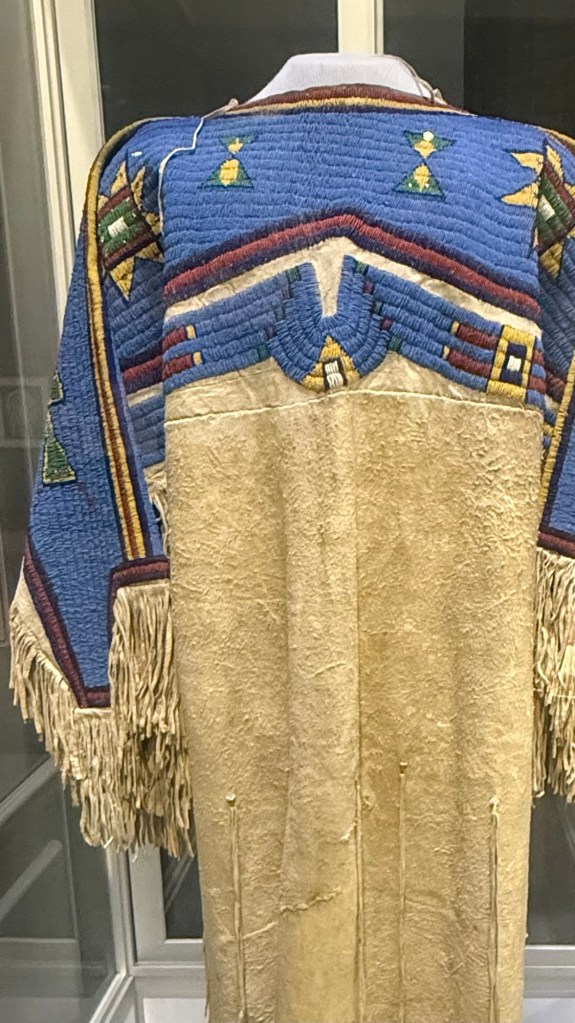
The painted robe!
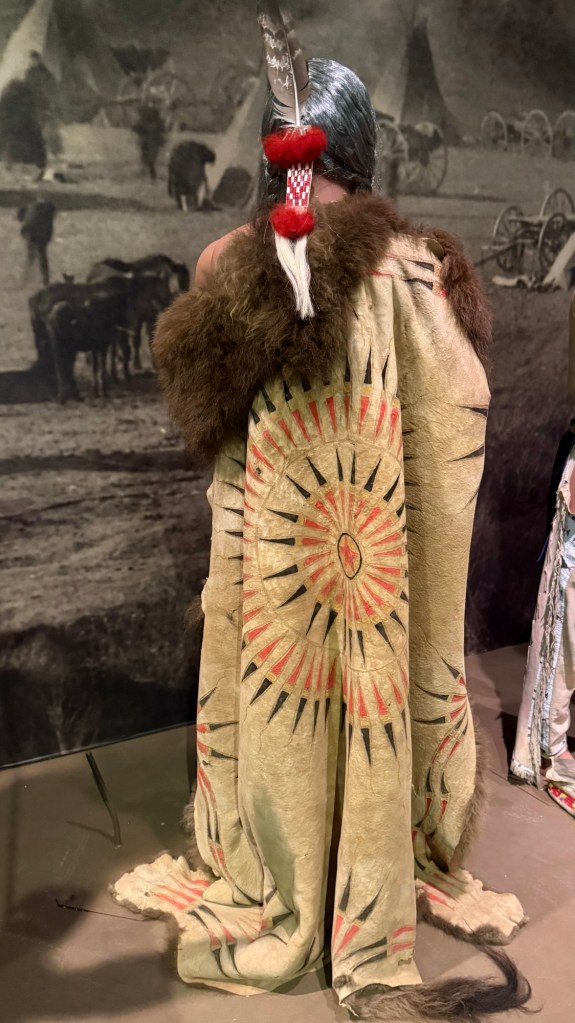
The painted robe in this photo is a highlight of Lakota artistic achievement. The figure wears a man’s feather circle design robe which is called the Black Warbonnet design. The two patterns, border-and-box design and the feather-circle may vary a little; for example, there might be three, four or even five circles of feathers; but one basic characteristic remains constant…all designs radiate from the center.
Among Lakotas, there were many specialists among the male members of the tribe. Some were noted as exceptional hunters, others were warriors, medicine men, singers, dancers and painters. Most often a great hunter or warrior would relate his story to an artist who in turn translated the story into a painted narrative.
The painter worked in a quiet and unassuming, yet deliberate fashion. His studio was usually outside with his animal skin stretched on the ground. Working with a bone brush, a line was made and the color was applied and then warm hide glue was added, holding the paint like a fixative. In some instances, the hide glue, a colorless material, was applied first, drying to make white lines.
Gradually, as hides grew scarce and woven goods came into use, Lakotas began using canvas to make clothing and tipis.

The Lakota lived a simple, mostly peaceful existence for centuries on the Great Plains…until white European settlers came a calling. Clashes sprang up and, eventually, The Red Cloud War began. After some fierce battles peace was reached with them via the 1868 Fort Laramie Treaty that ceded the Black Hills and surrounding lands to the Lakota. But then six years later gold was found in the Black Hills in 1874 during an expedition led by Lieutenant Colonel George Armstrong Custer, triggering a tsunami of white prospectors to invade the Black Hills. Resistance to this invasion culminated in the Great Sioux War of 1876 and events like Wounded Knee in 1890 that left the Lakota Nation beaten and scattered amongst a dozen reservations.
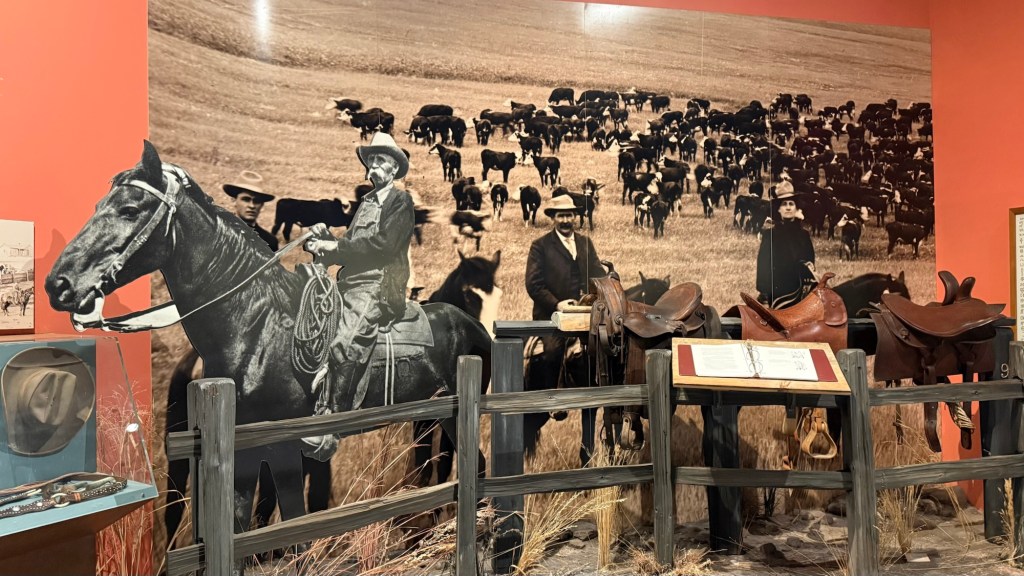
So, the White man blanketed the land with their White man ways pushing the Native Americans onto reservations …

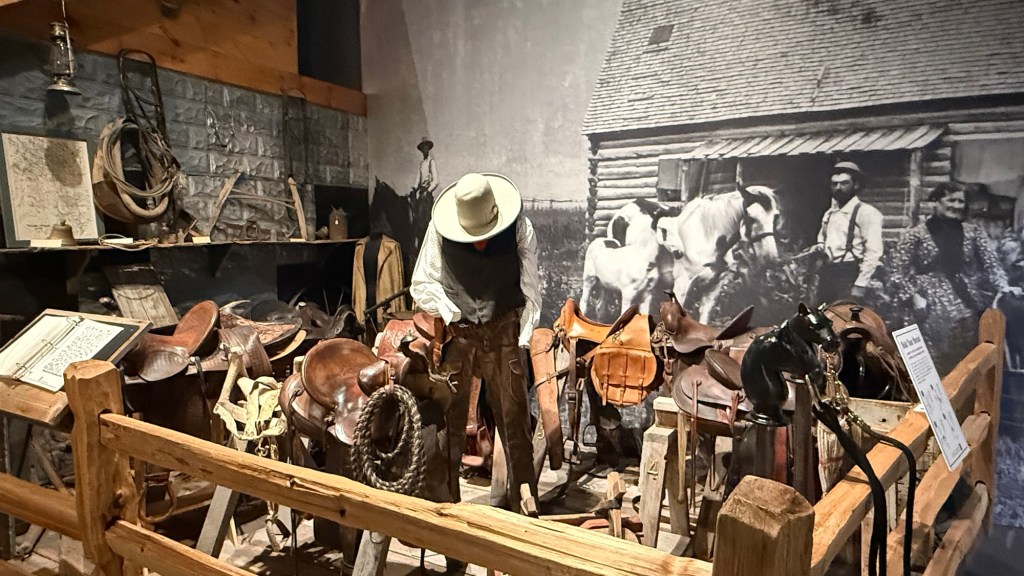
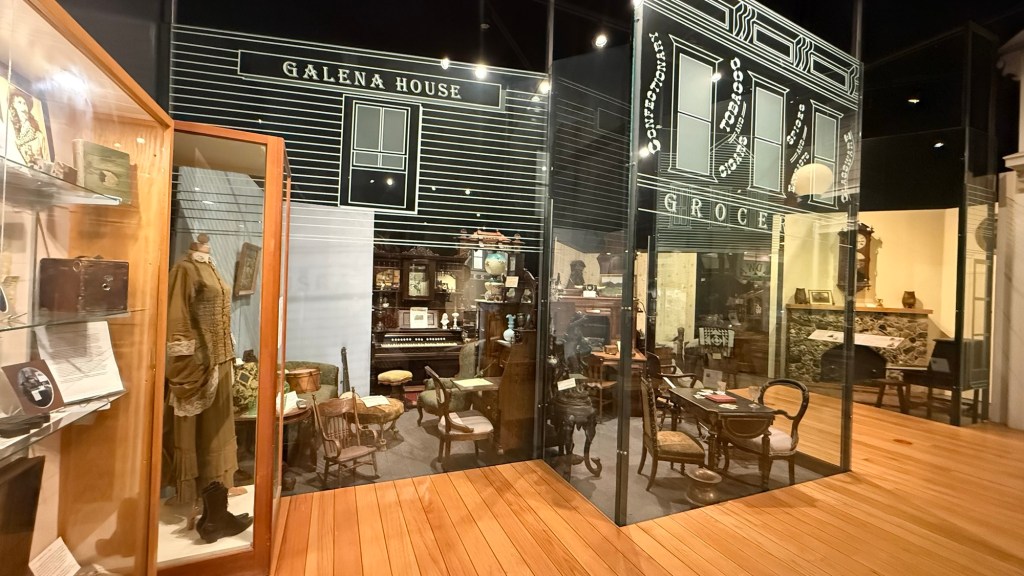
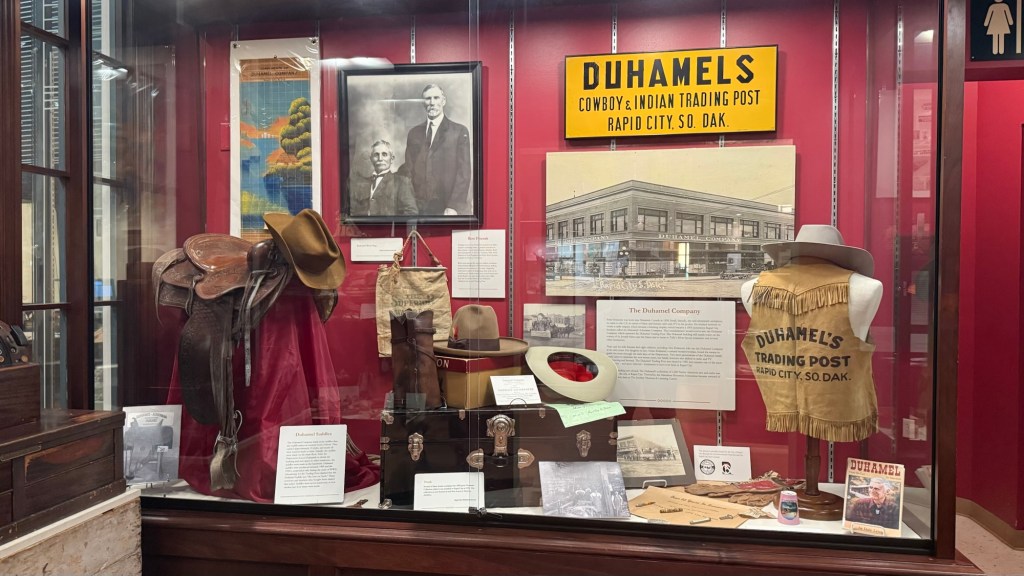

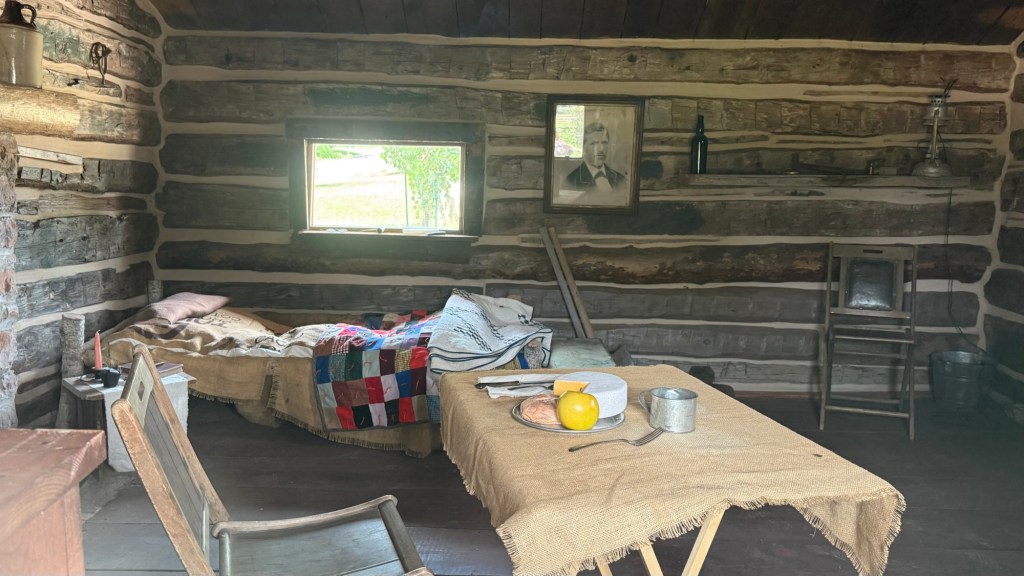
…and the animals running from their earthly homes…
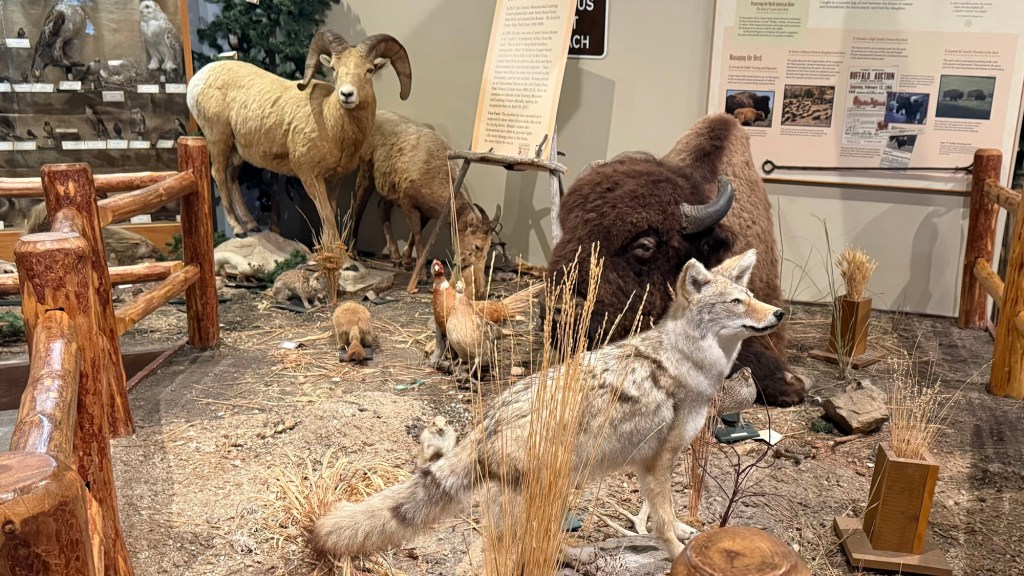
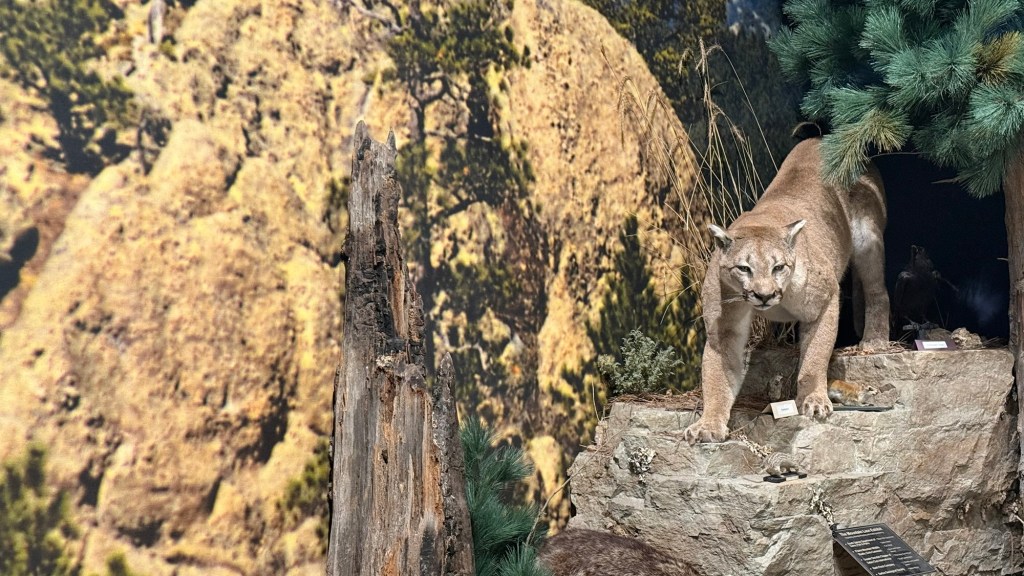

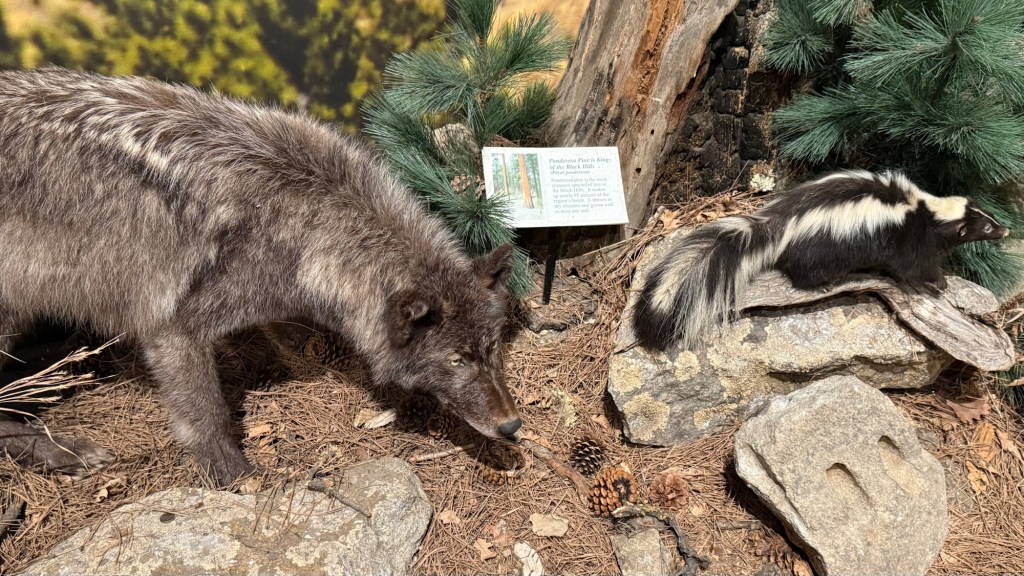
…and you know how the rest of the story goes as we celebrate the 250th anniversary of the Declaration of Independence. 🇺🇸
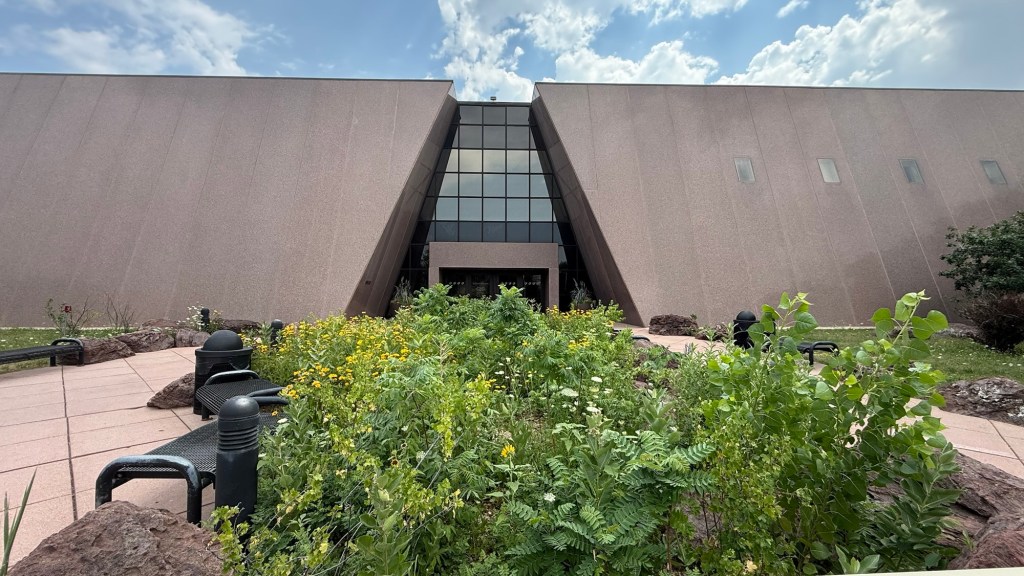
I hope you enjoyed this historical journey of the Black Hills through the eyes of the Journey Museum.
The gam continues…


These have been so very interesting and I’ve learned a lot from them alsoIf I were still teaching social studies and history, and with your permission, of course-I would share these with my students! Fantastic have a good time stay safe and healthyFrom your little flowery neighbor🙋🏻♀️🌸☮️Sent from my iPhoneOn Aug 22, 2026,
LikeLike
You have my permission to share these post with anyone. Take care!
LikeLike