American Gam
Mammoths!A great American road trip
 | Peace on Beavertail |
 | WAReynolds on I-90 |
| Peace on I-90 |
| Peace on SPAM |
| Peace on Green Giant |
“The community of Hot Springs keeps one of the most valuable fossil treasures known to mankind today.” ~ Dr. Ralf-Dietrich Kahlke
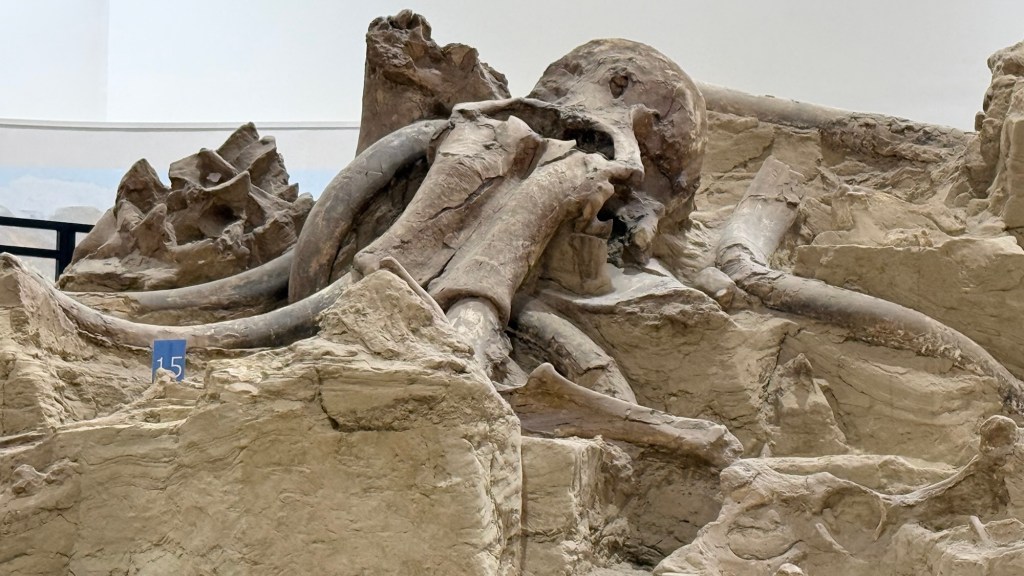
In June 1974, heavy equipment operator George Hanson was leveling ground for a Hot Springs, South Dakota housing development planned by landowner Phil Anderson. Hanson was grading a small hill when his blade struck something that shone white in the sunlight. Hanson got out for a closer look. What he saw was a tusk, about seven feet long. Land owner, Phil Anderson, offered to halt his housing project until they had a better handle on what was there.
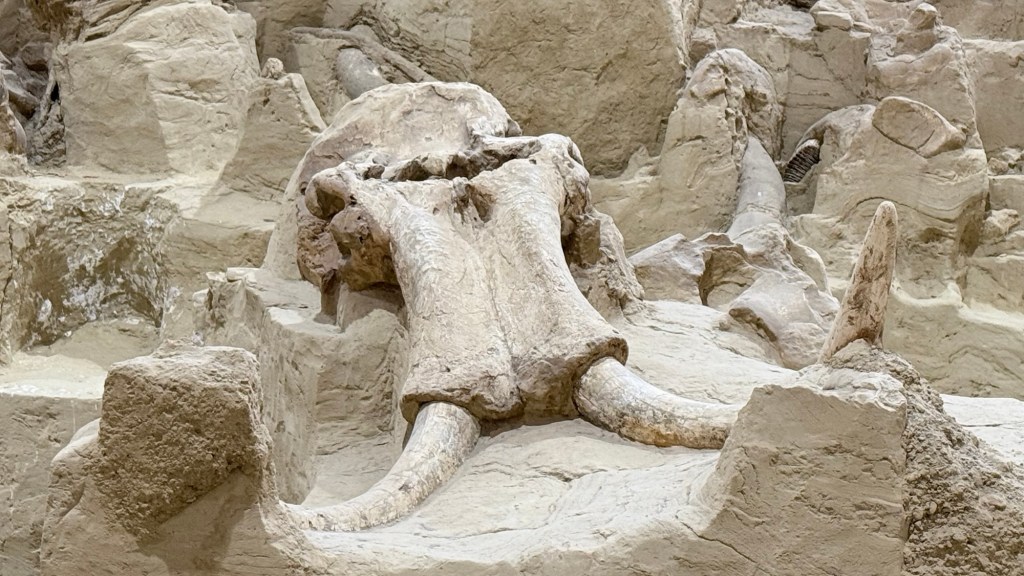
The following year, in 1975, a team of volunteer students began excavating the site. Interest in the mammoth graveyard grew rapidly after a complete skull with tusks intact was unearthed. This short excavation proved significant, as an unprecedented number of specimens were uncovered.
By the end of the 1975 summer excavation, Phil Anderson realized his fourteen acres of land would be more valuable as a resource for scientific study rather than a housing development.
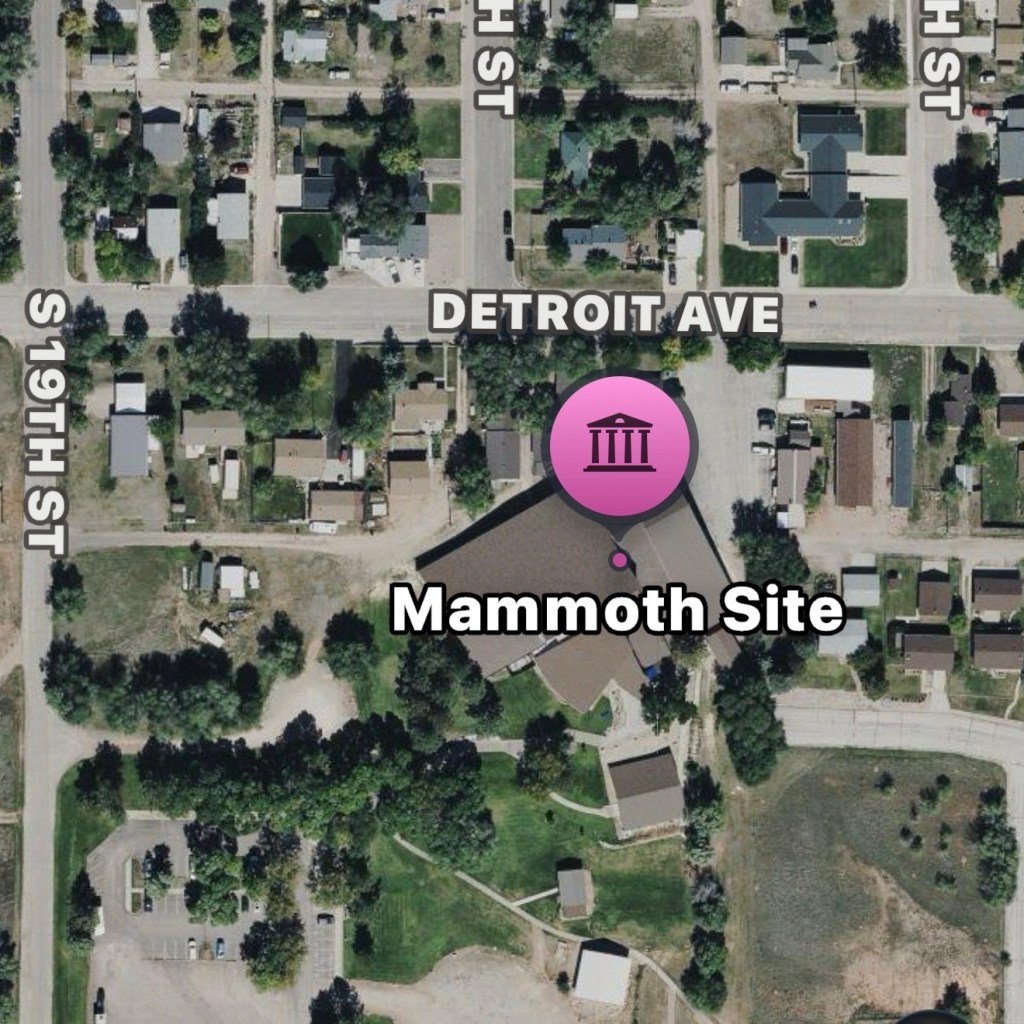
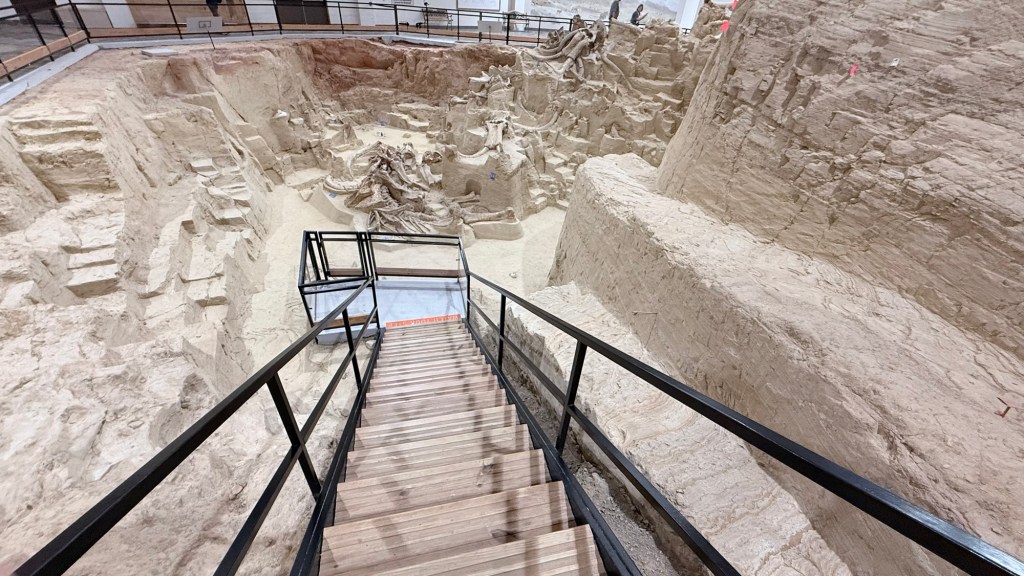
Here, in what is now called the town of Hot Springs, which is nestled in the southern tip of the Black Hills, a karst sinkhole developed way back in the Pleistocene era. A karst sinkhole forms when slightly acidic water, over a long period of time, dissolves soluble bedrock like marble or limestone. The sinkhole’s warm water must have attracted the mammoths, creating a prehistoric death trap for these leviathans who could get into the deep water but couldn’t climb out. Over millennia, the sinkhole filled in with sediment and preserved the skeletal remains of the unfortunate creatures. Layer upon layer of sand, silt, and clay filled the sinkhole pond, entombing the mammoth skeletons.
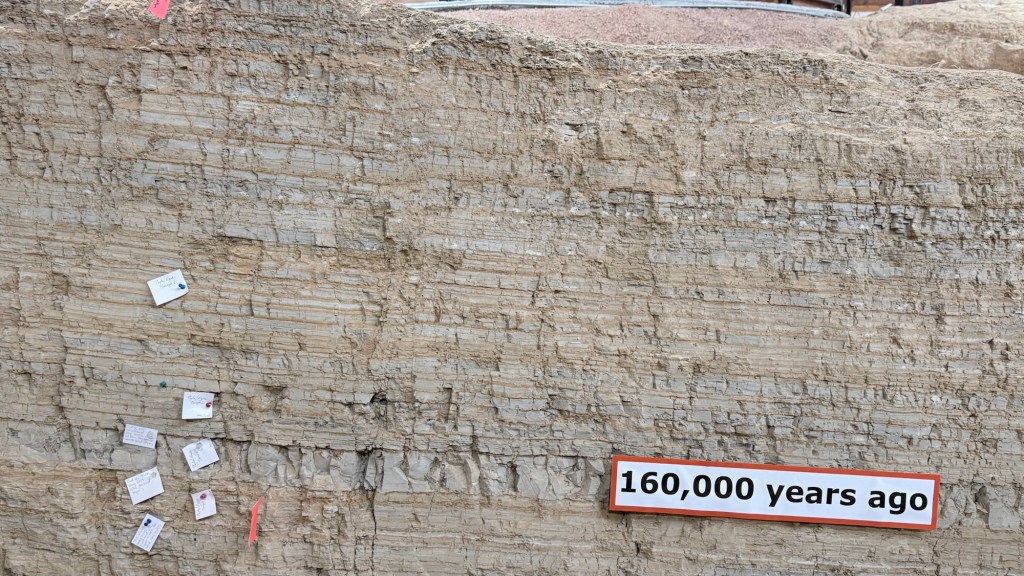
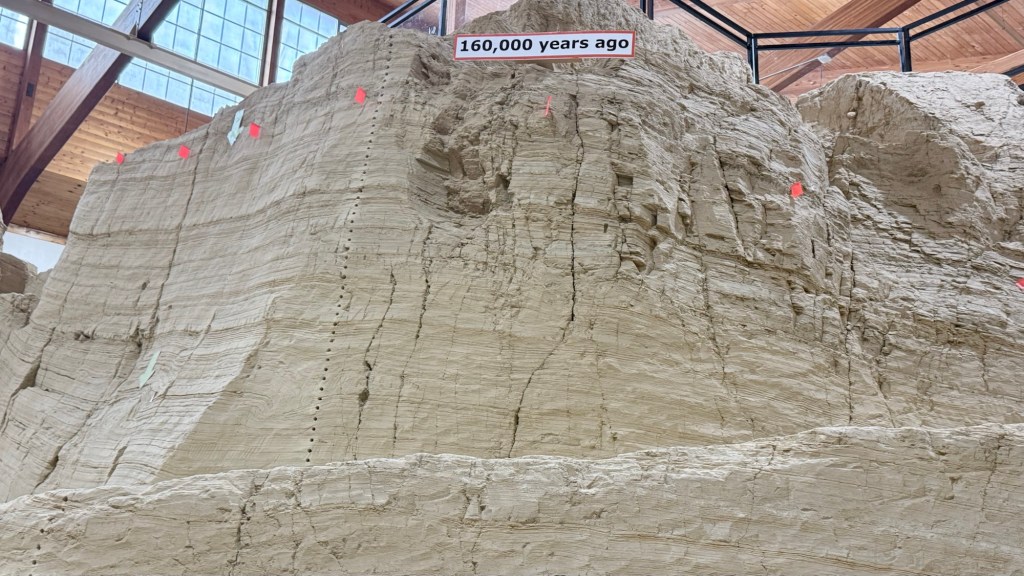
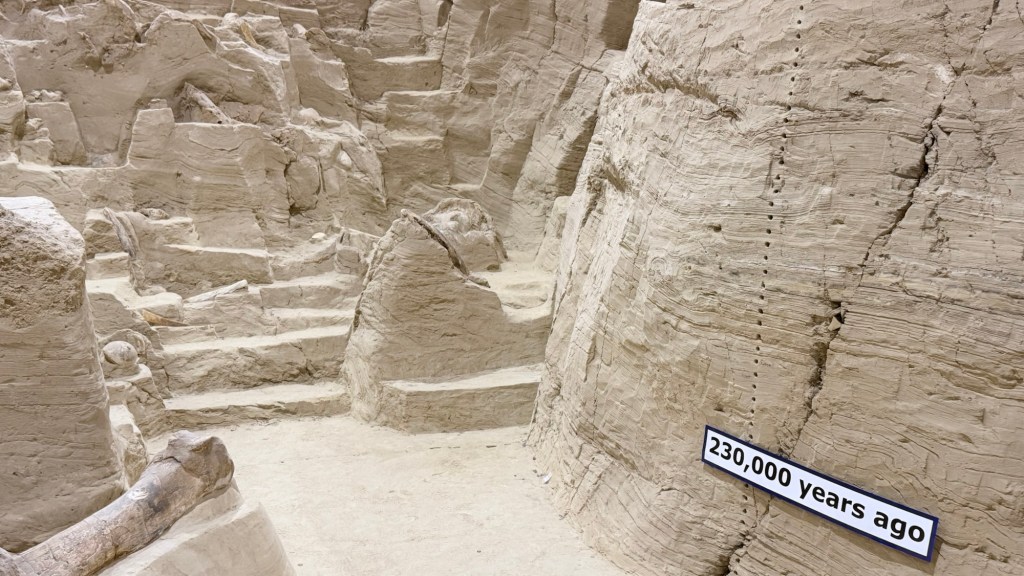
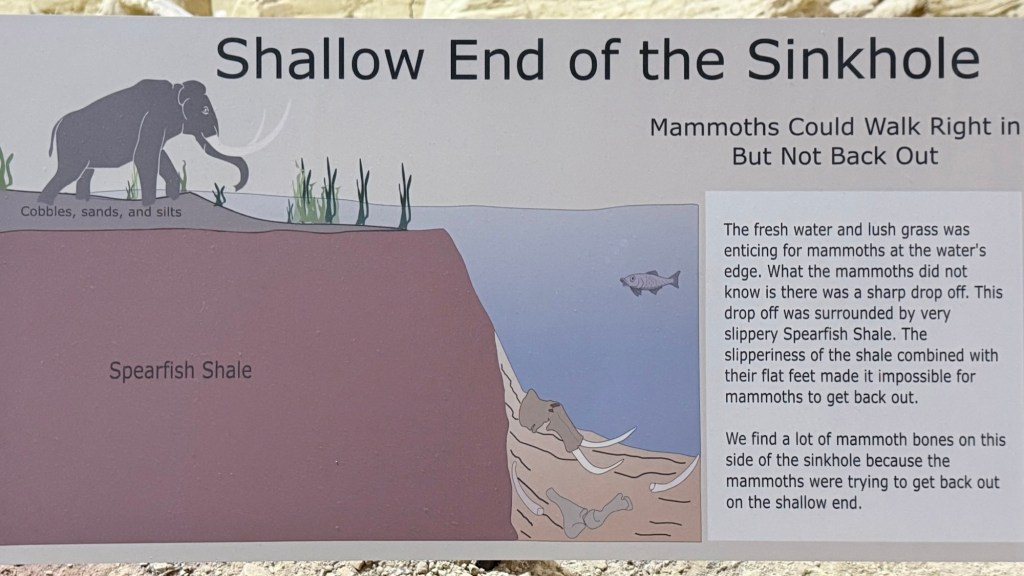
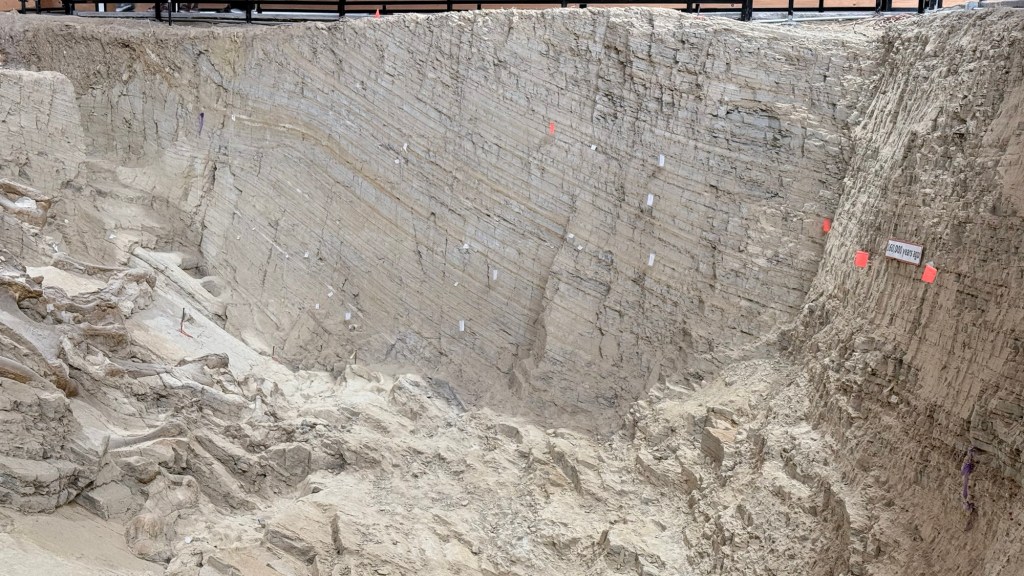
This last picture is of the shallow end of the sinkhole. You can see the angle of the striations of sediment sloping down into the sinkhole, which became a one-way entrance for the giant mammoths whose flat feet would slide on the slippery shale.
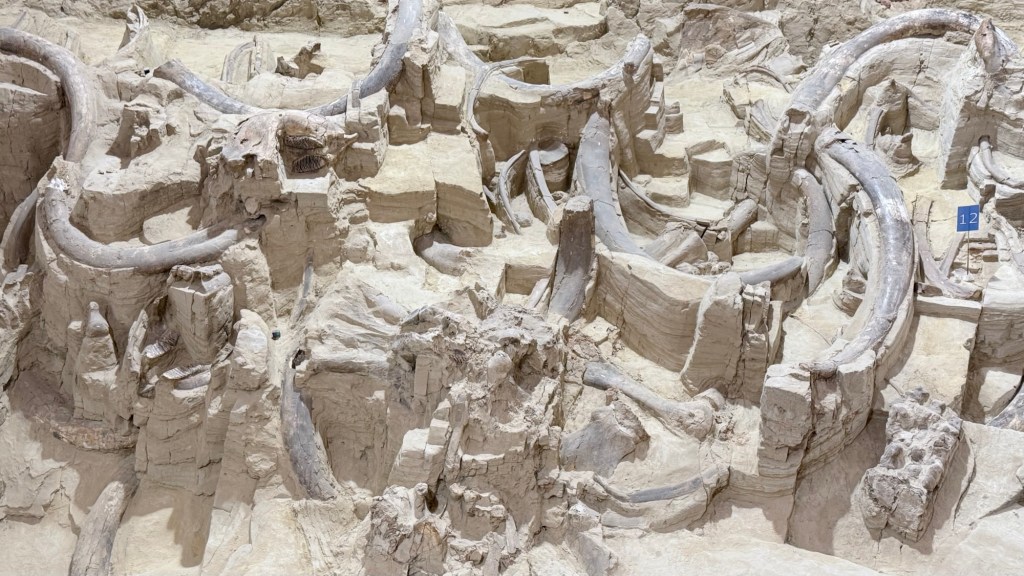
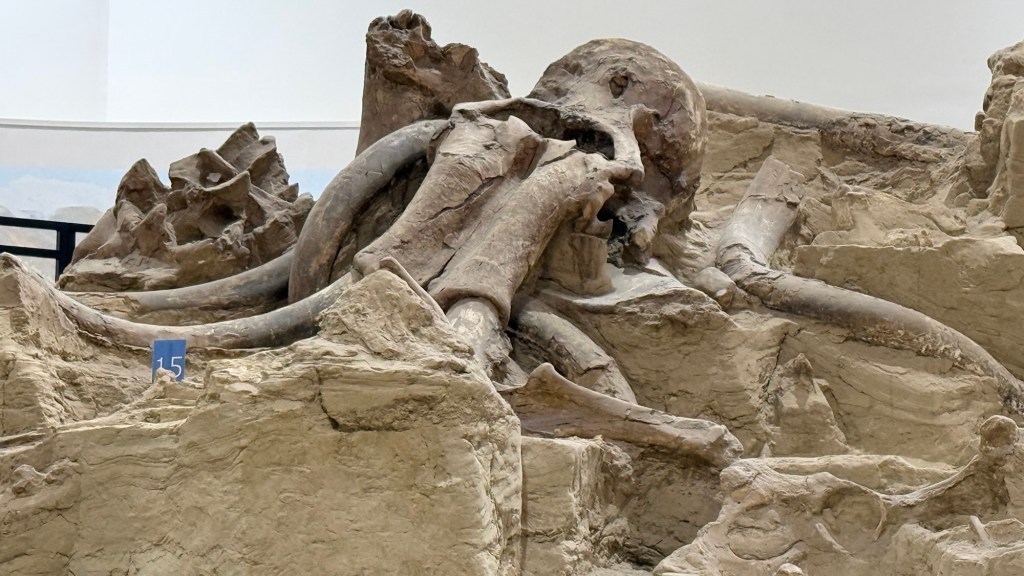
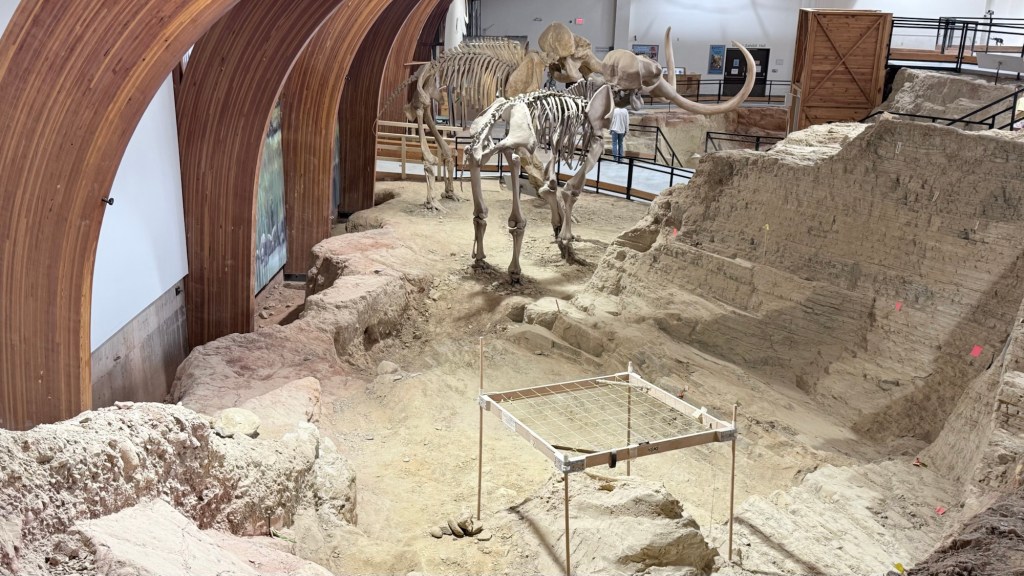
The Columbian Mammoth, the species that succumbed to this sinkhole, was one of the largest species of mammoth, generally standing about thirteen feet tall and weighing eight to ten tons. An interesting fact is that all of the skeletal remains found (so far) belong exclusively to young male Columbian Mammoths, who may have lived a solitary lifestyle and who misjudged the steep rim of the sinkhole. (Teenagers…always getting into trouble.)
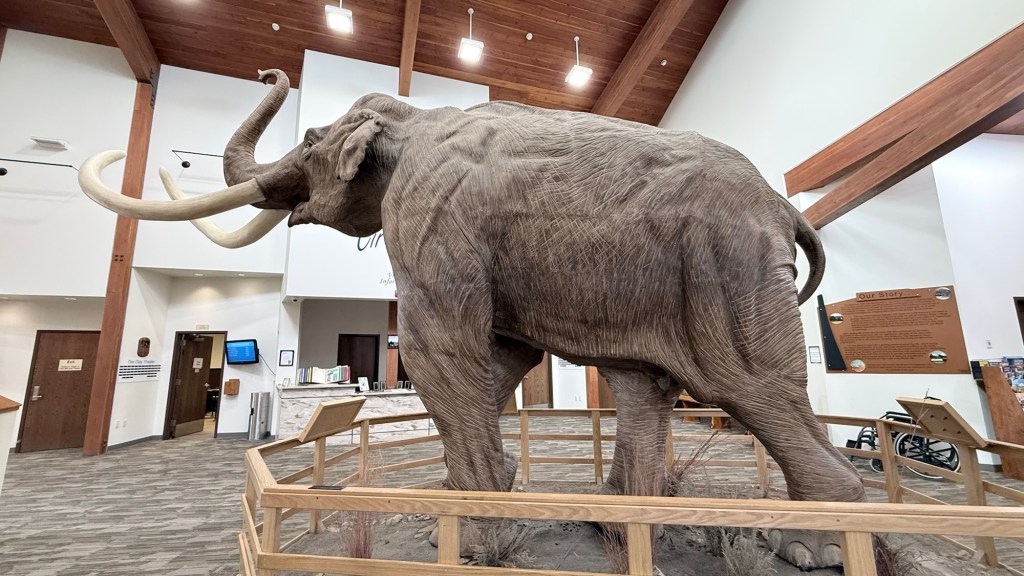
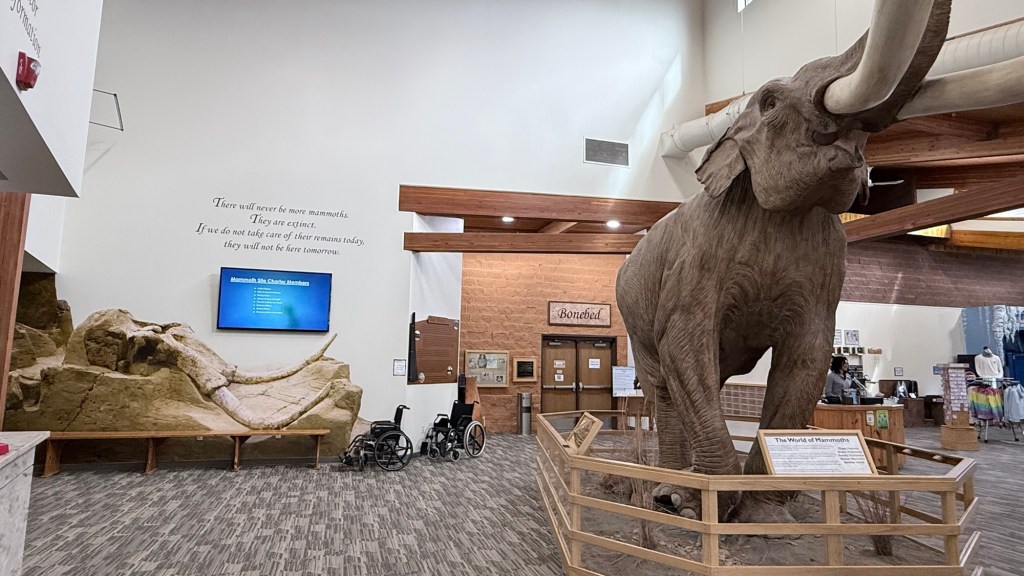
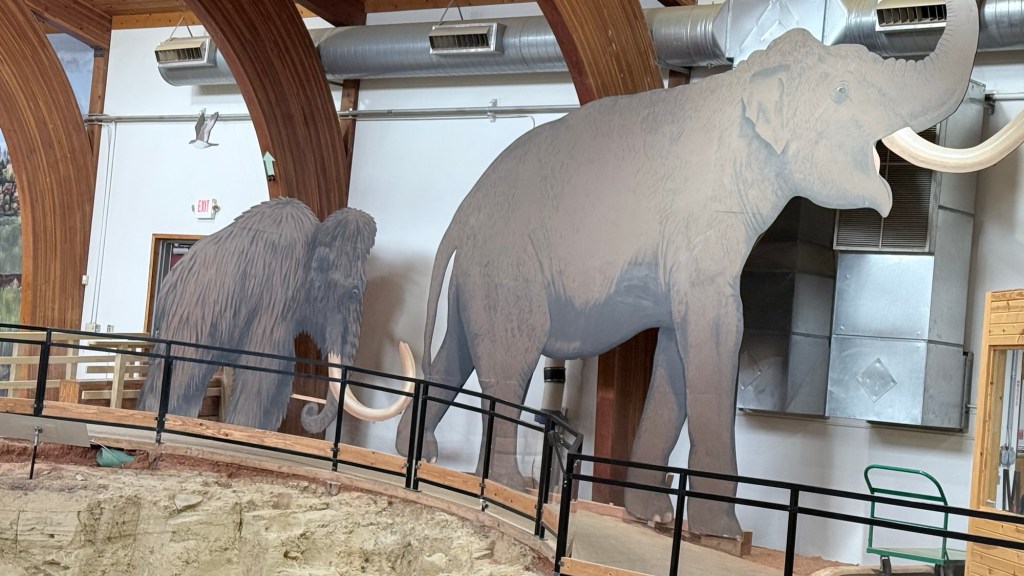
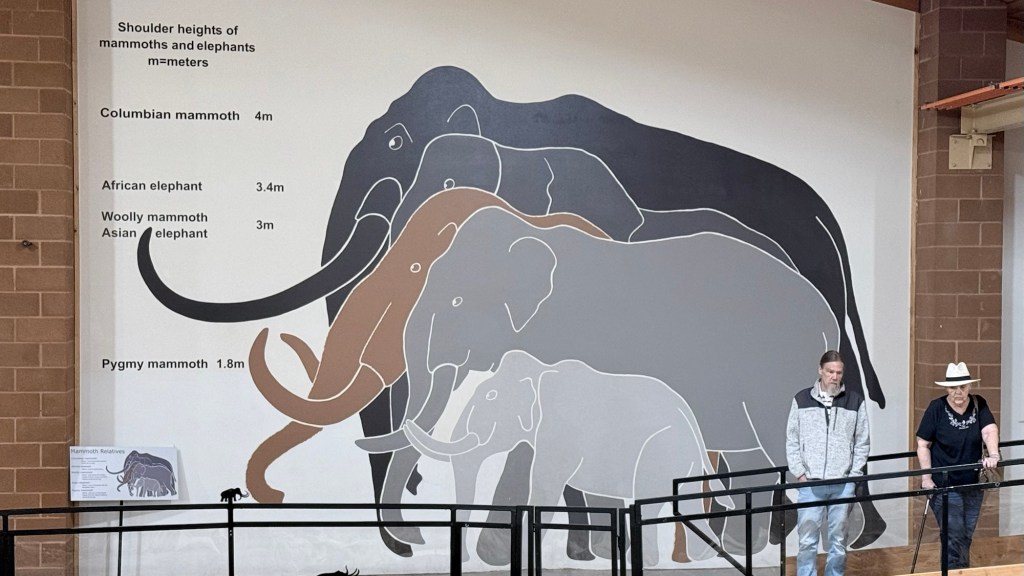
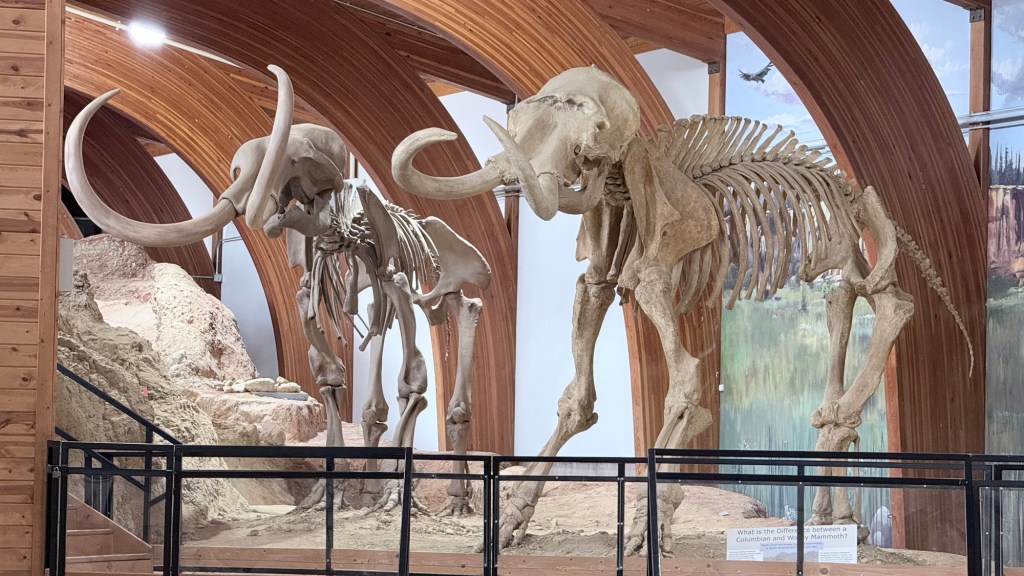
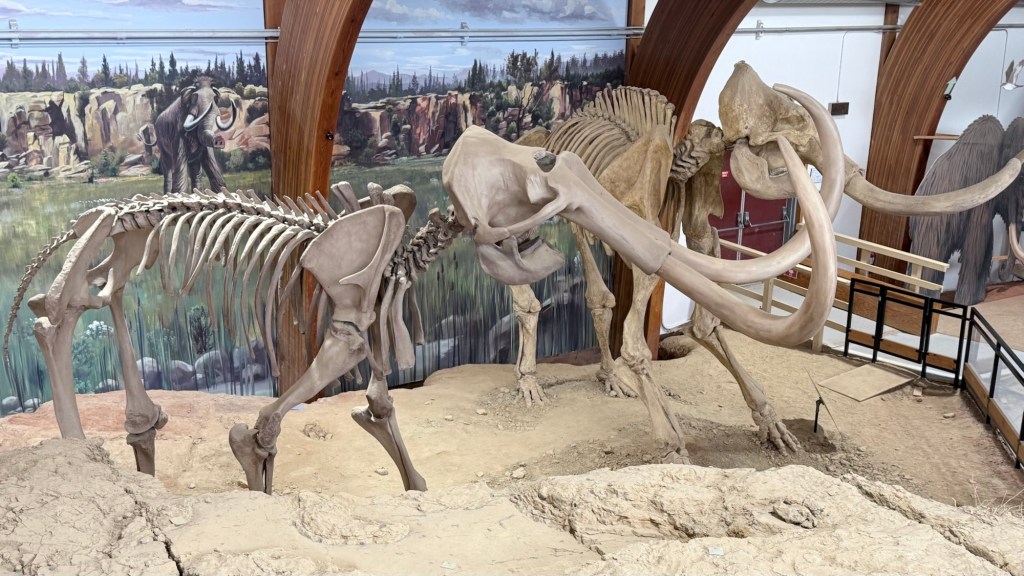
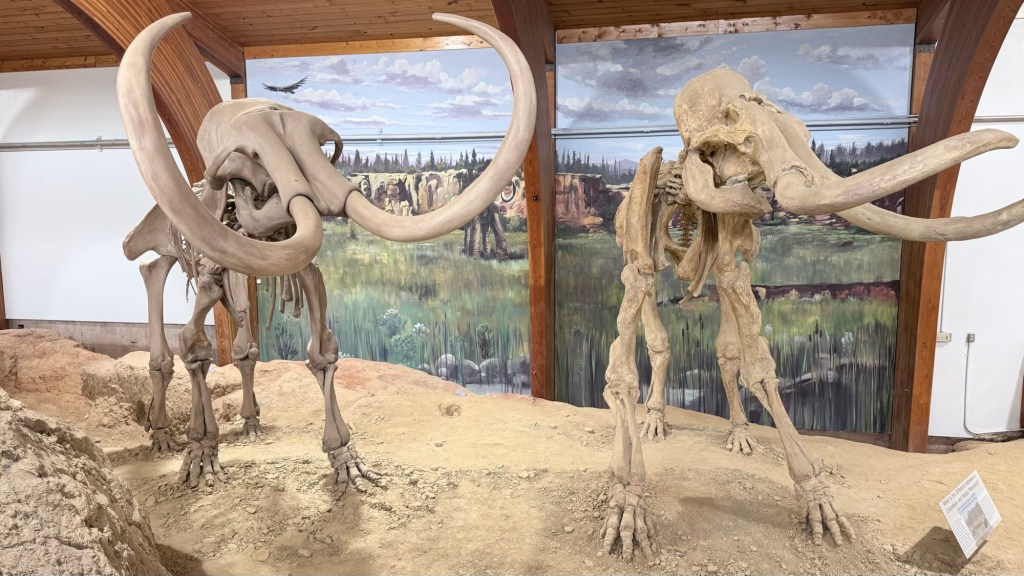
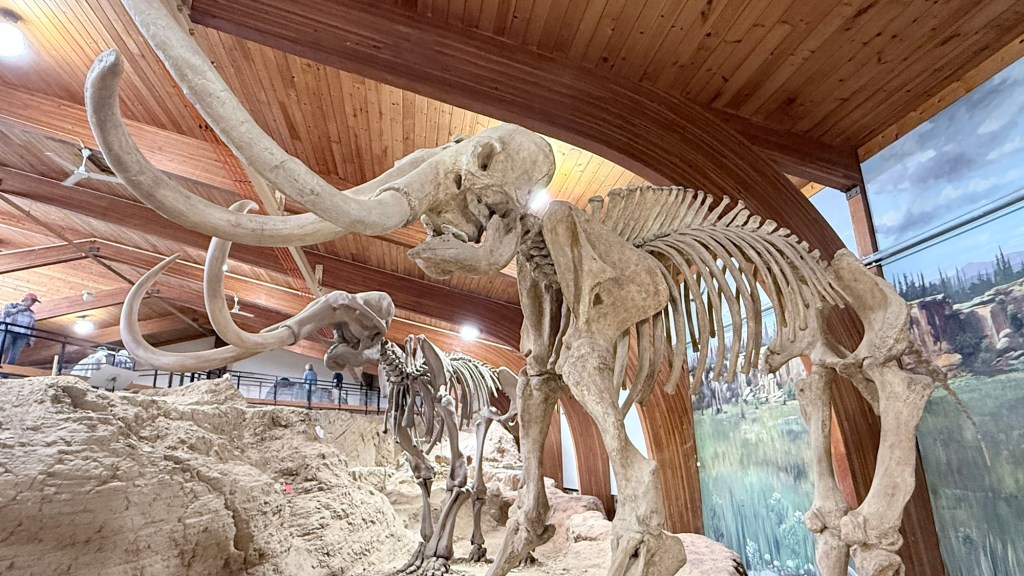
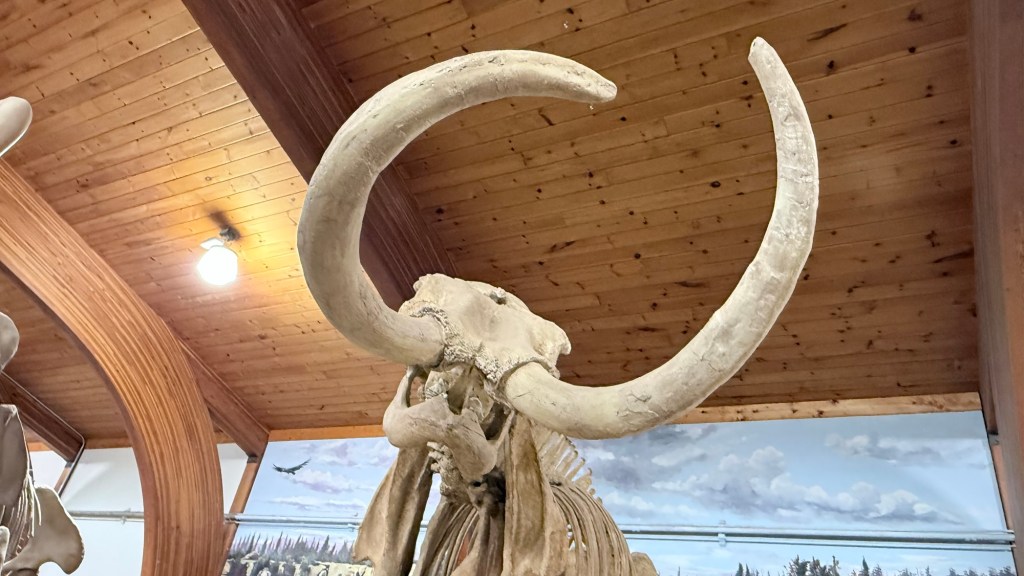
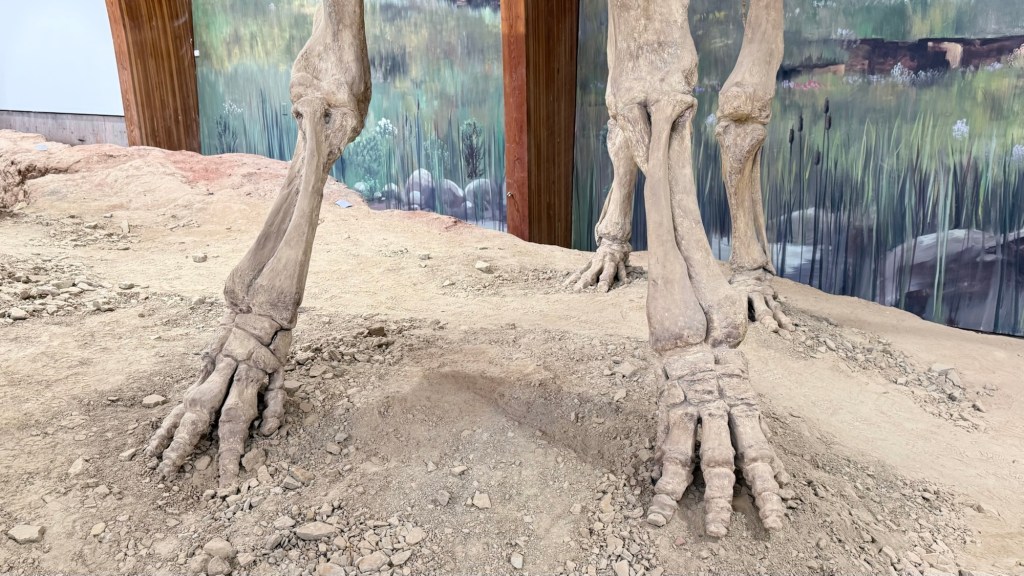
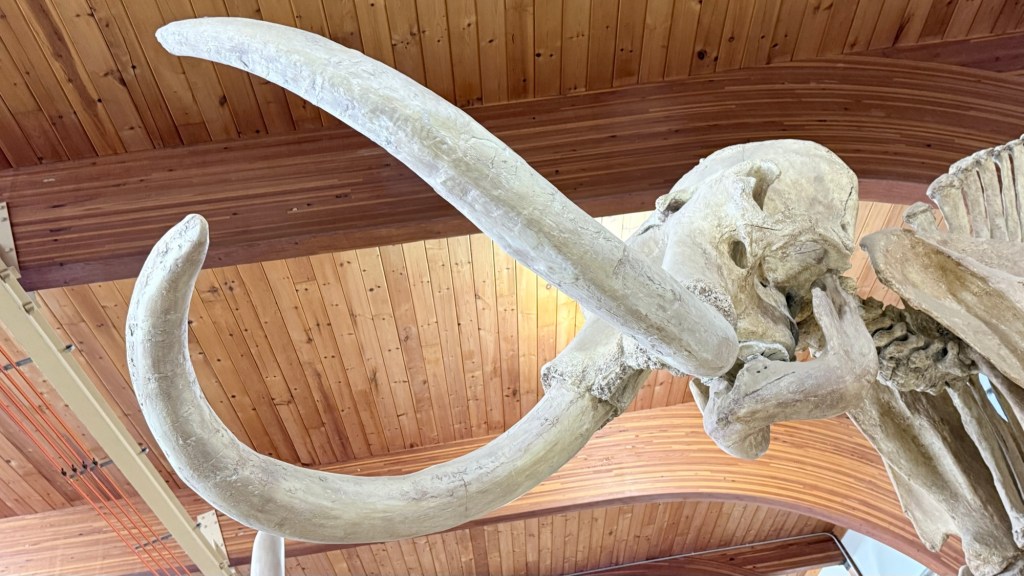
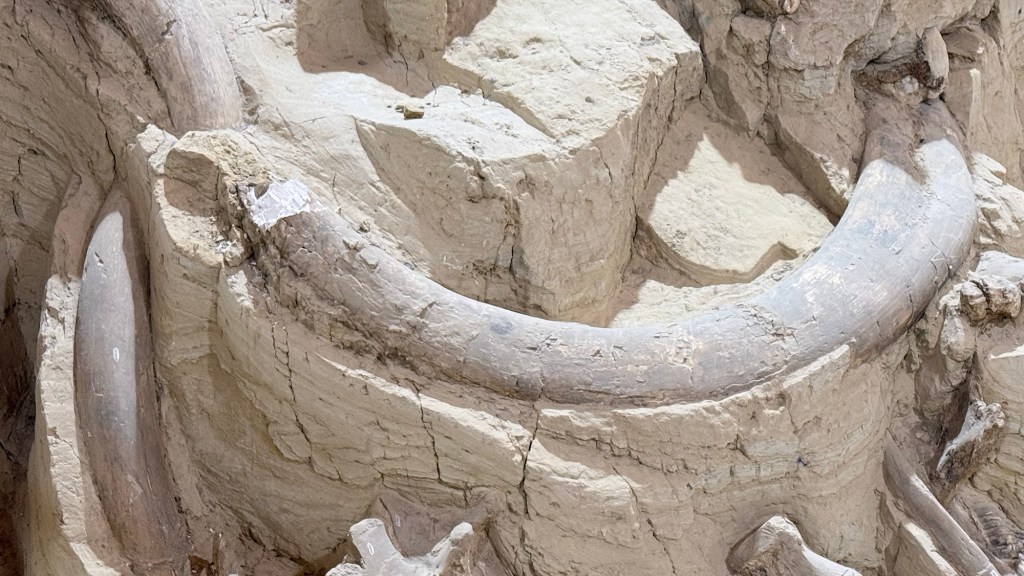
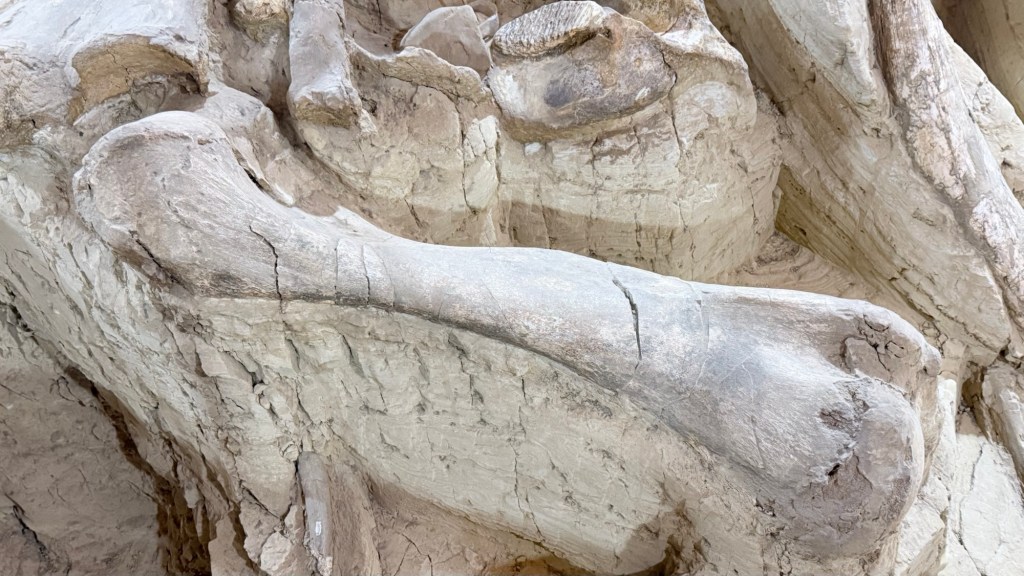
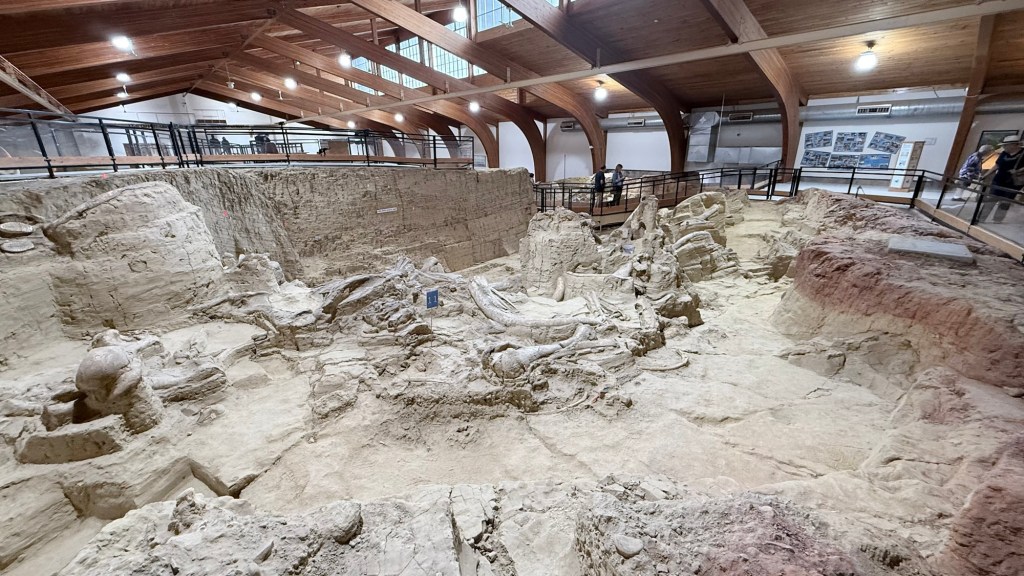
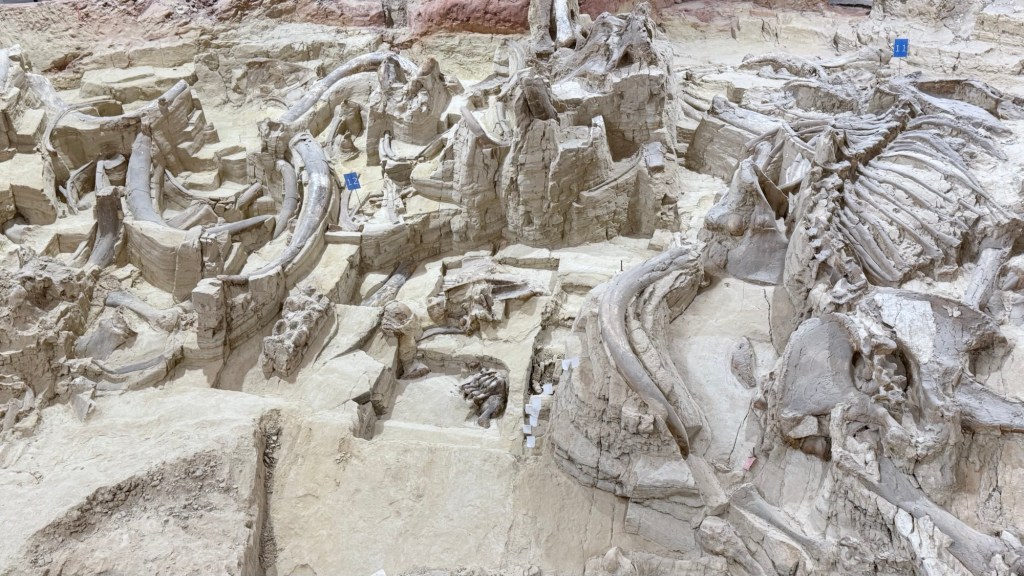
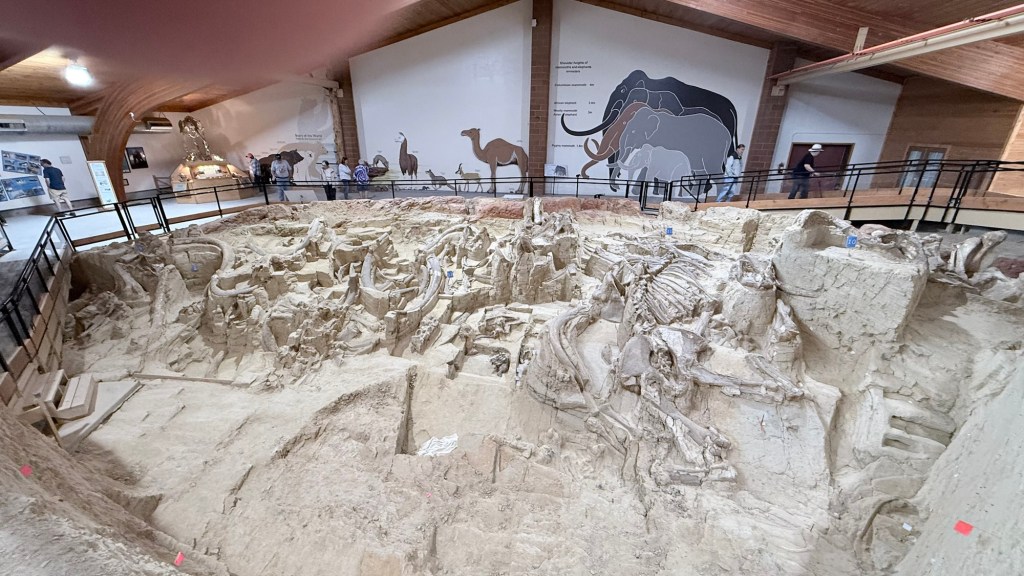
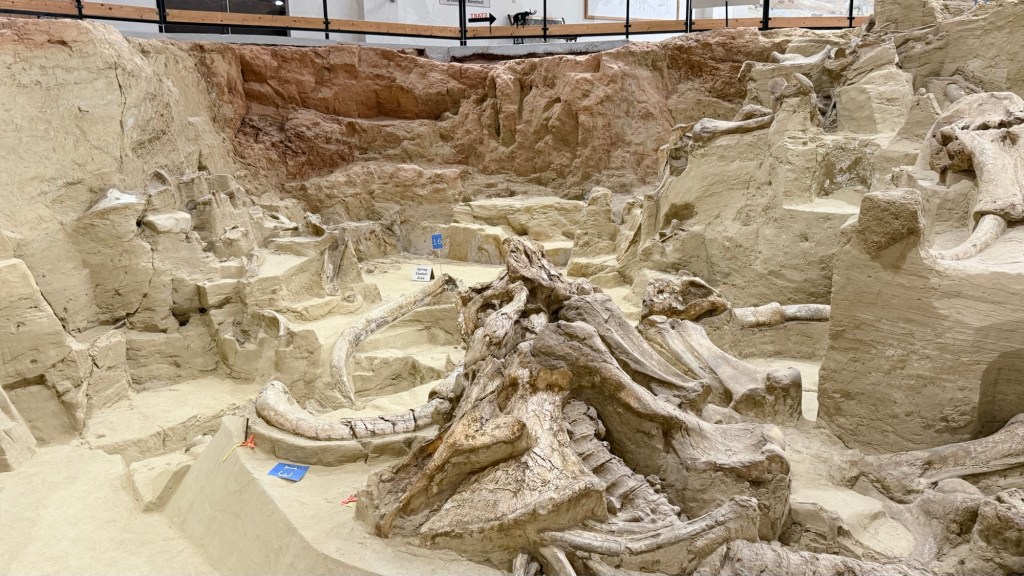
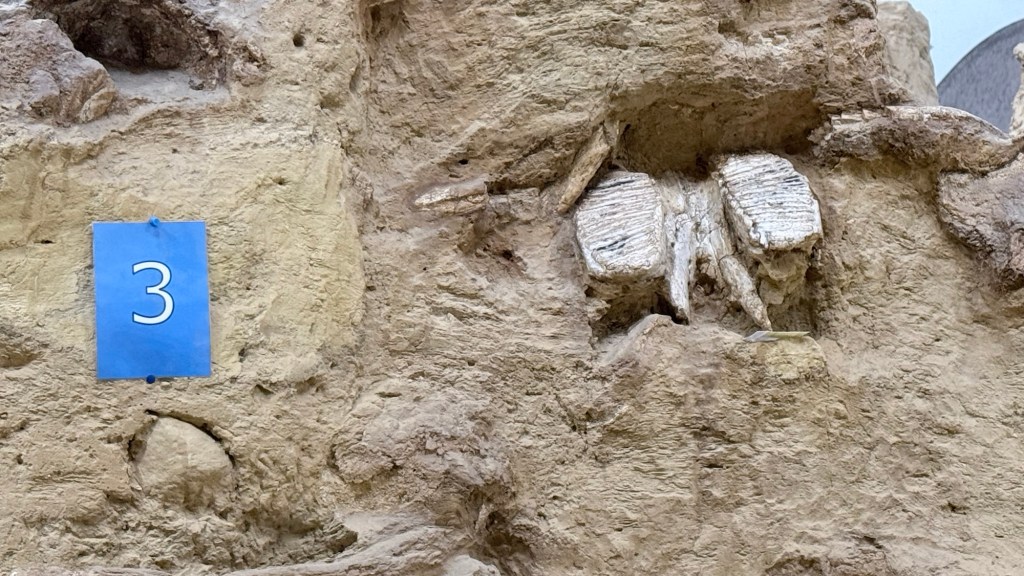
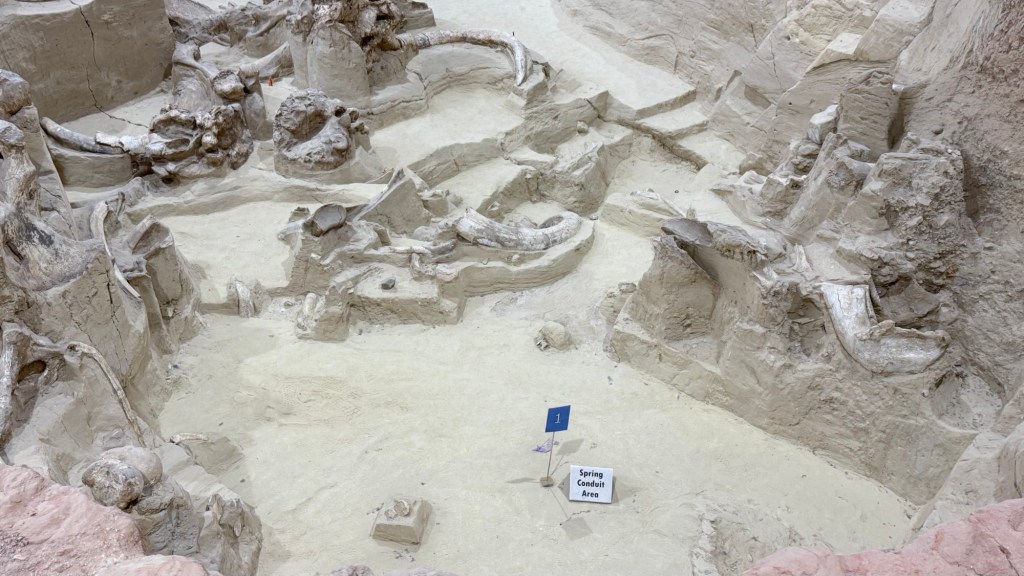
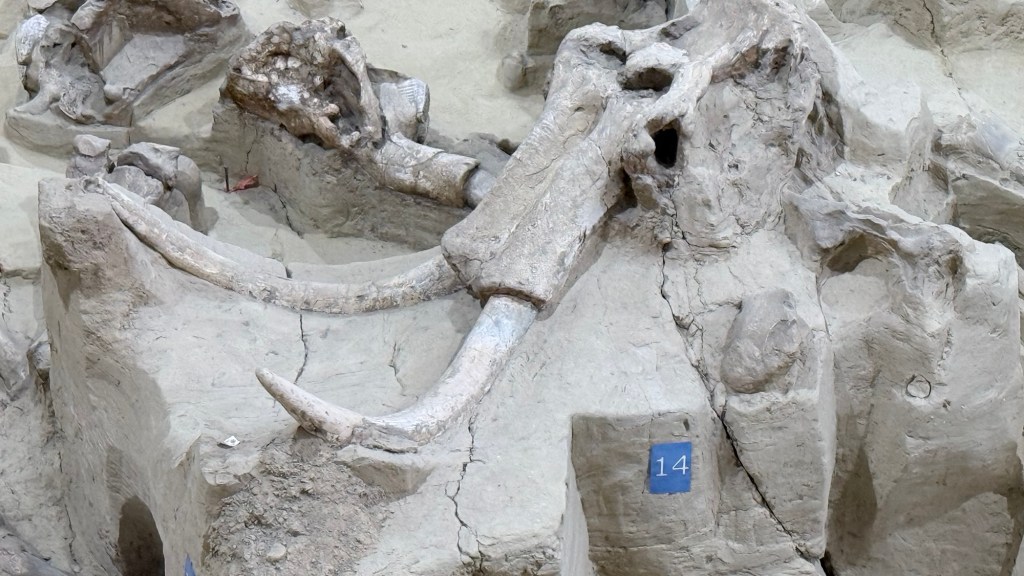
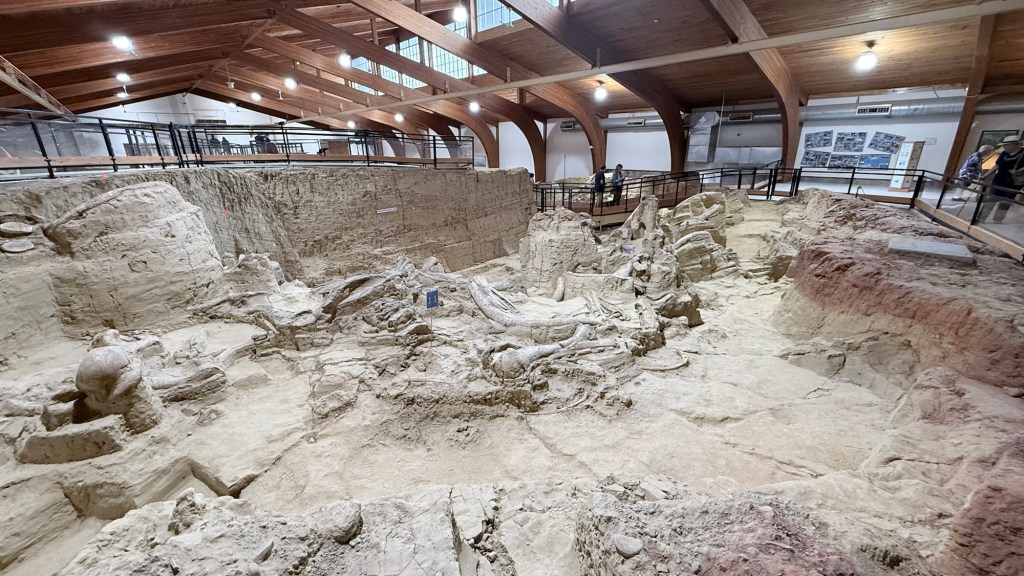
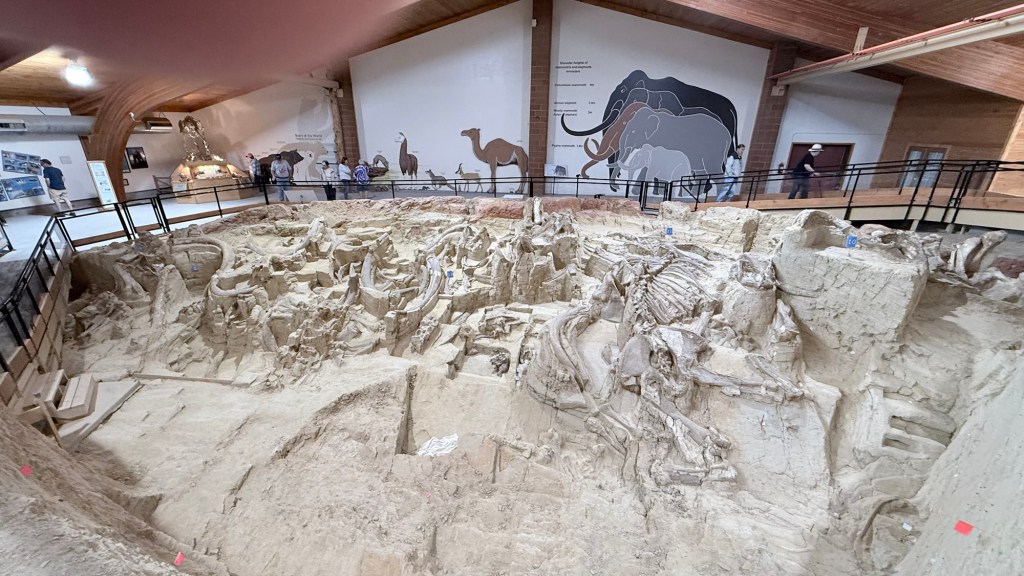
This site is still a working dig where paleontologists actively excavate, clean, and study fossils inside of this climate-controlled building. Visitors can view the bones in situ, or right where they were uncovered in the original sediment rather than mounted upright like in most museums. An artifact is in situ when researchers find it still sitting in the exact dirt or location where it was left or buried, rather than moved.
The term “in situ” is a Latin phrase that simply means “on site” or “ in its original place.” (When I typed this phrase, autocorrect tried to change it to “in situation.” I wonder if situ is the root word of situation…?) This certainly would’ve been a tough situ-ation to be in for the mammoths. 🦣
The Mammoth Site is the only Late Ice Age facility of its kind in North America. It is the world’s largest mammoth research facility and one of the top fossil interpretive sites in North America. Over sixty mammoths have been unearthed here, one hundred and twenty-two tusks, along with at least eighty-seven other Late Ice Age animals, all dating back some 140,000 years!
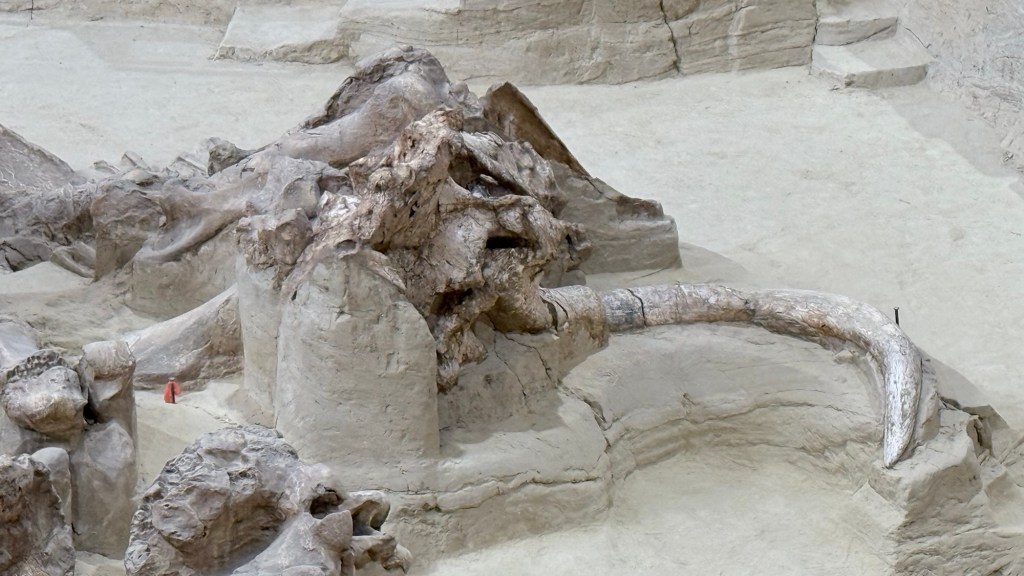
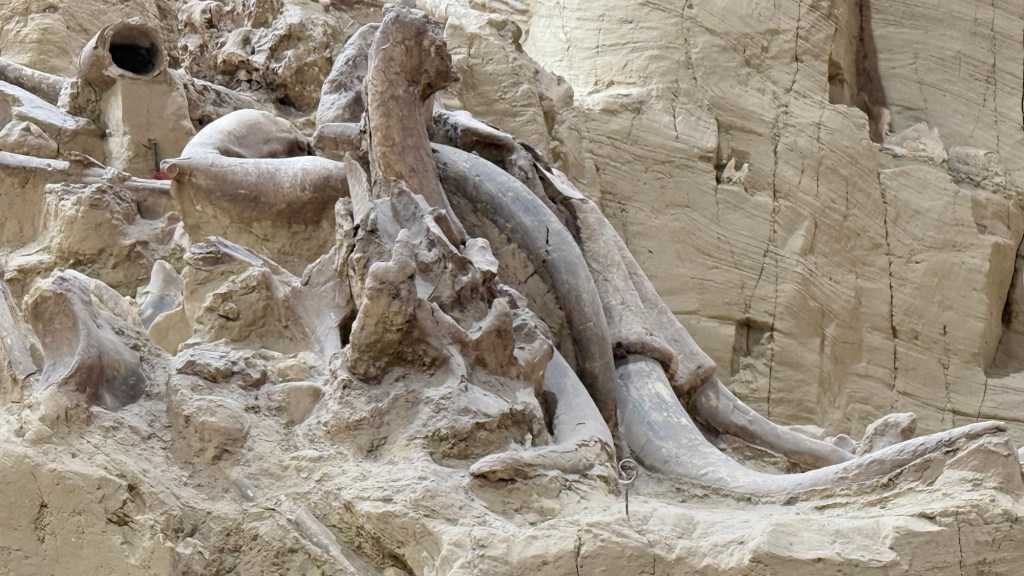
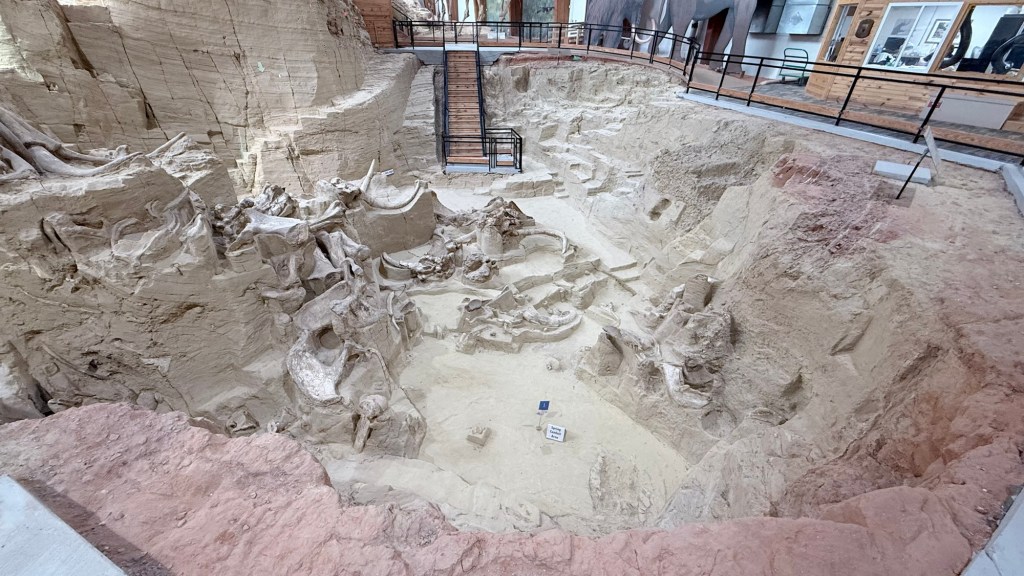
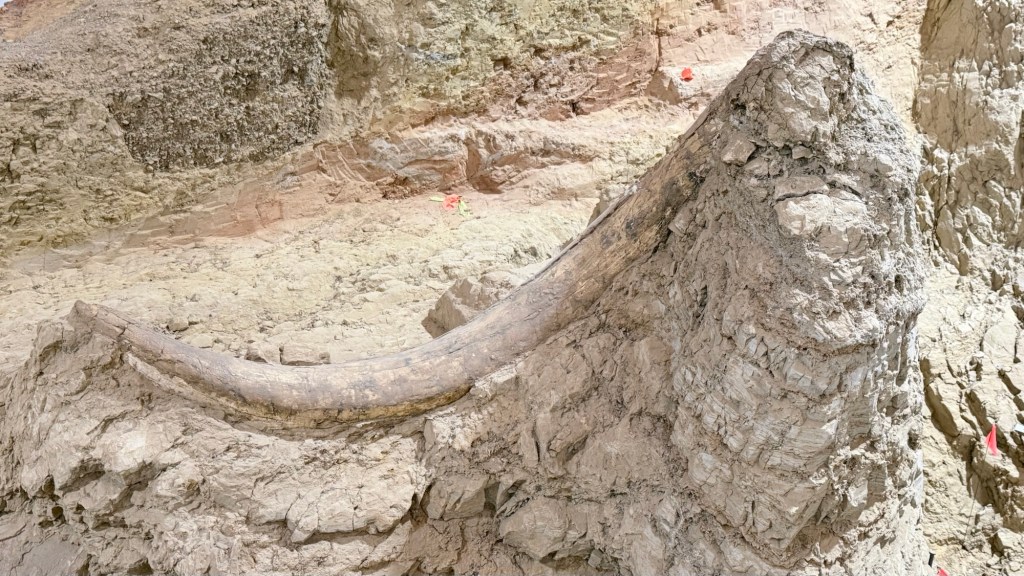
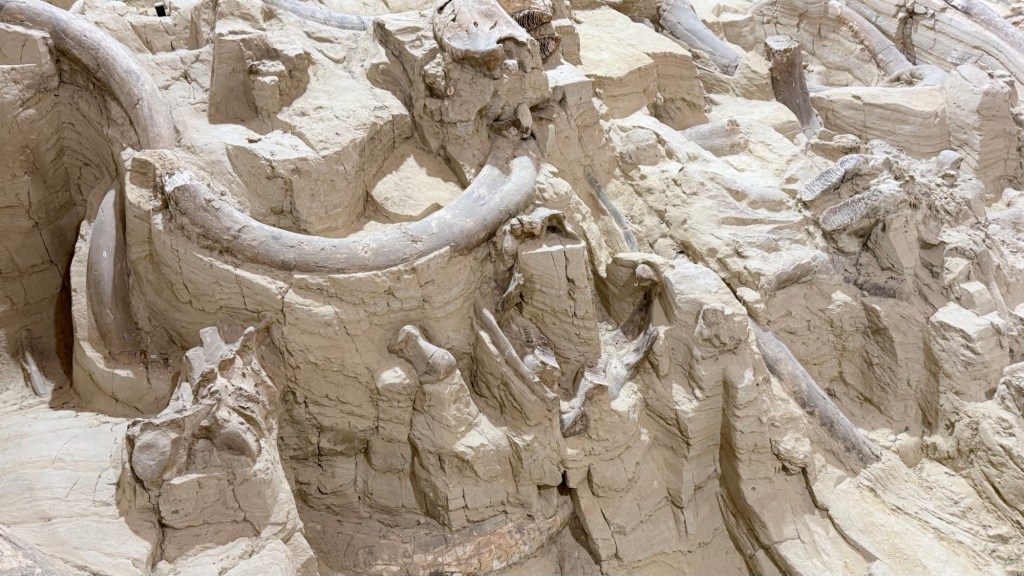
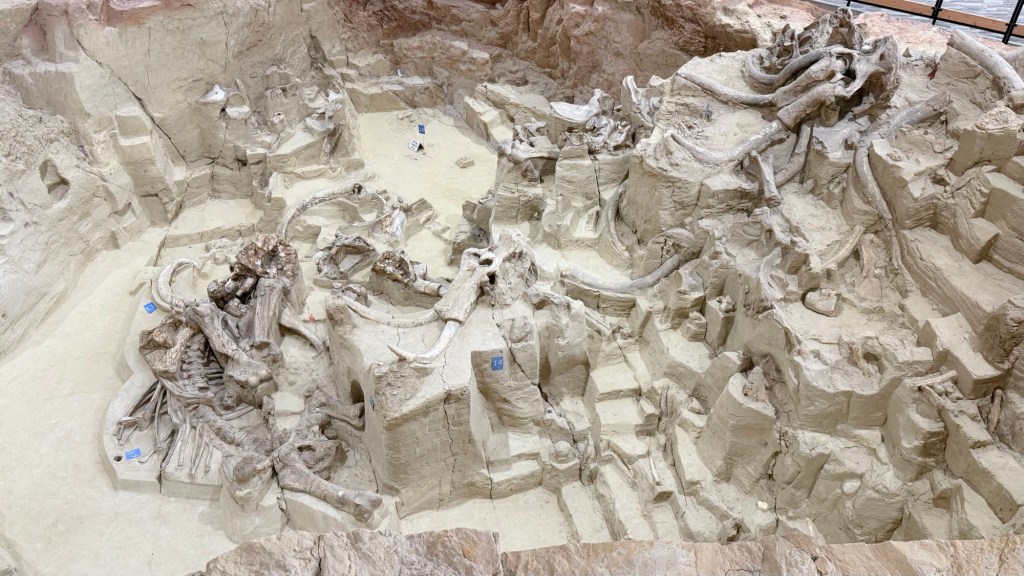
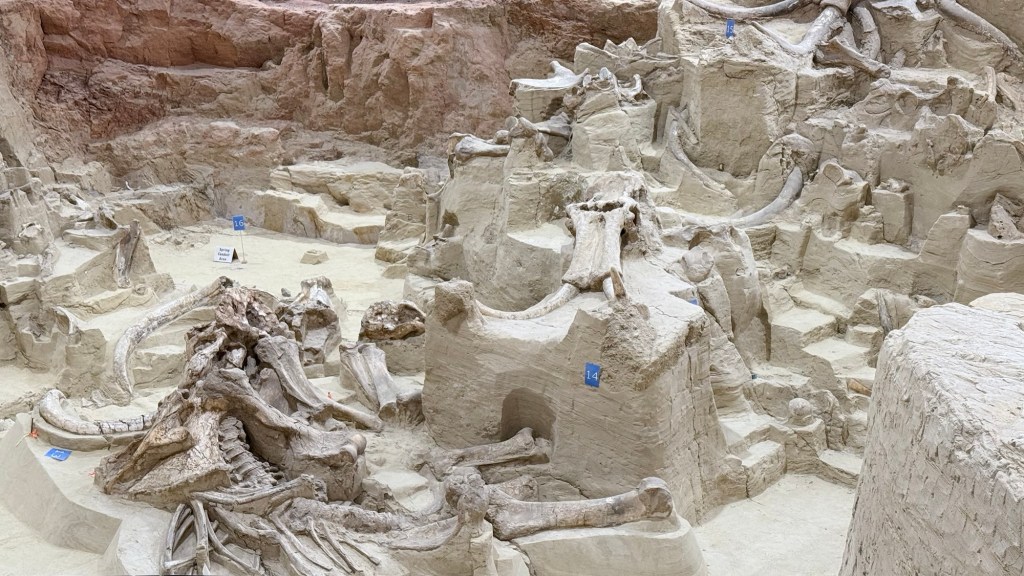
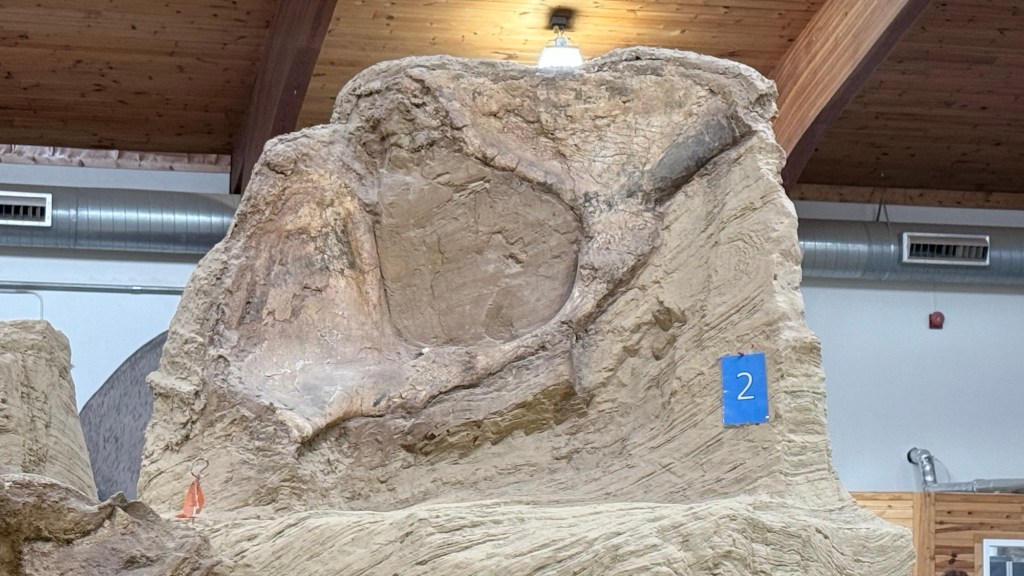
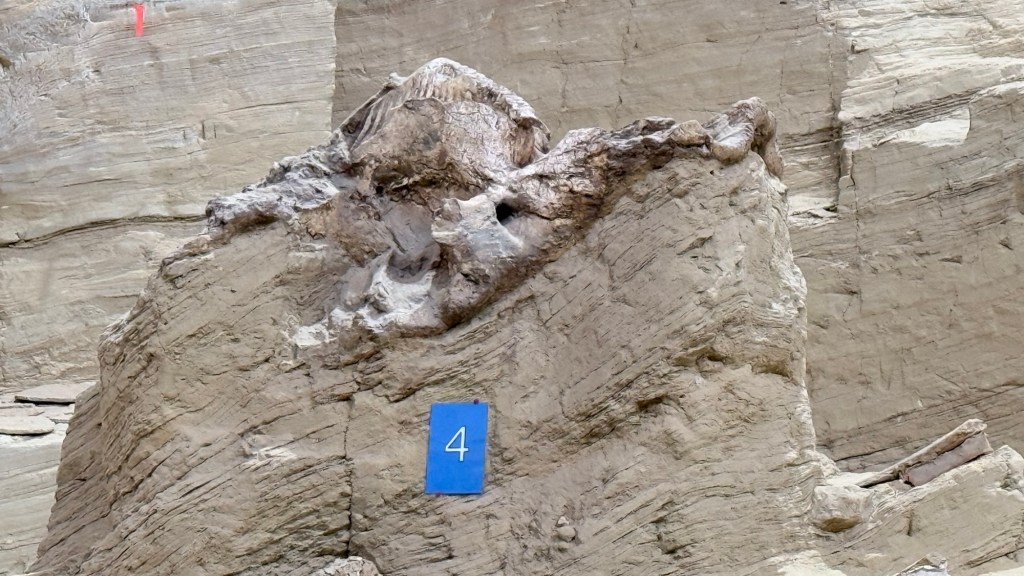
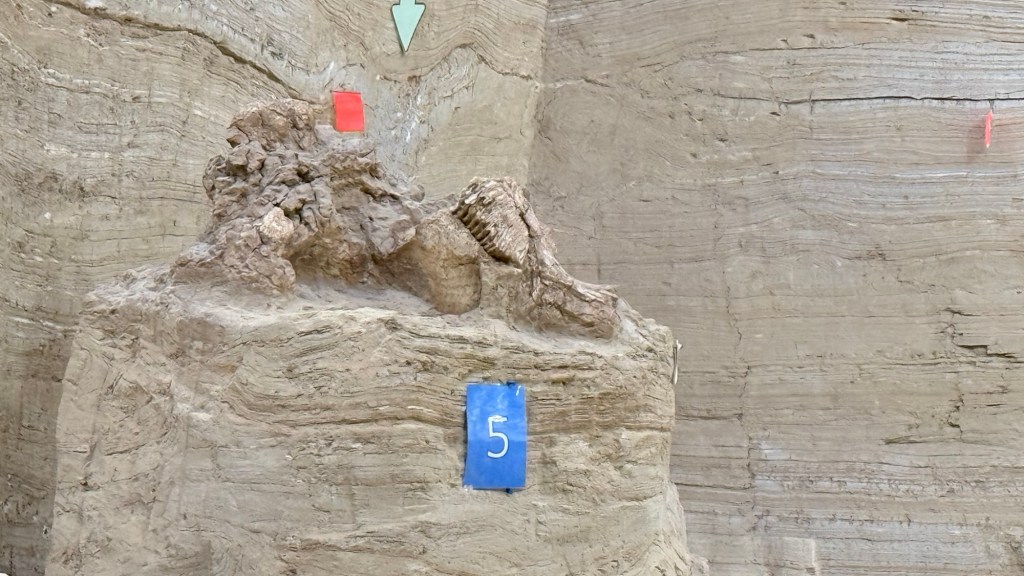
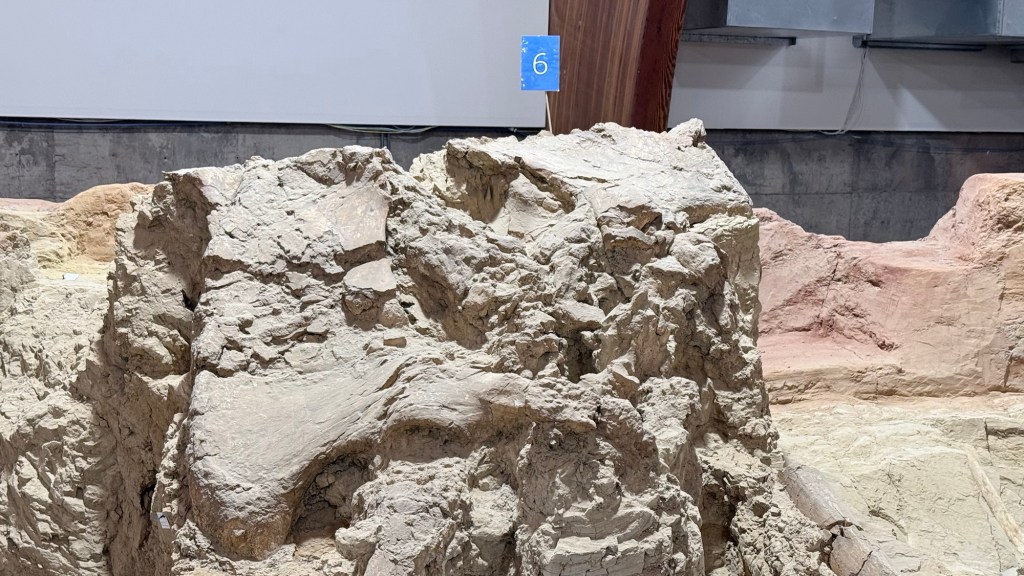
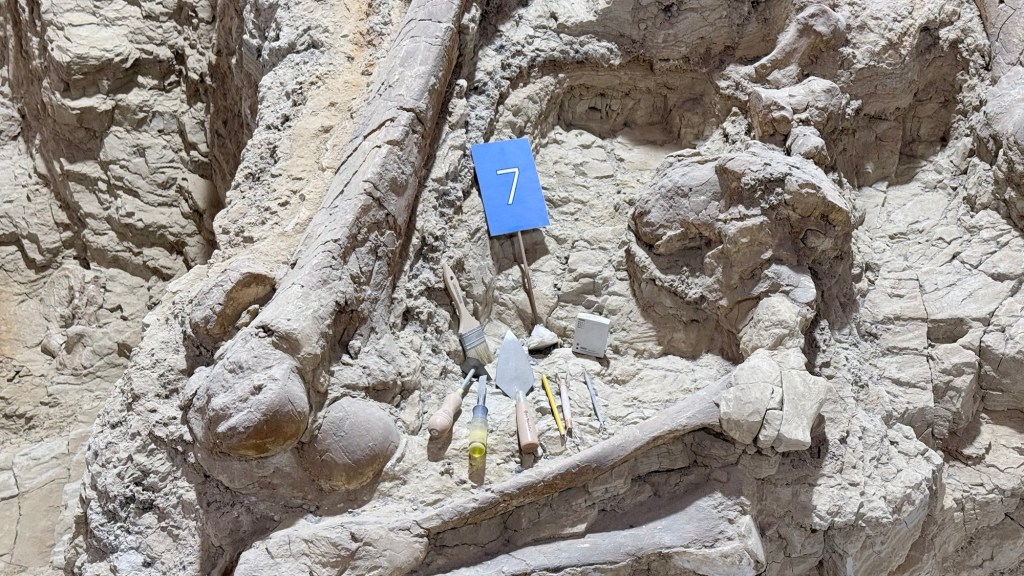
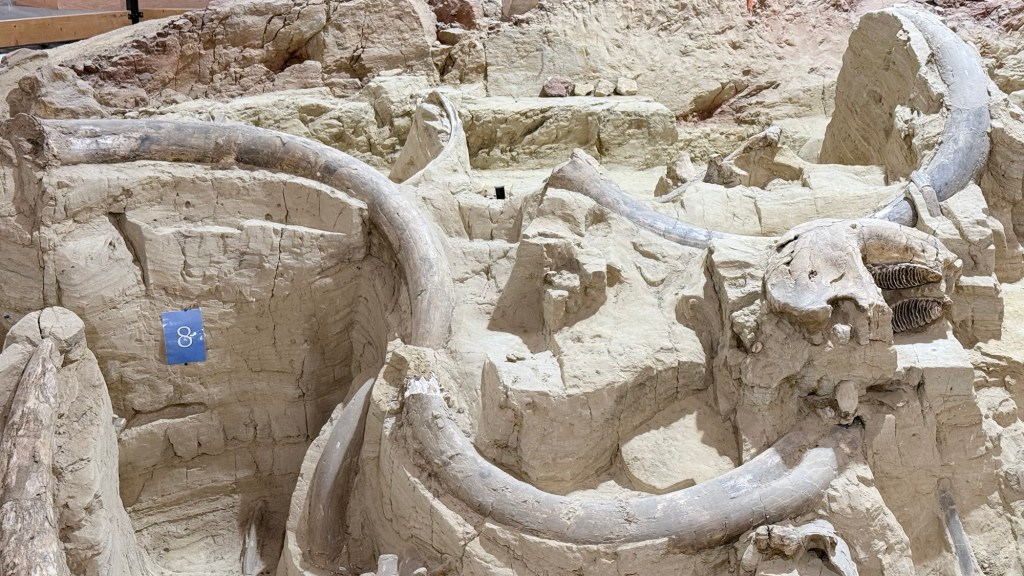
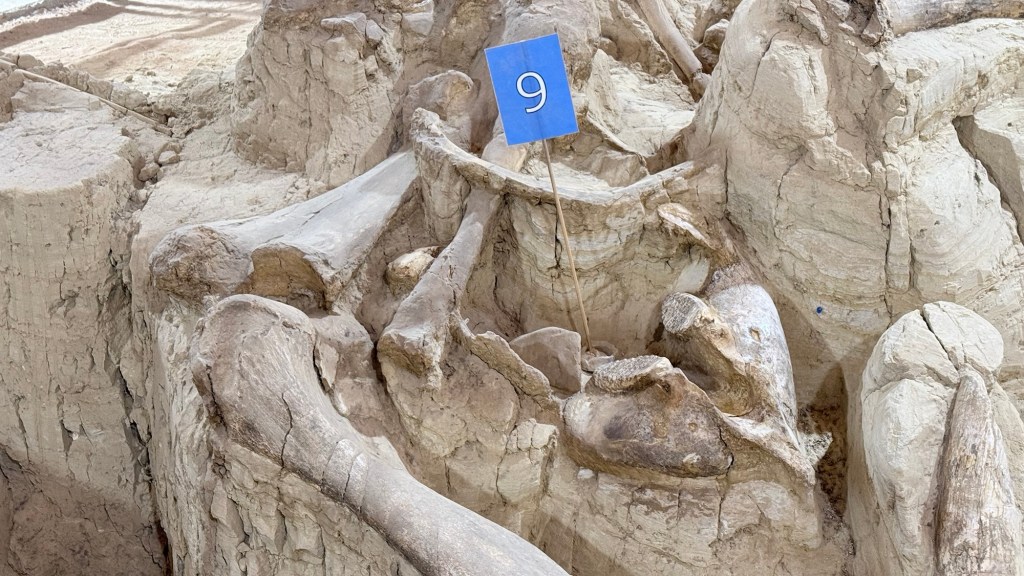
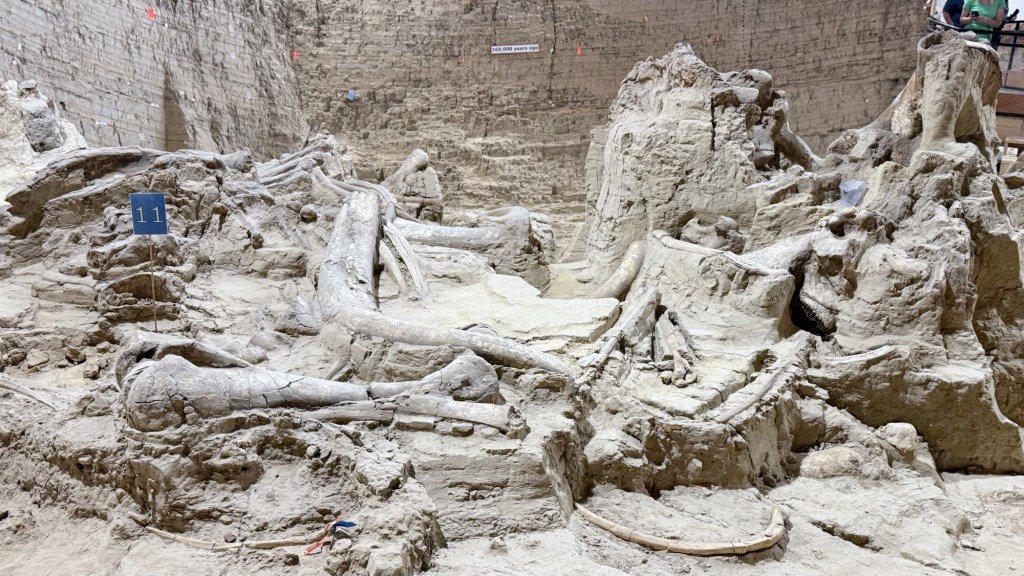
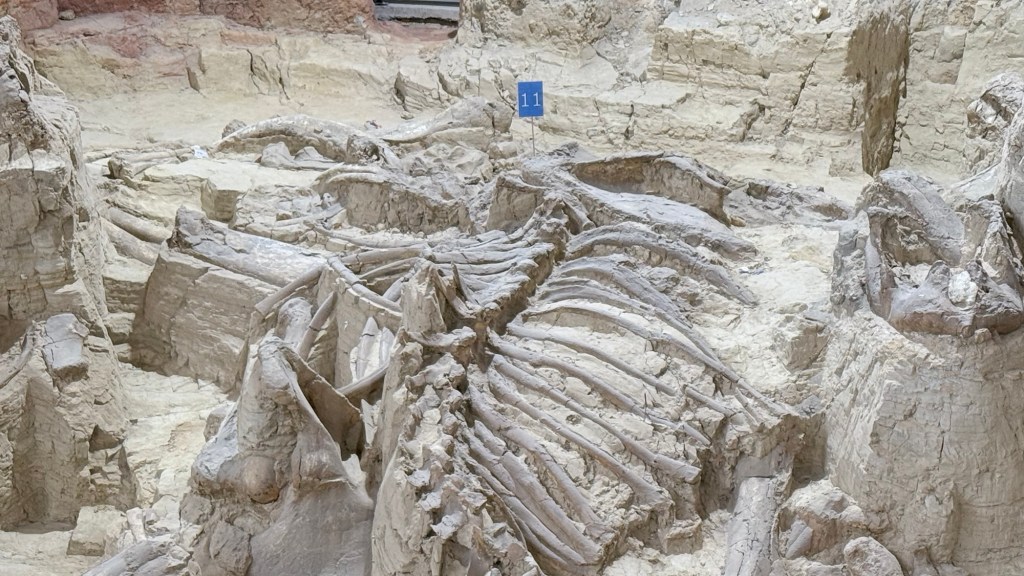
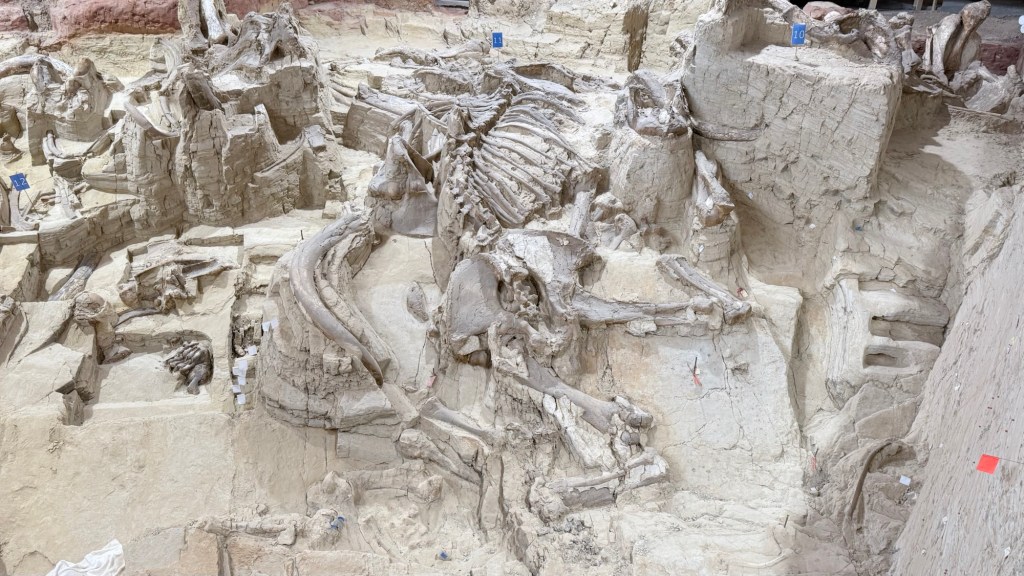
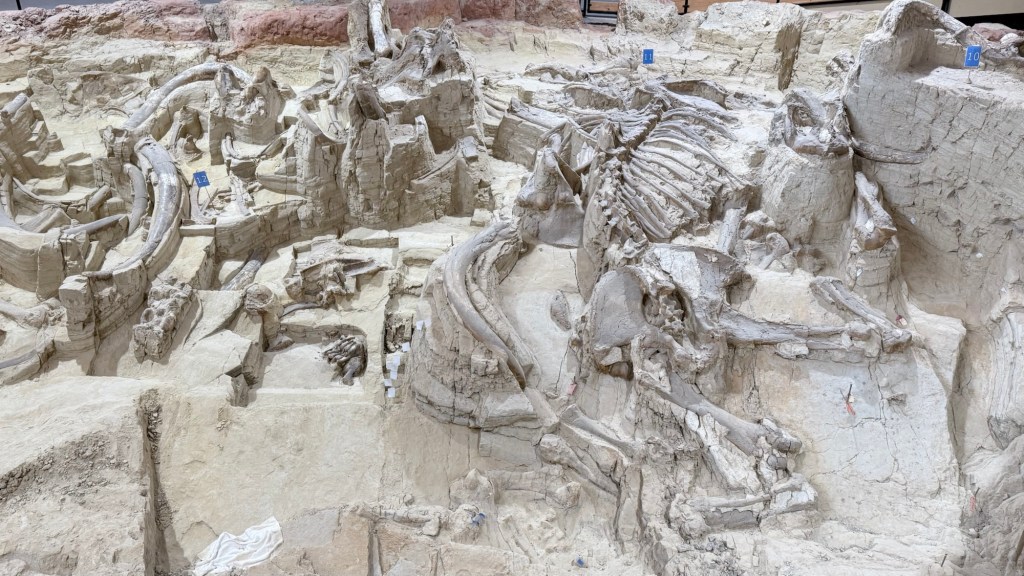
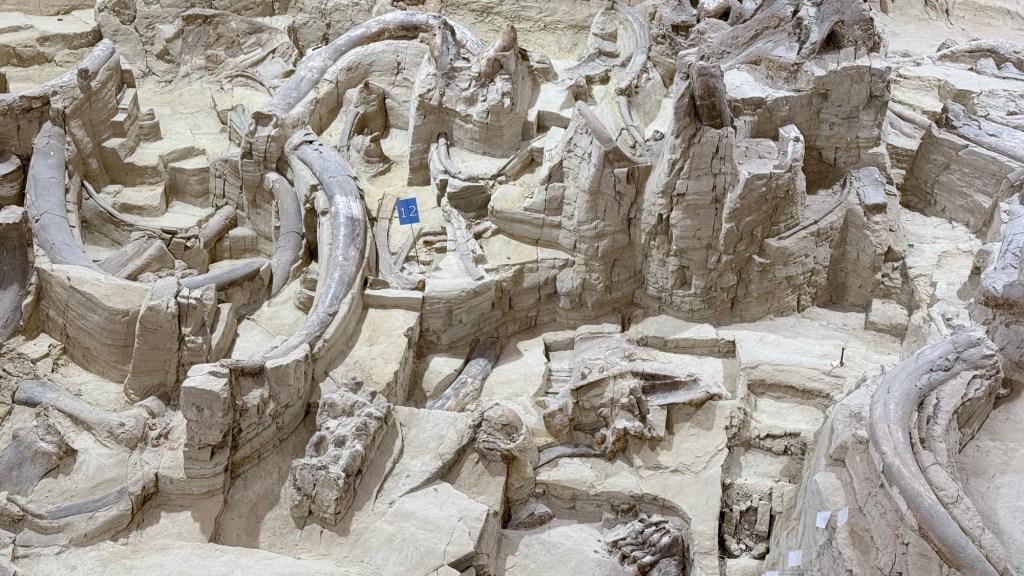
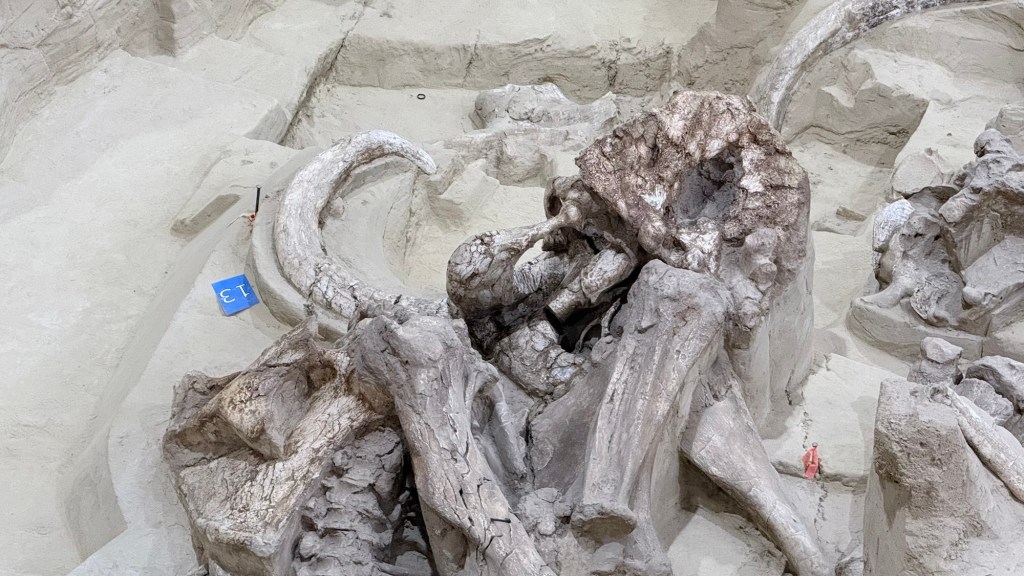
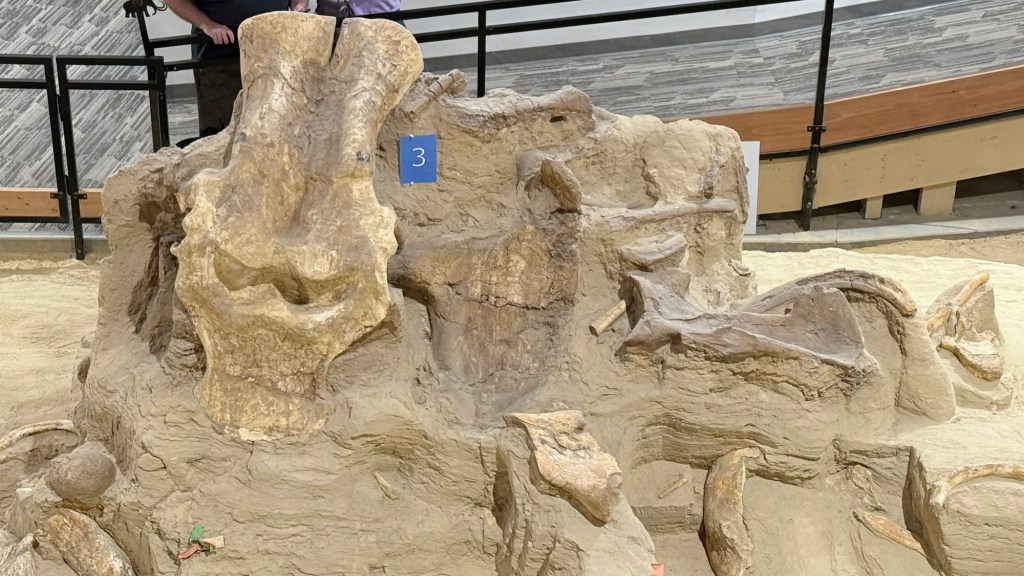
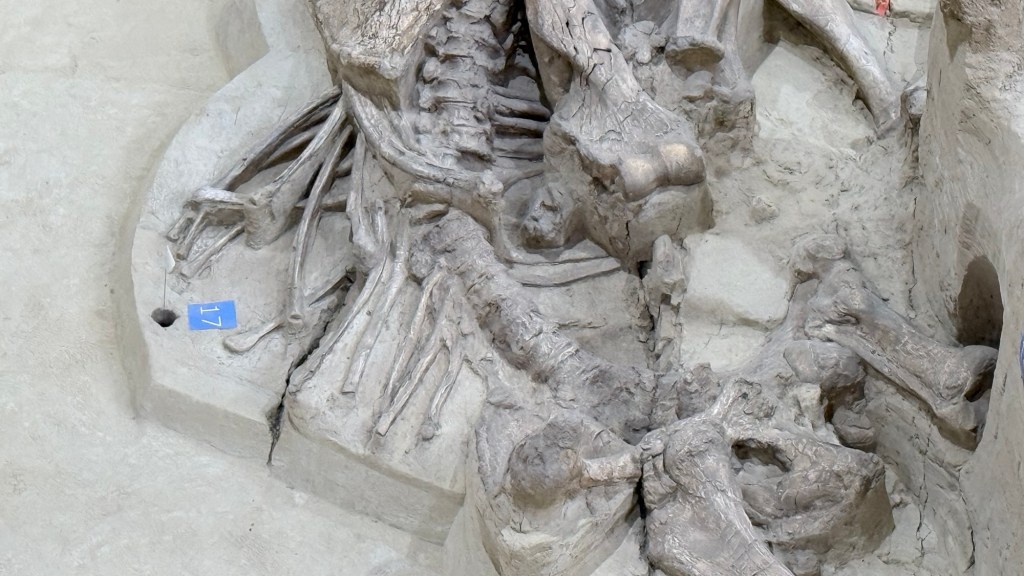
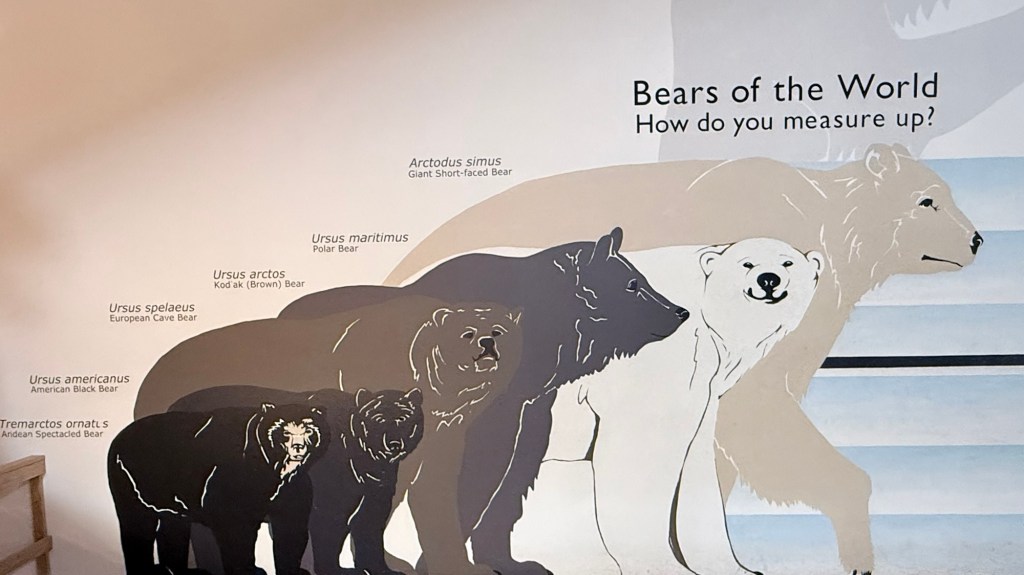
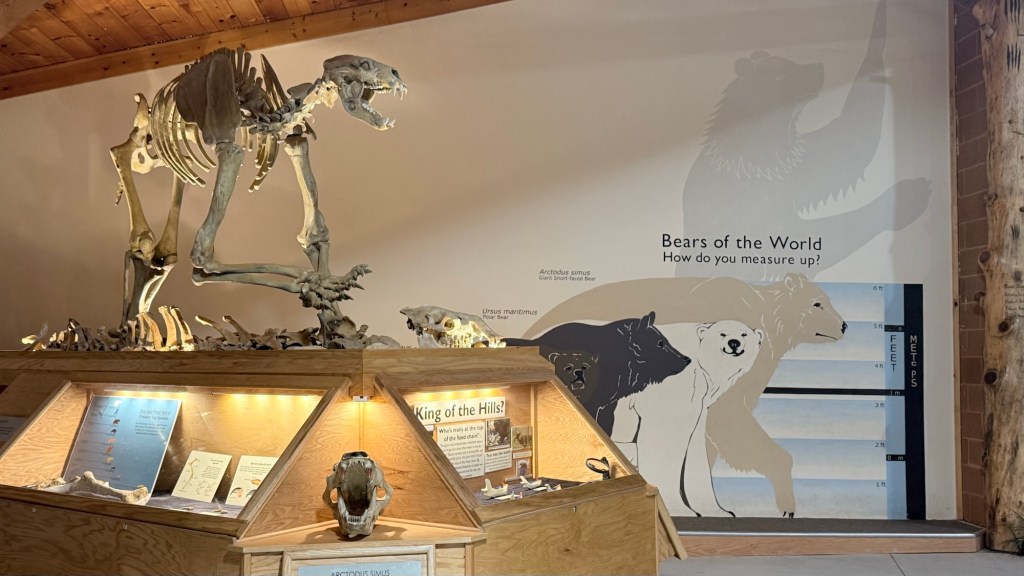
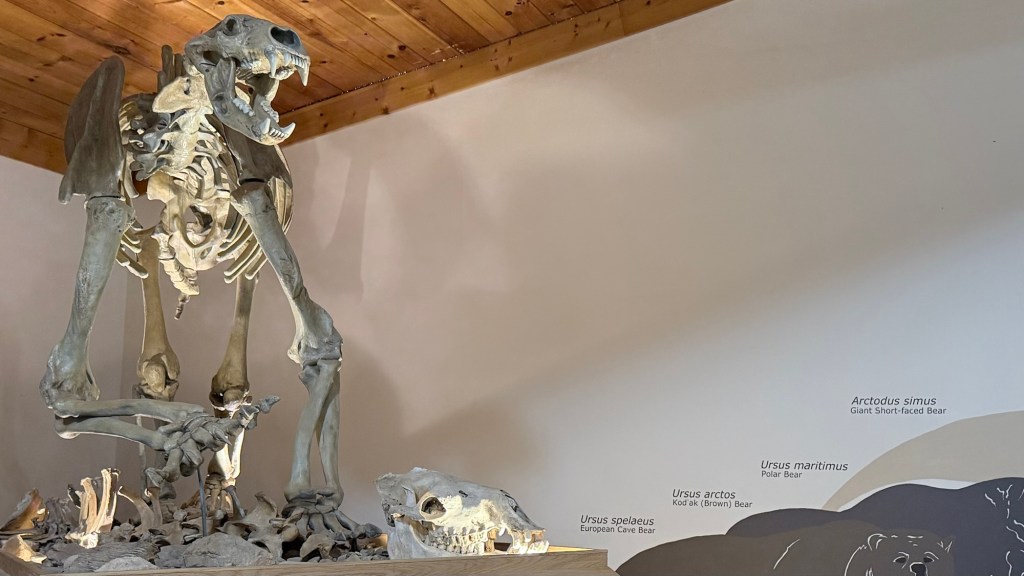
The Short Faced Bear is one of those other animals who found his way into this pit.
And there was also the Dire Wolf, who was the apex predator of this time period. Dire Wolves hunted large Ice Age megafauna such as horses, bisons, camels, ground sloths, Pronghorns, mastodons and mammoths. Perhaps this particular Dire Wolf saw a trapped mammoth as easy prey, but then became trapped himself in this same basin…?
The largest collection of Dire Wolf fossils ever recovered was from the La Brea Tar Pits in California some thirteen hundred miles away. Just last year a biotechnology company announced they used CRISPR gene-editing and ancient DNA extracted from those fossils to modify gray wolf embryos and bring back three Dire Wolf pups from extinction.
Just about up to the ceiling of this facility is where the original digging started back in the 1970’s and, so far, they have dug down to forty-five feet. Core samples estimate that there is a total of sixty-seven feet of sediment to go through before reaching the bottom of this sinkhole with an untold number of fossils to be discovered!
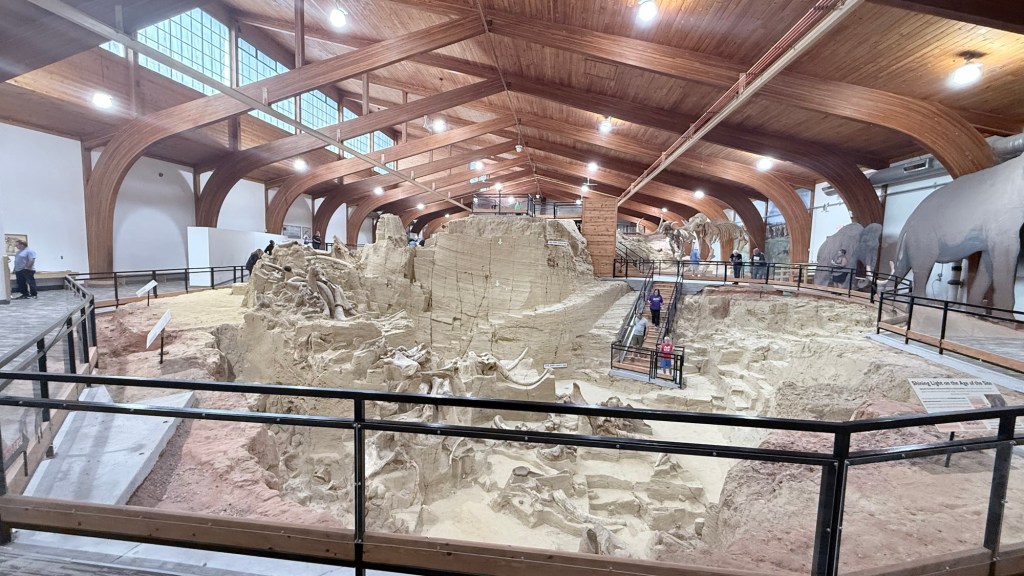
I hope if you’re ever out here in the Black Hills you’ll visit this fascinating, unique-in-all-the-world facility.
The gam continues…


Scary but interesting! FascinatingIf I were still teaching, I would be showing these to my students. These are great. Stories terrific. thank you have fun. Stay safe. God bless.🌸🙋🏻♀️Sent from my iPhoneOn Sep 6, 2026,
LikeLike